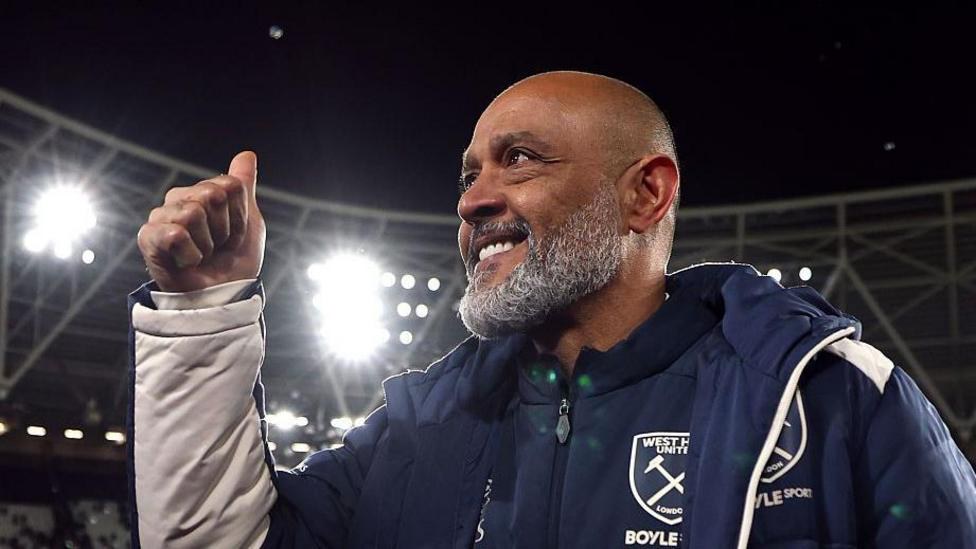
West Ham United confirm Nuno Espirito Santo will remain as manager for their Championship campaign as the club prepares for a massive £200m revenue drop.
The heavy air of disappointment hanging over East London has not led to the typical managerial bloodletting that usually follows a Premier League relegation. In a move that prioritizes continuity over a complete reset, West Ham United have confirmed that Nuno Espirito Santo will remain in the dugout to lead their charge for an immediate return to the top flight. The decision follows a pivotal Monday meeting where the Portuguese coach and the club hierarchy opted to stick together, despite a clause that allowed both parties to walk away without the burden of compensation.
This is a calculated gamble by a board that has seen the club plummet into the second tier for the first time since 2012. Rather than starting from scratch with a new philosophy, the Hammers are betting on Nuno’s proven track record in one of the most grueling divisions in world football. The manager made his desire to stay clear, insisting he has the motivation required to navigate the 46-game slog that awaits. The objective for the coming season is not just improvement but an unquestionable demand for promotion at the first time of asking.
The 99-Point Blueprint
The primary reason for the board’s faith in Nuno lies in his history with Wolverhampton Wanderers. During his first and only previous stint in the Championship, Nuno did more than just get promoted; he dismantled the division. His Wolves side finished the 2017-18 season with a staggering 99 points, playing a brand of clinical, transition-heavy football that left opponents chasing shadows. The West Ham board is desperate for a repeat of that dominance, hoping that Nuno’s familiarity with the league’s unique demands will give them a head start over their rivals.
However, the context is vastly different this time around. At Molineux, Nuno was backed by the star power of Ruben Neves and the clinical edge of Diogo Jota, players who were arguably already operating at a Premier League level. While West Ham possess a talented squad on paper, the financial reality of relegation means the manager might not have the same caliber of tools at his disposal. The board is banking on his ability to organize a defense and instill a winning mentality in a squad that has spent the last nine months forgetting how to win games consistently.
The £200 Million Reality Check
Relegation is never just a sporting failure; it is a financial catastrophe, and the numbers coming out of the London Stadium are sobering. Club sources estimate that the drop will result in a lost revenue stream of approximately £200 million. This comes on the back of latest accounts showing a loss of over £100 million, with further deficits expected for the current financial year. The Hammers are facing a fiscal tightening of the belt that will fundamentally alter the makeup of the first-team squad before a ball is even kicked in August.
The club cannot hide from the fact that their recent recruitment and wage structure were designed for a team competing for European places, not one preparing for trips to the more modest outposts of the Championship. This financial black hole makes the sale of high-value assets an inevitability rather than a possibility. The recruitment department will now have to find value in the bargain bins of Europe and the lower leagues of England, a far cry from the ambitious spending sprees that defined the David Gold and David Sullivan era in the top flight.
A Changing of the Guard
The exodus will not be limited to the boardroom, where vice-chair Karren Brady recently stepped down citing continued abuse from supporters. On the pitch, the squad is expected to lose its most influential figures. Skipper Jarrod Bowen, whose industrious performances and goal-scoring threat remained a rare bright spot in a dismal season, is a primary target for several top-tier clubs. Losing a captain of his stature is a blow that Nuno will have to manage both tactically and in terms of dressing room leadership.
Similarly, the future of Portugal midfielder Mateus Fernandes is under intense scrutiny. A player of his technical quality is unlikely to spend a year in the physical furnace of the Championship when Champions League suitors are circling. The challenge for Nuno will be to rebuild a spine that has been ripped out. He must find players who possess the technical floor to dominate possession but also the physical ceiling to handle the relentless Saturday-Tuesday schedule. The club is moving into a period of austerity where every pound spent on a transfer fee must be justified by immediate impact.
Repairing a Fractured Relationship
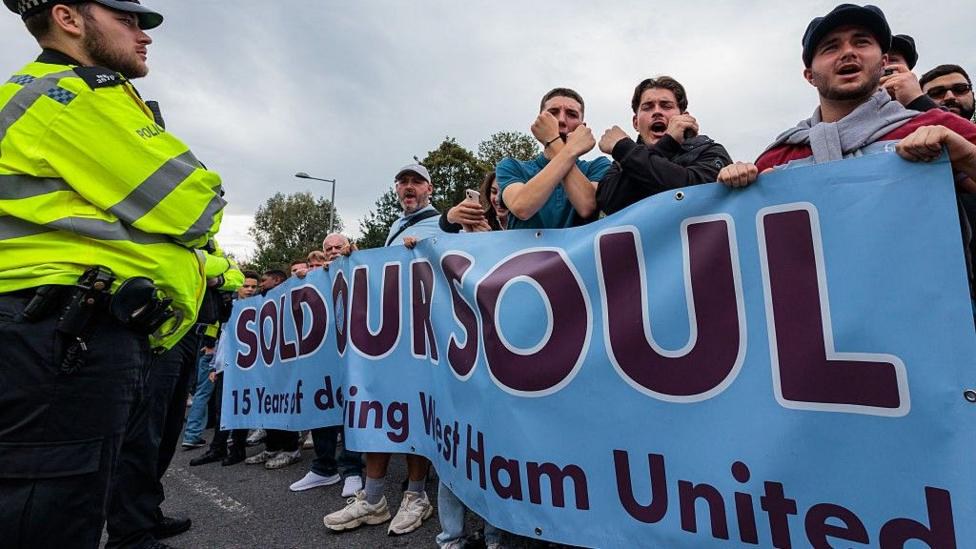
Beyond the tactics and the balance sheets, West Ham are facing a crisis of identity. The move from Upton Park to the London Stadium in 2016 remains a deep-seated grievance for a large portion of the fanbase. Many supporters feel the move was a betrayal of the club’s soul, sold on the promise of regular European nights and top-four challenges that have largely failed to materialize. The relegation has only served to sharpen those knives, with the 62,500-capacity arena often feeling like a cavernous monument to unfulfilled ambition.
In an attempt to mend these fences, the club has announced a significant reduction of up to 30% on all season ticket prices for the upcoming campaign. It is a necessary gesture, acknowledging that the product on the pitch has not been good enough. The board has also pledged to be more transparent in their communication, admitting they cannot shy away from the failures of the past season. Whether a cheaper ticket and an open letter are enough to quell the toxicity remains a major question mark as the club enters a new era under the sole leadership of David Sullivan.
The Statistical Shield
Despite the overall failure of the season, West Ham’s decision-makers are pointing to a specific block of games as proof that Nuno is the right man. Since January, there has been a noticeable uptick in performance metrics. The team collected 25 points from their final 17 matches, a ratio of 1.47 points per game. Extrapolated over a full season, that form would have secured a seventh-place finish. This data has become the board’s shield against criticism, arguing that the mentality and togetherness of the group have improved drastically since the dismissal of Graham Potter.
This statistical optimism must now be translated into the realities of Championship football. Nuno’s task is to ensure that the late-season improvement was not just a flash in the pan but the foundation of a new system. He has proven he can build a promotion-winning machine before, and West Ham are desperate for him to do it again. The goal is a return to the Premier League by August 2027, but the road there is fraught with danger. For now, the Hammers are sticking with the man they believe knows the way out of the wilderness. more football news on MATCHLINE