Arne Slot's Liverpool tenure ends in shock dismissal after a title-winning start and a locker room collapse. Matchline investigates the Anfield exit.
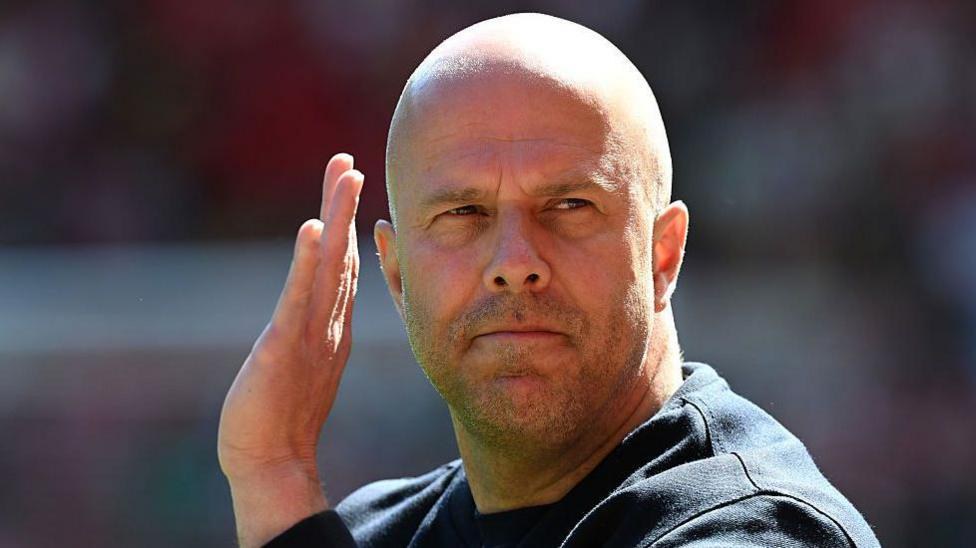
The silence at the AXA Training Centre on Saturday morning was deceptive. Arne Slot arrived thinking about pre-season, convinced he was the architect of Liverpool's next great era. He had told the media just two weeks prior that he had every reason to believe he would be in the dugout next term. He was wrong. In a move that sent shockwaves through the Merseyside footballing community, the Dutchman was summoned by sporting director Richard Hughes and FSG chief executive Michael Edwards to be told his time was up. The architect was being cleared off the site before the next floor could be built.
Slot's tenure at Anfield lasted exactly two seasons, a period defined by the highest of highs and the most grueling of lows. His departure represents a brutal departure from Liverpool's historical tradition of patience. To sack a manager who delivered a Premier League title just twelve months prior is a statement of cold, data-driven ruthlessness. For Michael Edwards and Richard Hughes, sentiment is a secondary currency. They saw a team that had lost its way, a dressing room that had lost its faith, and a manager who, for all his tactical acumen, could not fill the colossal vacuum left by Jurgen Klopp.
The Authority Vacuum and the Klopp Shadow
Stepping into the shoes of Jurgen Klopp was always described as an impossible task, but for Arne Slot, the reality proved even more punishing than the theory. Klopp was a figure who governed through emotional connection and a cult of personality that bound players, staff, and supporters into a singular, fanatical unit. Slot, by contrast, was viewed as a technician. While his first season produced a stunning Premier League triumph, the internal mechanics of his leadership began to fray the moment results dipped. Sources within the club have suggested that while Slot is an excellent individual, he never possessed the natural gravity required to command a squad of Liverpool's stature during a crisis.
This lack of perceived authority became a terminal issue when the club's heavyweights began to drift. The breakdown in communication with Mohamed Salah was perhaps the most visible indicator of Slot's waning influence. When a player of Salah's legendary status feels comfortable enough to indirectly criticize his manager's style of play on social media, the hierarchy is effectively broken. It was an attack on Slot's leadership that resonated throughout the training ground. In the hyper-competitive ecosystem of an elite dressing room, any perceived weakness in the manager is magnified. By the end of his second season, it was clear that the players were no longer prepared to run through brick walls for the man in the dugout.
The departure of other senior figures further isolated Slot. With stalwarts like Andy Robertson and Ibrahima Konate moving on, the Dutch manager lost the dressing room lieutenants who might have bridged the gap between his technical demands and the emotional needs of the squad. One club source, who served under both Klopp and Slot, noted that the Dutch coach's methods often felt clinical rather than inspirational. When the team was winning, the clinical nature was praised as efficiency. When they began to lose, it was viewed as a lack of soul. That distinction eventually cost him his job.
Tactical Divergence and the Need for Aggression
Beyond the personality clashes, a fundamental tactical disagreement had been brewing between Slot and the Liverpool hierarchy. FSG, led by the return of Michael Edwards, has a very specific vision for how the team should play. They want a front-foot, aggressive, and urgent style of football that mirrors the high-octane identity of the club's modern era. Slot, however, leaned toward a more measured, controlled approach. While this control led to a ten-point margin in their title-winning campaign, it appeared to stifle the team's natural instinct for chaos when the squad was hit by injuries.
The statistics from Slot's final season were damning. Liverpool lost 19 games across all competitions, a figure that is simply unacceptable for a club with title aspirations. The team often looked caught in possession and exposed down the channels, unable to replicate the suffocating press that had once defined them. The board believed that Slot was not the man to lead the next phase of evolution. They want a manager who can weaponize the pace and power of the squad, someone who prioritizes verticality and relentless pressure over the more patient, Dutch-influenced build-up that Slot preferred.
This desire for a stylistic reset explains the club's interest in Andoni Iraola. The current Bournemouth boss, originally appointed by Richard Hughes on the south coast, is seen as the leading candidate to restore that sense of urgency. Iraola's philosophy is built on high turnovers and rapid transitions, the very traits that the Liverpool hierarchy felt had evaporated under Slot. The decision to sack Slot now, rather than waiting for the final year of his contract to expire, was driven by the fear that another year of tactical stagnation would leave the squad even further behind their rivals in the Premier League and Europe.
The Weight of a Record Transfer Spend
Last summer saw Liverpool commit to a record-breaking spend of £415m, a massive investment designed to facilitate a smooth transition into the post-Klopp era. The arrivals of Alexander Isak, Florian Wirtz, Hugo Ekitike, Milos Kerkez, Jeremie Frimpong, and Giovanni Leoni were meant to provide Slot with the tools to dominate for years to come. Instead, the sheer volume of new faces seemed to complicate the manager's task. Integrating that much talent while maintaining a winning rhythm is a delicate balancing act, and Slot struggled to find his best eleven as the season progressed.
While Florian Wirtz and Alexander Isak showed flashes of brilliance, the team as a whole often felt like a collection of expensive individuals rather than a cohesive unit. The board's frustration grew as they watched their investment fail to yield a consistent return on the pitch. The signing of Jeremy Jacquet from Rennes for £60m is already confirmed for this summer, indicating that the club has no intention of slowing down its recruitment drive. However, the decision-makers reached the conclusion that Slot was not the right person to maximize the potential of these elite players.
The financial stakes at Liverpool are now higher than ever. With a squad valued in the hundreds of millions, every month spent outside of trophy contention is seen as a wasted opportunity. The hierarchy felt that delaying the inevitable would be damaging to the squad's development and unfair to the incoming players who need a clear, aggressive tactical direction. By acting now, they hope to give the new manager a full pre-season to implement a style that matches the ambitions of the ownership. Slot may have been the man who spent the money, but he will not be the one to see the project through to its conclusion.
A Season of Tragedy and Injury Woes
It would be unfair to analyze Slot's downfall without acknowledging the immense personal and professional hurdles he faced during his final year. The campaign began under a cloud of tragedy following the passing of Diogo Jota, a loss that deeply affected the entire club. Managing the emotional fallout of such an event while trying to maintain elite performance levels is a burden few coaches ever have to carry. Slot handled the situation with dignity, but there is no doubt that it drained the collective energy of the group from the very first week of the season.
Following the tragedy, an unprecedented injury crisis ravaged the first-team squad. At various points, Slot was forced to field makeshift defenses and experimental midfields as his stars lined the treatment room. The loss of key veterans like Mohamed Salah to injury at critical junctures left the team without its focal point. While Slot described it as the toughest season of his career, the Anfield crowd grew increasingly impatient. The sound of boos ringing out across the Kop became a regular occurrence, a jarring contrast to the adulation Slot had received during the title celebrations just a year earlier.
The disconnect with the supporters was perhaps the final nail in the coffin. Liverpool is a club where the synergy between the manager and the fans is paramount. Once that bond is severed, it is rarely repaired. Slot found himself in a position where he was being judged not against the title he won, but against the 19 losses he suffered. In the modern game, the memory of success is short, and the demand for immediate results is absolute. Slot was dealt a difficult hand with the injury situation, but at a club like Liverpool, there are no excuses for a sustained decline in standards.
The Missed Opportunity and the Future
There is a lingering sense of regret within some sections of the Liverpool support regarding the timing of this decision. Had the board acted just a few weeks earlier, they might have been in a position to secure the services of Xabi Alonso. The former Liverpool midfielder was the overwhelming choice of many fans to succeed Klopp, but the vacancy at Chelsea proved too tempting, and he signed a four-year deal at Stamford Bridge. Losing out on a club legend to a Premier League rival stung, and it forced FSG to look elsewhere for their next leader.
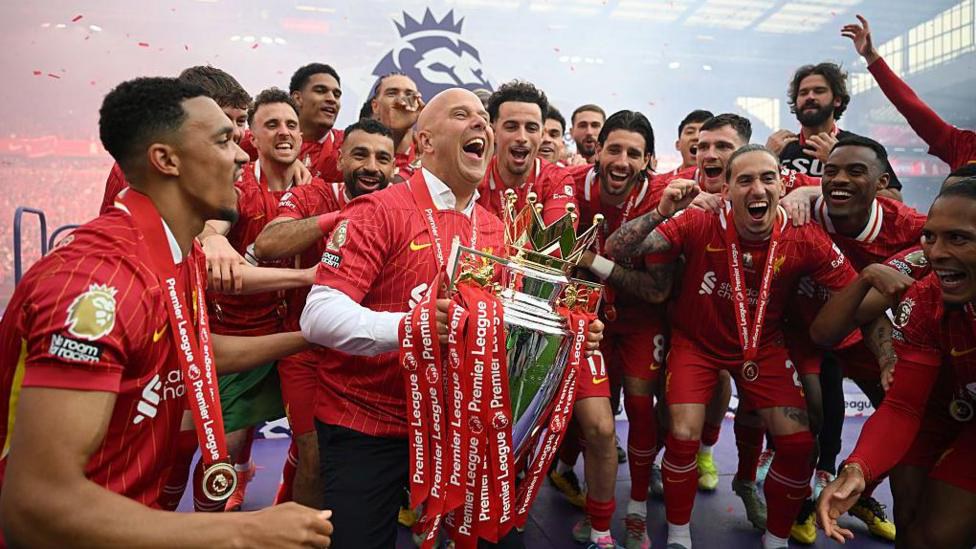
The Dutch manager leaves with his head held high, having secured a place in the history books as a Premier League winner. In any other era, a league title would have bought a manager five years of job security. But this is the era of the sporting director and the efficiency model. Slot guided the Reds through one of the most dominant campaigns in their history in 2024-25, finishing ten points clear of the field. He proved he could win, but he could not prove he could sustain. He will be remembered as the man who briefly kept the flame alive after Klopp, but also as the man who couldn't keep it from flickering out.
As the search for a successor intensifies, the club is moving quickly to ensure that the momentum of the summer transfer window is not lost. Contact has already been made with Andoni Iraola, and the Spaniard's track record of overachieving with limited resources makes him an attractive prospect for a board that values tactical efficiency above all else. For Arne Slot, there is no bad blood, only the realization that he was a victim of the brutal standards he helped set. He won the league, he lost his job, and in the ruthless world of top-flight football, both of those things can be true at once. The transition continues, but it will do so under a different set of eyes. more football news on MATCHLINE