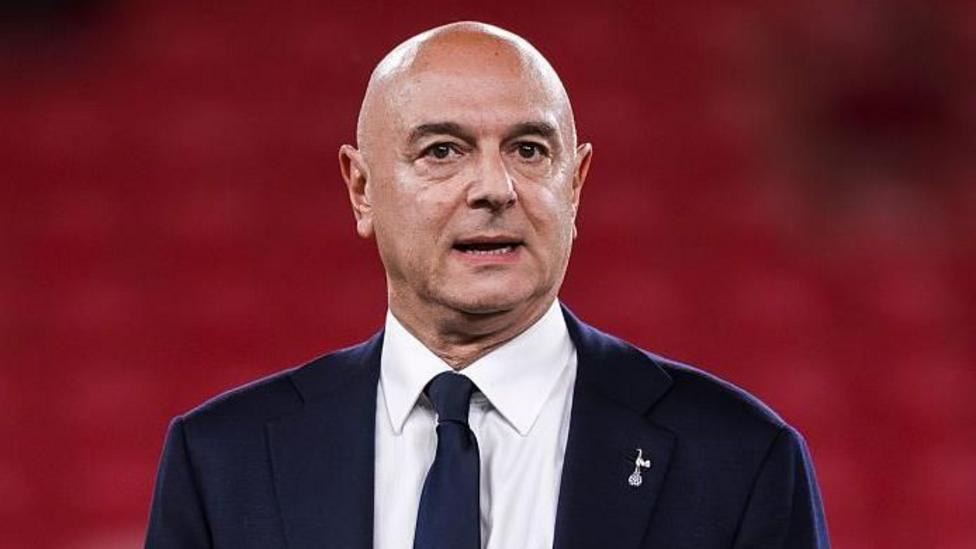
Former Spurs chairman Daniel Levy speaks out on the club's shocking slide into a relegation battle, admitting he never imagined such a crisis in 25 years.
Standing amidst the historic grandeur of Windsor Castle to receive a CBE for his services to charity and the community, Daniel Levy presented the image of a man whose professional legacy is being dismantled in real-time. For twenty-five years, he was the architect of Tottenham Hotspur’s modernization, a figure who turned a north London club into a commercial behemoth. Yet, as he spoke following his investiture ceremony on Wednesday, the gloss of his new honor could not mask the grim reality of the situation he left behind. The man who oversaw the construction of a billion-pound stadium now watches from the sidelines as the team he built teeters on the edge of the Championship.
The admission was as stark as it was surprising. Levy confessed to a profound sense of ‘emptiness’ regarding Tottenham’s current league position, a sentiment that echoes the hollow feeling among a fanbase that has seen their club collapse with terrifying speed. After stepping down as executive chairman in September, Levy expected to watch a period of transition from a position of security. Instead, he is witnessing a catastrophe that he claims he did not foresee ‘in a million years.’ The disconnect between the club’s off-field infrastructure and its on-field performance has never been more painfully apparent.
An Unthinkable Collapse into the Drop Zone
The numbers currently haunting the Tottenham Hotspur Stadium are a far cry from the Champions League nights that defined the middle of Levy’s tenure. A wretched run of form throughout 2026 has seen a squad filled with international talent slide into the bottom three. While a recent uptick of eight points from the last twelve has provided a glimmer of hope, the club remains perched just two points above third-bottom West Ham with only two games left to play. This is not just a dip in form; it is a full-scale systemic failure that has left the club’s Premier League status hanging by a thread.
Levy’s insistence that relegation was never a consideration during his quarter-century at the helm highlights a potential blind spot in the club’s leadership. For years, Spurs were a fixture in the ‘Big Six,’ a club that looked upward at the title race rather than over its shoulder at the trapdoor. The rapid descent suggests that the foundations were far more fragile than the gleaming glass of the new stadium implied. When Levy departed his role, he likely believed the club was on an upward trajectory, but the subsequent months have exposed a lack of leadership and identity that has proven nearly fatal.
The psychological toll of this battle is evident in Levy’s words. He spoke of his continued optimism that the club will remain in the top flight, but his voice lacked the typical corporate certainty of his chairmanship. The fact that Tottenham are even in this position—fighting for survival alongside the likes of West Ham—is a damning indictment of the decisions made over the last several years. The managerial churn and the lack of a coherent recruitment strategy have finally caught up with a club that tried to run before it could walk.
The Infrastructure vs Silverware Paradox
Daniel Levy’s legacy will always be a tale of two halves. On one hand, he delivered a world-class stadium and training facilities that are the envy of Europe. On the other, the trophy cabinet remained stubbornly empty for the vast majority of his reign. The 2008 League Cup was the solitary highlight for years until last season’s Europa League triumph provided a fleeting moment of joy. Levy admitted that his hope was always to win the Premier League and the Champions League, acknowledging that such ambitions were far ‘easier said than done’ despite the massive investment in the club’s physical assets.
The irony of Spurs’ current predicament is that they possess the revenue streams of a European giant but the results of a basement dweller. The stadium, designed to be a ‘game-changer,’ has become a monument to a missed opportunity. The revenue it generates was supposed to provide the competitive edge required to bridge the gap to Manchester City and Liverpool. Instead, it has become the backdrop for a desperate fight for survival. Levy’s tenure proved that while you can build a house for success, you cannot manufacture the soul of a winning team through architecture alone.
The former chairman’s comments at Windsor Castle serve as a retrospective on twenty-five years of ambition and frustration. He spoke of the ‘services to the community’ that earned him his CBE, a reminder that his impact on the local area has been significant. However, to the season-ticket holders watching their team struggle to string two passes together, these civic contributions feel like a secondary concern. The primary duty of any football club chairman is to ensure the team’s competitive health, and on that front, the verdict on the Levy era is currently being written in the cold ink of the relegation table.
The Road to Survival and the Final Two Games
As the season reaches its crescendo, the pressure on the current Tottenham squad is immense. The two games remaining will define the club’s history for a generation. A drop to the Championship would not only be a sporting humiliation but a financial disaster of unprecedented proportions for a club with such high overheads. Levy’s optimism, while welcome, must be matched by a level of grit on the pitch that has been absent for much of the campaign. The recent run of eight points from four games suggests the players have finally realized the gravity of their situation, but the margin for error has vanished.
The battle with West Ham for the final safe spot is a narrative that few could have scripted at the start of the season. It is a local rivalry turned into a fight for life. For a club that reached a Champions League final as recently as 2019, the fall is staggering. Levy’s admission that he saw no signs of this crisis reinforces the idea that the club’s hierarchy had become insulated from the reality of the team’s decline. They were so focused on the horizon that they didn't see the cliff edge directly in front of them.
Should Spurs survive, the summer will require a total reckoning of how they reached this point. If they fall, the Levy era will be remembered not for the stadium, but for the spectacular collapse that followed his exit. The CBE he received at Windsor Castle marks the end of an era, but for Tottenham Hotspur, the future has never looked more uncertain. The ‘emptiness’ Levy feels is a sentiment shared by everyone associated with the club as they wait for the final whistle of a season that has gone horribly wrong.
A Legacy in the Balance
The final assessment of Daniel Levy’s time at Tottenham will depend heavily on the outcome of the next fortnight. He was the longest-serving chairman in the Premier League, a survivor who outlasted dozens of managers and hundreds of players. His ability to negotiate and his focus on the club’s long-term financial health were his trademarks. However, the current crisis has cast a long shadow over those achievements. A club is more than a balance sheet, and the lack of footballing success during his 25 years is a void that no charity work or stadium can fill.
As he left Windsor Castle, Levy likely reflected on the highs and lows of his quarter-century in power. He saw the club rise to the brink of European glory under Mauricio Pochettino, only to fall back into mediocrity. He saw the departure of icons like Harry Kane and the struggle to replace their influence. The ‘million years’ he cited as the timeframe in which he never expected a relegation fight serves as a haunting reminder of how quickly football can humble even the most experienced executives.
The path forward for Spurs is fraught with difficulty, regardless of whether they stay up. The club needs a total reset of its footballing philosophy and a leadership that can bridge the gap between the boardroom and the pitch. Levy’s era is over, but the consequences of his decisions continue to ripple through the club. The hope for everyone at Tottenham is that the emptiness Levy feels today does not become a permanent fixture of life in the Championship come next season.
The former chairman’s candid reflections provide a rare window into the mind of a man who saw his life's work suddenly veer toward a tragic conclusion. more football news on MATCHLINE