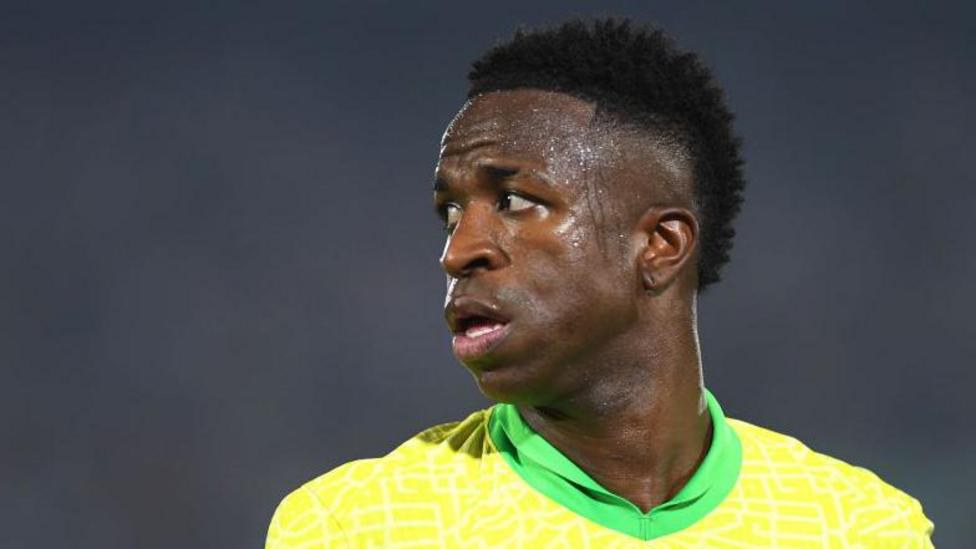
Vinicius Junior faces a defining 2026 World Cup as he seeks to win over the Brazilian public and step out of the shadow of veteran icon Neymar.
Carlo Ancelotti stood at the podium in late May, his typically calm demeanor masking the magnitude of the statement he was about to deliver. As the Brazil manager prepared his squad for a friendly against Panama, he addressed the persistent narrative surrounding the lack of a singular, transcendent superstar in the current Selecao setup. The Italian veteran conceded that while the era of Pele, Romario, and Ronaldo may be in the rearview mirror, a new paradigm of shared responsibility could prove even more potent on the global stage. Yet, for many in Brazil, that explanation feels like a placeholder for a missing protagonist, a role specifically earmarked for Vinicius Junior.
The Ancelotti Paradox and the Yellow Jersey
The expectation was that by this stage in the 2026 World Cup cycle, the Real Madrid forward would have firmly established himself as the undisputed face of Brazilian football. At 25 years of age, Vinicius is arguably the most dangerous winger in the European game, a player who has decided Champions League finals and terrorized LaLiga defenses for half a decade. However, the transition from being a club deity in Madrid to a national icon in Brasilia has been fraught with tactical friction and public skepticism. The debate reached a boiling point following a narrow 2-1 defeat to France in March, where the discourse shifted from how to support him to whether he should even be in the starting XI.
Ancelotti, who has overseen the most prolific years of the player's career in Spain, finds himself in a difficult position. He must replicate the environment that allows Vinicius to thrive at the Bernabeu while navigating the different rhythms of international football. The manager's call for collective accountability is a tactical necessity, but it also highlights the struggle to find a system that maximizes his star winger. In Brazil, the criticism is often blunt, with prominent football panels questioning why the electrifying pace and clinical finishing seen in white shirts rarely manifest in the famous yellow jersey.
The Statistical Gap and the Club vs Country Divide
When looking at the numbers, the disconnect is tangible. While Vinicius is the leading contributor for Brazil in this current cycle, his output remains relatively modest compared to his club exploits. Seven goals and six assists in 28 appearances are respectable figures, but they lack the explosive dominance expected of a Ballon d'Or runner-up. Former national team assistant Cleber Xavier suggests that the reality of international football is far more complex than observers realize. At a club like Real Madrid, players benefit from daily repetition, consistent partnerships, and a deeply ingrained tactical philosophy that is impossible to replicate in short international windows.
Xavier points to the historical example of Lionel Messi, who faced years of scrutiny in Argentina before finally finding the right collective structure to succeed in 2022. The argument is that for an individual to truly shine, the team around them must be a cohesive unit. In the previous World Cup, Brazil fell to a Croatia side that functioned almost like a club team due to their long-term familiarity. For Vinicius to reach his peak for the Selecao, the coaching staff must build a framework that provides him with the same level of support he receives from the likes of Jude Bellingham or Federico Valverde in Madrid.
The Long Shadow of Neymar and the Santos Legacy
Perhaps the greatest hurdle Vinicius faces is the enduring emotional connection between the Brazilian public and Neymar. Despite being 34 and moving toward the twilight of his career, the Santos legend still commands a level of affection that Vinicius has yet to touch. A recent Datafolha poll revealed that a slender majority of 53 percent still back Neymar for a place in the World Cup squad. This preference is rooted in a shared history; Neymar spent years dominating the domestic league with Santos before moving abroad, allowing Brazilian fans to witness his rise firsthand every single week.
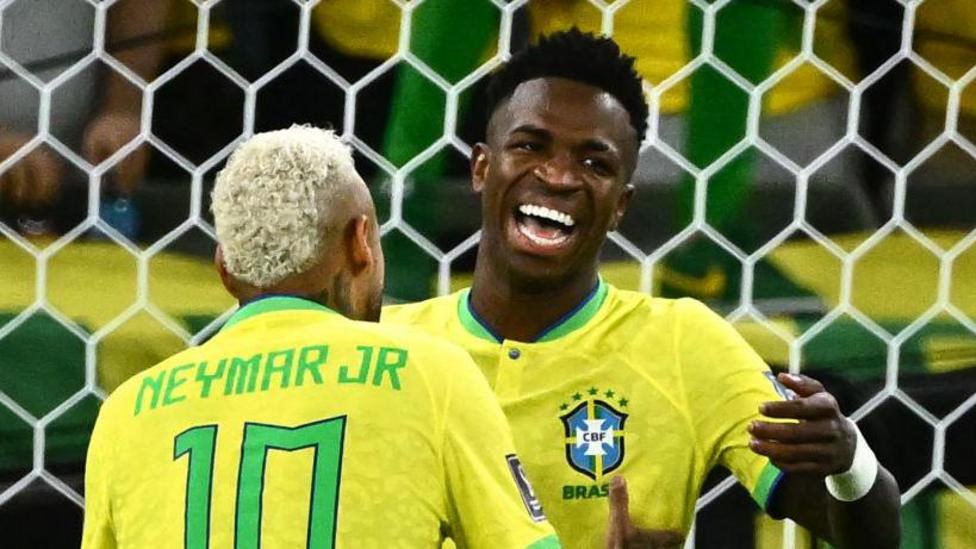
Vinicius, by contrast, followed the modern trend of leaving for Europe before fully establishing himself as an undisputed starter at Flamengo. This early departure created a sense of distance between the player and the domestic fanbase. While Neymar has unforgettable moments etched into the national consciousness as the all-time leading scorer for the Selecao, Vinicius is still searching for that singular, tournament-defining performance. The paradox remains that one superstar is past his physical peak but remains beloved, while the other is at the height of his powers but is still waiting for the same level of warmth from the terraces.
Commercial Supremacy vs Emotional Enigma
Off the pitch, the 25-year-old is already a global titan. He currently holds 14 major commercial deals, more than any other Brazilian player, reflecting his status as a marketable icon for the next generation. Yet, there is a perceived anxiety in his performances for the national team, a desire to be the protagonist that sometimes leads to forced play or frustration. An anonymous former international manager noted that this psychological weight can be heavy for a player who is used to being the focal point of every attack at the club level.
Vinicius himself is aware of the pressure and the difference in how he is judged. He recently noted that at a club, a bad performance is quickly forgotten because another game arrives three days later. In the national team, a single quiet match can become the subject of months of debate. He understands that the narrative will only truly shift if he delivers a trophy. If he leads Brazil to a sixth world title in 2026, the questions about his form and his place in the hierarchy will vanish instantly, replaced by the same adulation once reserved for his predecessors.
A Tactical Maturity and the Number 10 Burden
In the lead-up to the tournament, the Brazilian Football Confederation has made concerted efforts to elevate Vinicius to a leadership role. When Rodrygo was sidelined by injury, Vinicius was handed the iconic number 10 shirt and placed front and center in media duties. This was a clear signal that the federation viewed him as the cornerstone of the future. However, Neymar's recent return to the fold saw the famous jersey return to its long-term owner, a move that further complicates the hierarchy within the dressing room.
Despite these shifts, Vinicius continues to evolve his game. He has matured significantly under the guidance of Ancelotti, improving his finishing and his ability to combine with teammates in tight spaces. The current coaching staff believes that the ongoing rebuilding process, which began after the 2022 quarter-final exit, is finally reaching a point where the collective can support his individual brilliance. For the player, the goal remains clear: to prove that his ceiling is high enough to carry the weight of a nation expectations. The upcoming tournament in North America represents the perfect stage for him to finally marry his Madrid brilliance with his Brazilian ambitions. more football news on MATCHLINE