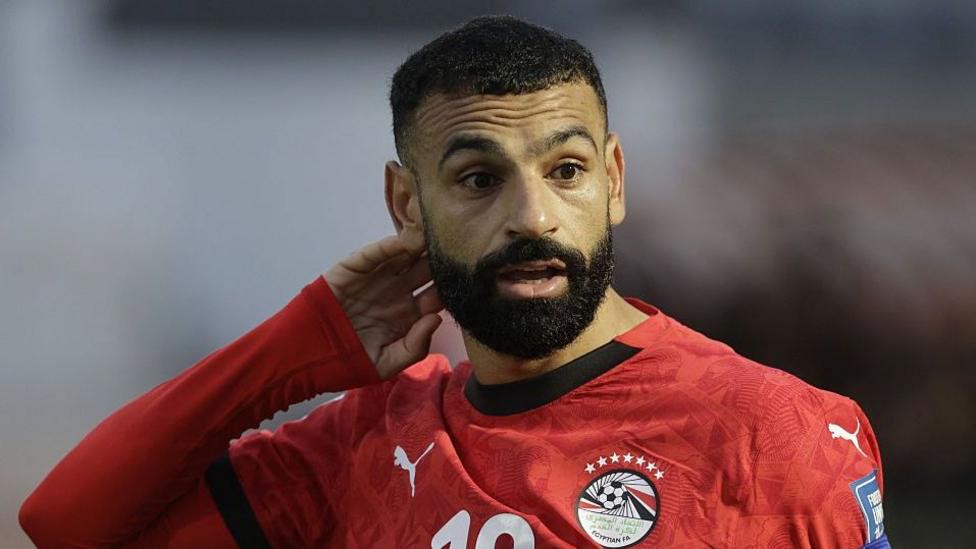
Egypt legend Mohamed Salah will miss the Africa Cup of Nations qualifier against South Sudan as the national team moves to protect him from injury risk.
Mohamed Salah has conquered almost every blade of grass in European football, but the plastic blades of Juba’s artificial turf are a frontier he will not be crossing this week. The Egypt captain has been officially left out of the squad for the forthcoming Africa Cup of Nations qualifier against South Sudan, a decision made collectively by the technical staff to prioritize the long-term fitness of their most decorated star. While technological advancements have narrowed the gap between natural and synthetic surfaces, the perceived risk of injury remains a primary concern for high-profile veterans in the twilight of their careers.
The Turf Dilemma in Juba
The decision to rest Salah was not a sudden reaction to a weekend injury but rather a calculated strategy established before the international break even began. The Egyptian Football Association confirmed that an agreement was reached between the player and coach Hossam Hassan prior to their opening fixture against Angola. The surface at the stadium in Juba, the capital of South Sudan, is a modern artificial turf, yet it represents a physical challenge that many elite players, particularly those with a history of high-intensity minutes, prefer to avoid. For a player like Salah, whose game is built on explosive pace and sharp changes of direction, the different traction and impact profile of synthetic grass present a variable his medical team is unwilling to gamble on.
While studies often suggest that there is no statistically significant increase in injury rates on modern artificial surfaces compared to natural grass, the perception among players remains steadfastly cautious. The way the foot interacts with the surface is fundamentally different; the heat retention of the rubber crumb and the consistency of the bounce can alter a player's natural mechanics. For Egypt, the risk of losing their talisman to a non-contact injury in a qualification match is far higher than the reward of his presence on the pitch for ninety minutes, especially given their current standing in the group.
Preserving a Continental Icon
Hossam Hassan, the legendary former striker turned coach, is well aware of the value Salah brings to the Pharaohs' locker room even when he isn't playing. By substituting Salah after an hour in the recent goalless draw with Angola in Cairo, Hassan demonstrated a clear plan to manage the 34-year-old’s workload. Salah’s departure from the Premier League last summer marked a significant shift in his career, moving away from the relentless 50-game seasons of English football to a new chapter in Turkey. The national team is now adapting its approach to ensure that they can extract the maximum value from him in major tournaments rather than burning him out in every qualifying window.
Protecting Salah is as much about psychological management as it is physical. Allowing him to return to his club early or skip difficult away trips on taxing surfaces builds a level of trust between the player and the national setup. At this stage of his career, Salah knows his body better than anyone, and Hassan’s willingness to listen to those concerns suggests a modern, collaborative approach to management that hasn't always been present in the Egyptian national team history. The goal is simple: ensure Salah is available and sharp for the 2025 Africa Cup of Nations and the subsequent World Cup qualifying campaign.
Life After Anfield: The Trabzonspor Chapter
Since leaving Liverpool after a trophy-laden nine-year spell, Salah has shown no signs of slowing down in the Turkish Super Lig. His move to Trabzonspor was viewed by some as a step toward a less demanding environment, but his output suggests he is still operating at a world-class level. With seven goals and two assists in his first six domestic appearances this season, he has quickly become the focal point of the Turkish club’s attack. This prolific form is exactly why both club and country are being so protective of his physical state.
The transition from the Premier League to Turkey has allowed Salah to maintain his high scoring standards while slightly reducing the physical toll on his body. However, the international break remains a period of high intensity. The travel across Africa, the varying quality of pitches, and the heat all add up. By skipping the South Sudan fixture, Salah gets a valuable window of recovery before returning to domestic duties, where Trabzonspor will be relying on him to maintain their push for the top of the table. His success in Turkey proves that while the venue has changed, the underlying quality remains undisputed.
Tactical Shifts and the Angola Stalemate
Egypt’s recent performance against Angola provided a glimpse into life without a fully firing Salah. The goalless draw in Cairo was a frustrating affair where the Pharaohs struggled to break down a disciplined defensive block. Salah’s substitution after 60 minutes was a tactical gamble by Hassan, who was already looking ahead to the logistical challenges of the South Sudan trip. The lack of a breakthrough in that match highlighted just how much the team relies on Salah’s individual brilliance to create openings in tight matches.
Without him in Juba, other members of the squad will need to step into the leadership vacuum. This provides an opportunity for younger attackers to prove they can carry the creative burden for the most successful nation in AFCON history. Hassan will likely look to implement a more collective pressing style, moving away from the Salah-centric counter-attacks that have defined the team for nearly a decade. It is a necessary evolution for a team that must eventually prepare for a future where their greatest-ever player is no longer the first name on the teamsheet.
Science vs Perception on the Pitch
The debate over artificial turf continues to divide the medical community in football. While the EFA cited the surface as the primary reason for Salah’s absence, the scientific consensus is often more nuanced. Some researchers argue that modern '4G' pitches are actually more consistent than poor-quality natural grass, which can be uneven and dangerous in its own right. However, for a player who has spent his entire professional life on the pristine, hybrid-grass carpets of the Premier League, any deviation from that standard is viewed with suspicion.
Ultimately, the decision isn't based on a peer-reviewed study but on the specific needs of a 34-year-old elite athlete. The Egyptian medical staff is prioritizing the 'mechanical load' on Salah’s joints. Artificial surfaces provide less 'give' than natural soil, meaning the shock of every sprint and jump is absorbed more directly by the player’s knees and ankles. For a player with over 700 professional appearances, those marginal differences in impact can be the difference between a clean bill of health and a month on the treatment table. Egypt has decided that for this week, the risk simply isn't worth the reward. more football news on MATCHLINE