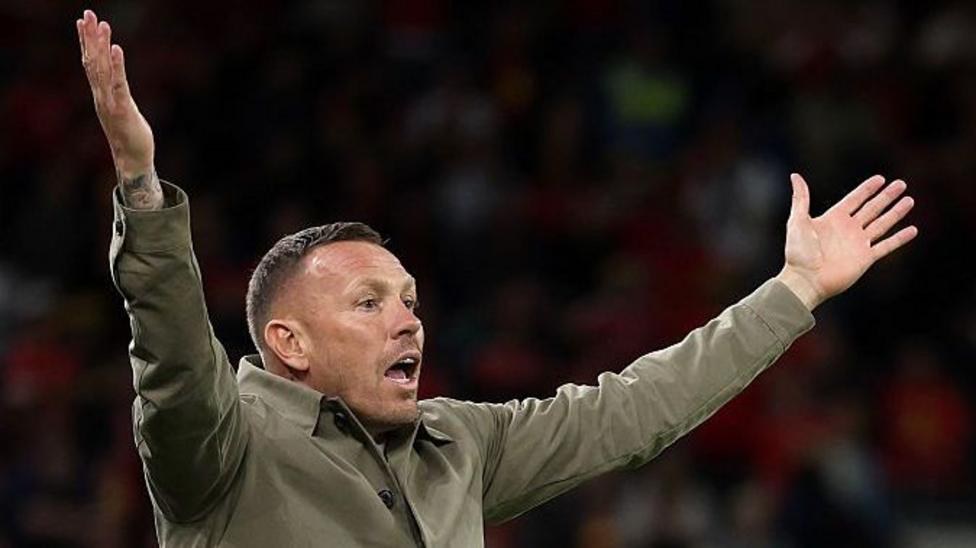
Craig Bellamy criticizes the grueling four-match international window as an exhausted Wales side suffers a narrow 1-0 defeat to Denmark in the Nations League.
Craig Bellamy did not mince his words in the wake of Wales’ 1-0 defeat to Denmark, a result that felt like the inevitable breaking point for an overstretched squad. The former striker, now leading the national side, was scathing in his assessment of the newly implemented four-match international window. After watching his side struggle for energy in the second half at the Cardiff City Stadium, Bellamy suggested that the schedule is fundamentally designed to favor the elite nations while punishing those with thinner squads.
The match was decided by a 75th-minute penalty from Rasmus Hojlund, a moment that encapsulated the physical fatigue creeping into the Welsh ranks. It was Wales’ third defeat in a ten-day period that has seen them crisscross the continent, and the physical toll was visible in every heavy touch and mistimed tackle. Bellamy’s frustration stems from a belief that the athleticism required to maintain intensity over four high-stakes games in such a short window is simply beyond a nation currently missing its core stars to injury.
A Schedule Built for the Elites
Traditionally, the international breaks in the autumn featured two games per window. The recent merger of these breaks into a four-game marathon has been met with significant resistance from several managers, but Bellamy was one of the few to speak out with such bluntness. He noted that he was in the room when the vote for this new schedule took place and was among the minority who opposed it, knowing full well the disadvantage it would place on countries like Wales who cannot rely on a deep pool of "like for like" replacements.
The manager’s argument is rooted in the disparity of resources. While the "elite" nations can rotate world-class talent and maintain a high level of physical output across four games, Wales must rely on the same core group of players to go to the well again and again. When that core is decimated by injuries—as was the case in this camp with the absence of Joe Rodon, Harry Wilson, and Karl Darlow—the stress on the remaining players becomes unsustainable. Bellamy pointed to the fatigue of senior figures like Ben Davies as evidence of a system that is pushing players to the brink.
The lack of depth meant that even players who were clearly struggling with knocks had to be risked. Dan James was confined to the bench because he was not fit enough to contribute the high-intensity running that is his trademark, while David Brooks had already been forced to withdraw following the opening game against Portugal. For Bellamy, this isn't just a matter of results; it’s a matter of player welfare and the integrity of the competition for mid-tier nations who are being squeezed out by the demands of the calendar.
Ward’s Heroics Undone by a Moment of Fatigue
If there was a silver lining for Wales, it was the performance of Danny Ward for much of the evening. The goalkeeper produced a series of top-tier saves to deny Hojlund and Gustav Isaksen, keeping a dominant Danish side at bay when the Welsh defense was breached. Bellamy was quick to defend his keeper, despite Ward being the one to concede the decisive penalty following an uncharacteristic error and subsequent foul. The manager argued that the game had not turned on that single mistake, but rather on the relentless pressure Denmark was able to apply as Wales' energy levels dipped.
The Danes, possessing a more robust squad and a greater ability to rotate their personnel, were able to "crank it up" in the final twenty minutes. Their runs remained menacing and their physicality stayed consistent, while Wales found it increasingly difficult to shorten the distance between the lines. Bellamy admitted that his side simply couldn't work the ball well enough or find the energy to have a meaningful say in the closing stages, a direct consequence of the workload they had carried since the start of the window.

The Battle for Group A4 Survival
Despite the bitter taste of defeat, the night was not a total disaster for Wales’ standing in the Nations League. Due to Norway’s 2-1 loss in Portugal, Wales managed to climb to third in Group A4 based on their head-to-head record against the Norwegians. It provides a slim margin of comfort in what has been a difficult campaign, but the road ahead remains steep. The group remains highly competitive, and Wales know they will need to find a way to pick up points in their final fixtures to avoid the threat of relegation.
The focus now shifts to the final two games of the campaign next month. Wales will travel to Oslo to face Norway in what promises to be a high-stakes encounter, before returning home to host Portugal. Bellamy is hopeful that the return of key players like Harry Wilson and Joe Rodon will provide the necessary reinforcements to compete at the required intensity. However, the shadow of the four-game window looms large, and the manager will be wary of the physical state his players return in after another month of domestic action.
For Bellamy, the debut year in the dugout is proving to be a masterclass in crisis management. He has had to balance the introduction of a more aggressive, front-foot tactical style with the reality of an injury-depleted squad and an unforgiving schedule. As he looks toward the November window, his primary concern will be recovery. He has seen what his team can do when they have the energy to press; his task now is to ensure they aren't running on empty when it matters most. more football news on MATCHLINE