Egypt’s historic World Cup run ends in fury as manager Hossam Hassan accuses FIFA of favouritism following a dramatic late collapse against Argentina.
Atlanta Stadium was supposed to be the site of Egypt’s greatest sporting triumph. For 78 minutes, the Pharaohs held the world in their hands, leading the reigning champions Argentina 2-0 and standing on the precipice of their first-ever quarter-final. Then, the floor fell away. In a frantic, controversial 14-minute window, the narrative of Egypt’s tournament shifted from a fairytale to a polemic. When the final whistle blew on a 3-2 defeat, the disbelief on the faces of the Egyptian players was quickly replaced by a visceral sense of betrayal. It was a match that had everything: a penalty save, a disallowed goal, and a comeback that defied the statistics.
A Tale of Two Disallowed Moments
The crux of the Egyptian anger centres on a pivotal sequence when the score was 1-0. Mostafa Zico thought he had doubled the lead with a clinical finish that would have likely ended the contest. However, the video assistant referee intervened, pointing to an infringement 17 seconds prior. Marwan Attia was adjudged to have stepped on the toe of Lisandro Martinez at the very start of the attacking phase. It was a decision that many observers felt contravened the spirit of the tournament’s officiating, which had aimed to allow more natural physical contact to maintain match tempo.
Hossam Hassan’s side felt the inconsistency acutely. While their second goal was chalked off for a marginal touch, they were later denied what appeared to be a stone-wall penalty when Mohamed Salah was tripped in the box by Julian Alvarez. The fact that the VAR did not even suggest a review for the Salah incident while scrutinising every blade of grass in the Zico build-up left the Egyptian camp convinced of a double standard. The frustration boiled over on the touchline, resulting in a red card for a member of the Pharaohs' coaching staff and a booking for Hassan himself.
Explosive Claims of Favouritism
In the aftermath, Hossam Hassan did not mince his words, launching a scathing attack on the officiating and the wider tournament organisers. He spoke of an inherent lack of credibility and a perceived need from the governing body to keep the tournament's biggest stars in the competition. Hassan’s comments were not merely the grumblings of a defeated manager; they were a direct challenge to the integrity of the results, suggesting that the reigning champions received support at every level to ensure their progression.
The Egypt boss pointed to the immense pressure from the Argentine camp and the global desire to see Lionel Messi continue his pursuit of a second title. He questioned why fairness was absent from the sport, highlighting a specific incident where Alexis Mac Allister appeared to pull a shirt without any intervention. For Hassan, this was not a tactical failure by his team but a systemic injustice that prevented a smaller footballing nation from disrupting the established order. The rhetoric has sent shockwaves through the tournament, prompting a quiet but firm approach to FIFA for an official response.
The Final Chapter for a Legend?
While the controversy rages, the individual fate of Mohamed Salah hangs in the balance. The Liverpool icon departs North America with just one goal to his name, scored in the group stage win over New Zealand. Against Argentina, Salah was largely nullified, failing to register a single shot on target or a key pass. At 34, and with the 2030 World Cup four years away, there are growing questions about whether this was the final time the world will see Salah on the global stage. He will be 38 by the time the next tournament arrives in Morocco, Portugal, and Spain.
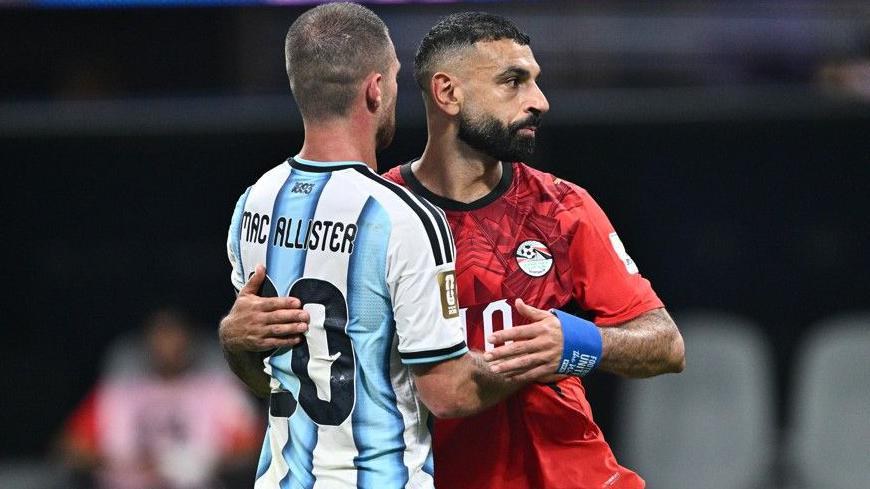
Salah’s exit mirrors those of other veterans like Cristiano Ronaldo and Luka Modric, though his departure feels more abrupt given the circumstances of the defeat. The image of him embracing former teammate Alexis Mac Allister at full-time was a rare moment of grace in an otherwise toxic atmosphere. Whether Salah has the appetite for another four-year cycle remains to be seen, but his influence on this Egyptian side is irreplaceable. Without him, the Pharaohs would likely not have reached these heights, yet the burden of carrying a nation’s expectations appeared to weigh heavily in the Atlanta heat.
Africa’s Last Standing Hope
Egypt’s departure leaves Morocco as the sole representative of the African continent. The Atlas Lions, who made history in 2022, now carry the hopes of an entire region as they prepare to face France in their own quarter-final. The exit of the other nine African teams highlights the difficulty of the expanded 48-team format, where the margin for error is non-existent. For Egypt, the pride of their performance is currently eclipsed by the pain of the result, but their campaign has proven they can compete with the world's elite on tactical terms.
The streets of Cairo and Alexandria remained quiet on Tuesday night, a stark contrast to the elation that followed their first-ever World Cup win earlier in the month. There is a sense of pride among the diaspora, particularly in the United States, who saw their team go toe-to-toe with the holders. The motto 'Mekameleen' — we will keep going — remains the rallying cry for a nation that feels it has finally found its place at the top table, even if the door was slammed shut in controversial fashion this time around.
Officiating Thresholds and Collina’s Directives
The statistical analysis of the game suggests a tightening of refereeing standards during the knockout phase. Throughout the tournament, fouls per game have dropped to an average of 22.6, significantly lower than the 2022 edition. Pierluigi Collina’s instruction to allow normal football contact was intended to improve the spectacle, yet the Zico decision seemed to ignore this directive. By going back 17 seconds to find a foul, the VAR may have set a dangerous precedent that contradicts the push for a higher-tempo game.
The debate will continue long after the teams have left Atlanta. When compared to other incidents in the tournament, such as Aleksandar Pavlovic’s high boot against Ecuador which went unpunished, the Egyptian camp has a legitimate grievance regarding consistency. The threshold for a VAR intervention remains the most contested aspect of the modern game. For Egypt, that threshold was the difference between a historic semi-final and a plane ride home. As the tournament moves into the final eight, the pressure on officials to maintain a level playing field has never been higher. more football news on MATCHLINE