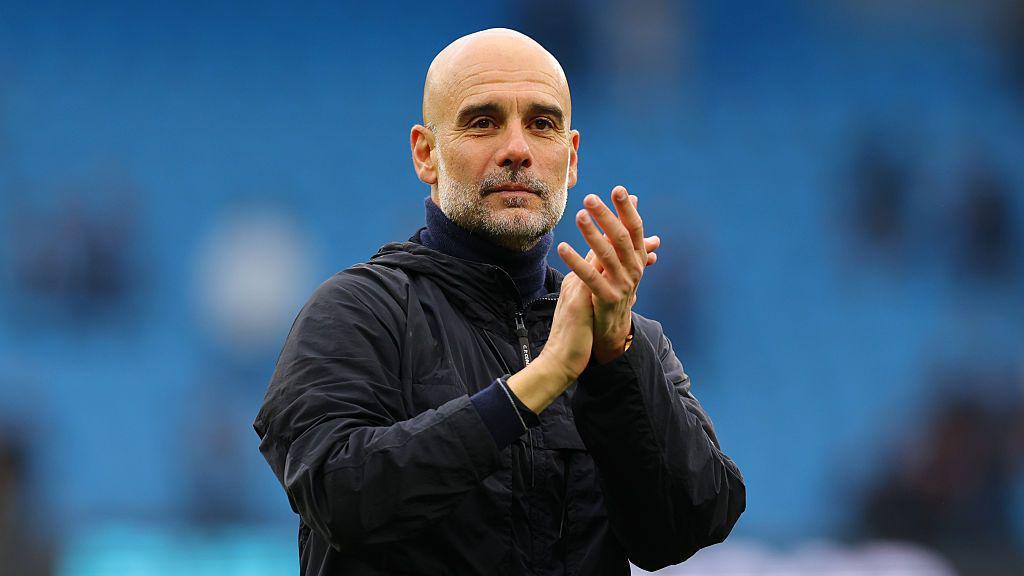
The Italian Football Federation has held discussions with Pep Guardiola, with President Giovanni Malago prepared to break financial norms to land the former City boss.
A seismic shift in international football might be brewing in Rome. The Italian Football Federation (FIGC) has officially confirmed that talks have taken place with Pep Guardiola regarding the vacant head coach position for the national team. Following his departure from Manchester City after a decade of unprecedented success, the Spaniard has emerged as the primary target to revive the fortunes of the Azzurri. FIGC President Giovanni Malago has hinted that the federation is willing to explore unprecedented financial arrangements to secure a manager widely regarded as the greatest of his generation.
The pursuit of Guardiola comes at a low point for Italian football. The national team has been drifting without a permanent leader since Gennaro Gattuso’s resignation in April, a move triggered by the country's failure to qualify for a third consecutive World Cup. For a nation that views football as a birthright and tactical superiority as a national identity, the current vacuum is intolerable. Guardiola, who spent time playing in Serie A with Brescia and Roma, represents more than just a coaching hire; he represents a cultural restoration of the Italian game's prestige.
Financial Exceptions and the Salary Hurdle
The primary obstacle to any deal involving Guardiola is predictably financial. During his time at Manchester City, the Spaniard was among the highest-paid individuals in world sport, commanding a salary that dwarfs the traditional budgets of national associations. However, Giovanni Malago has made it clear that the FIGC is prepared to be creative. In a candid interview, the president acknowledged that "exceptions" could be made for a name as significant as Guardiola’s, suggesting that the federation might look beyond its standard wage structure to accommodate the 55-year-old.
While Malago cautioned that the deal is far from certain, the fact that such discussions are even taking place indicates a massive shift in ambition. National team roles are often seen as the preserve of veteran managers or those seeking a slower pace of life, but Italy is pitching this as a legacy-defining project. The "exceptions" mentioned likely involve third-party sponsorships or complex commercial tie-ins that would bridge the gap between a standard international salary and the market rate for a manager who has won six Premier League titles and multiple Champions League trophies.
Guardiola himself has admitted to being exhausted after his ten-year stint in England. He spoke emotionally in May about the "luggage of memories" he carries from Manchester, Barcelona, and Munich, but he also stressed the sheer mental toll of the job. For Italy, the challenge is to convince him that the international schedule—with its concentrated bursts of activity followed by periods of tactical reflection—is the perfect antidote to the 60-game-a-season grind of club football. The Azzurri need his genius; Guardiola might just need their pace of life.
The Italian Connection: A Return to Roots
Guardiola is no stranger to the Italian peninsula. Long before he was the world’s most sought-after coach, he was a midfield metronome for Brescia, where he shared a pitch with the legendary Roberto Baggio. He also had a brief, albeit less successful, spell at Roma. These years were foundational for him; he learned the language, which he still speaks fluently, and immersed himself in the tactical intricacies of Calcio. This cultural affinity is a weapon the FIGC is using heavily in their recruitment drive.
Unlike many foreign managers who struggle with the idiosyncratic nature of the Italian media and the pressure of the federal hierarchy, Guardiola understands the landscape. He has often spoken with affection for his time in Italy, citing it as a period that broadened his footballing horizons beyond the Cruyffian ideals of Barcelona. Returning as the savior of the national team would bring his career full circle, allowing him to apply his evolved philosophy to the country that hosted him during his final years as a player.
Historically, the Italian national team has been an almost exclusively domestic enclave. Only a handful of non-Italians have ever held the reins, most notably Lajos Czeizler in the 1950s and Helenio Herrera in the 1960s. Appointing Guardiola would break a tradition spanning over half a century. Yet, such is the depth of the current crisis that the usual protectionism has been replaced by a desperate need for modernization. The FIGC believes that Guardiola is the only figure capable of overhauling the entire technical structure of Italian football.
Tactical Voids and the Azzurri Identity
Italy’s failure to reach the world stage in recent years is not just a failure of results, but a failure of identity. After the high of winning Euro 2020 under Roberto Mancini, the team’s tactical evolution stalled. The subsequent short-lived tenure of Gattuso failed to provide the necessary spark, leaving a squad that often looks caught between its defensive heritage and a desire to play modern, expansive football. Guardiola’s arrival would provide an immediate, world-class blueprint for a new era.
The current Italian talent pool, while perhaps lacking the superstar forwards of previous generations, is rich in technical midfielders and ball-playing defenders—the exact archetypes Guardiola thrives on. Players like Nicolo Barella and Alessandro Bastoni seem tailor-made for a system that prioritizes positional fluidity and high-tempo possession. The prospect of Guardiola working with the next generation of Italian talent is a tantalizing one for supporters who have grown weary of the pragmatic, often turgid performances of the last two years.
Alternative Paths: Mancini and Pirlo
While Guardiola is the dream candidate, the FIGC is maintaining a shortlist of realistic alternatives. Roberto Mancini, the man who delivered the European Championship title five years ago, is being considered for a sensational return. Mancini’s knowledge of the setup and his previous success make him a safe, if perhaps uninspiring, choice for those looking for stability. However, his departure for the Saudi national team and subsequent availability have complicated his standing with some sections of the Italian public.
Andrea Pirlo is another name frequently mentioned in the corridors of the FIGC. Currently managing Dubai United, the former midfield maestro represents the "Italian Guardiola" in terms of playing philosophy, though his managerial CV lacks the heavyweight trophies of his contemporaries. Pirlo’s status as a national icon provides him with significant leverage, and many see him as a natural fit for the international stage where tactical elegance is often rewarded. Malago has confirmed that both Mancini and Pirlo fall into the category of profiles the federation is looking at.
The decision ultimately rests on whether the FIGC can turn their financial "exceptions" into a concrete reality. If they can convince Guardiola to forego a sabbatical in favor of a Mediterranean mission, it would be the most significant managerial appointment in the history of the Italian national team. For now, the talks remain ongoing, and the football world waits to see if the man who redefined the Premier League is ready to do the same for the Azzurri. more football news on MATCHLINE