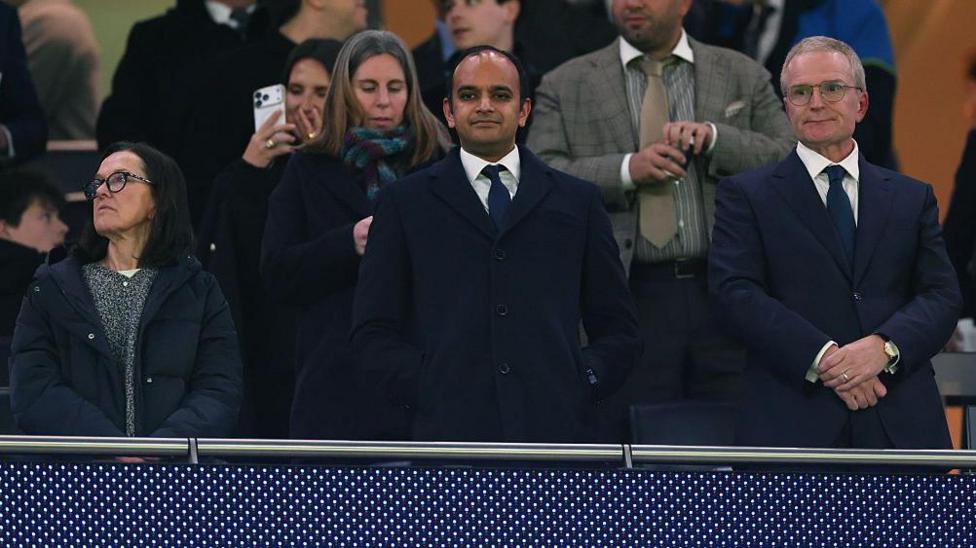
Spurs chairman Peter Charrington issues a stark admission that sporting success took a backseat at the club as a radical rebuilding phase begins.
The relief that swept through the Tottenham Hotspur Stadium on the final day of the season was not the celebration of a trophy or a European qualification, but the grim, exhausted exhale of a giant that had narrowly avoided the unthinkable. A solitary goal against Everton secured a 1-0 win and 17th place, sparing Spurs their first relegation since 1977. Yet, the fallout from this brush with the abyss has triggered something far more significant than a mere change in manager. In a remarkably candid open letter to the club’s global fanbase, non-executive chairman Peter Charrington has pulled back the curtain on a culture that he admits fundamentally failed to prioritise winning on the pitch.
The End of the Levy Era and a Seismic Reset
For nearly a quarter of a century, Daniel Levy was the face of Tottenham Hotspur, a figure synonymous with the club's transformation into a commercial powerhouse with a world-class infrastructure. However, the disconnect between the gleaming billion-pound stadium and the tattered remains of the first-team squad became impossible to ignore as the club spiralled toward the bottom three. Charrington’s admission that "something seismic had to change" confirms what many supporters had long suspected: the boardroom was no longer speaking the same language as the dressing room. The decision for Levy to step down as executive chairman was not just a change in personnel, but a symbolic decapitation of a regime that had allowed the sporting side of the business to atrophy.
This reset was not a spontaneous decision but a reactive one, forced by the looming threat of the Championship. Charrington noted that the Lewis family, who maintain their majority stake, had to intervene directly last September to authorise a complete overhaul. There is a sense of regret in the chairman’s words, an acknowledgment that the intervention arrived later than it should have, allowing a period of drift that saw two previous managers, Thomas Frank and Igor Tudor, fail to arrest the slide before Roberto de Zerbi was drafted in for a late-season rescue mission. The internal discovery of "uncomfortable truths" suggests a club that had lost its identity, trading its historic DNA for balance-sheet stability.
Missing Expertise and the Failure of Recruitment
Perhaps the most damning indictment in Charrington’s statement was the confession that Tottenham lacked the necessary expertise in key footballing roles. In the hyper-competitive landscape of the modern Premier League, where data-driven recruitment and specialized performance departments are the baseline for success, Spurs found themselves lagging behind. The chairman admitted that the club had failed to build squads capable of competing at the highest level, a blunt assessment of a recruitment strategy that often felt disjointed and lacked a coherent tactical profile. This lack of direction led to a bloated squad with high wages and low output, a combination that nearly cost them their top-flight status.
The restructuring currently underway is designed to ensure that these failings are never repeated. A refreshed executive team and a new-look football operations department are being established to provide the support network that previous managers lacked. By admitting that "football success had not been driving our decisions," Charrington has effectively promised a return to a meritocratic system where every penny spent and every appointment made is filtered through the lens of on-field performance. The focus is shifting back to the performance and medical departments, areas where the club felt they had fallen below the standards required for the most demanding league in the world.
De Zerbi: The Architect of the New Tottenham
In the midst of the structural chaos, the appointment of Roberto de Zerbi appears to be the one decision the board got right. The Italian, who arrived on a five-year contract in March, has been hailed by players and officials alike as the man who saved the club from a historic catastrophe. Midfielders James Maddison and Conor Gallagher have been vocal in their praise, suggesting that the former Brighton and Sassuolo coach brought a level of clarity and tactical sophistication that was previously absent. Maddison’s assertion that "disaster could have struck" without De Zerbi’s intervention highlights how close the club came to the edge.
Charrington has backed De Zerbi to lead the rebuild, stating that the manager embodies the ambition and style of play that Tottenham should represent. By securing De Zerbi on a long-term deal, the club is attempting to provide a period of stability that has been lacking since the departure of Mauricio Pochettino. The task now is to provide the Italian with a squad that can actually execute his complex, high-possession system. This will require significant investment across multiple transfer windows, a commitment the chairman has publicly made as the club looks to climb back into the conversation for European places and silverware.
Ownership Certainty Amid Takeover Rumours
Despite the turmoil on the pitch, the club’s ownership remains a topic of intense speculation. The emergence of interest from a consortium led by Brooklyn Earick, an American tech entrepreneur, suggested that the Lewis family might be looking for an exit strategy. However, Charrington used his address to clarify that Tottenham Hotspur is not for sale. The rejection of the Earick bid last September was a signal of intent, with the current owners insisting they are fully committed to the long-term project of rebuilding the club’s sporting reputation.
This commitment extends beyond the men’s first team. Charrington outlined plans for significant investment into the academy and the women’s team, currently managed by Martin Ho. The goal is to create a holistic footballing institution where success is woven into every level of the club. By rejecting outside interest and doubling down on their investment, the Lewis family are effectively staking their reputation on this "reset." They understand that the commercial value of the club is inextricably linked to its success on the pitch, and that a second season of struggling against relegation would be catastrophic for the brand they have spent decades building.
Restoring the Bond with the Red Army
The most difficult task for the new regime will be repairing the fractured relationship with the supporters. For two seasons, the Spurs faithful have watched their team finish 17th, enduring a home record that was among the worst in the league this year. Charrington acknowledged that the loyalty of the fans was something the club had taken for granted and vowed to be "worthy" of that support moving forward. The open letter is a first step toward transparency, but the fans will judge the new chairman and his board by the actions taken in the coming months rather than the words written in May.
As the summer transfer window approaches, the pressure is on the new recruitment team to deliver. The objective is clear: Tottenham must return to being a club that competes with the best in the league every season. The road back to the top four is long and fraught with challenges, but by admitting their mistakes, the club has at least identified the starting line. The era of commercial priority over sporting merit is over, or so the board claims. Now, it is up to De Zerbi and his revamped squad to prove that this reset is more than just a public relations exercise. more football news on MATCHLINE