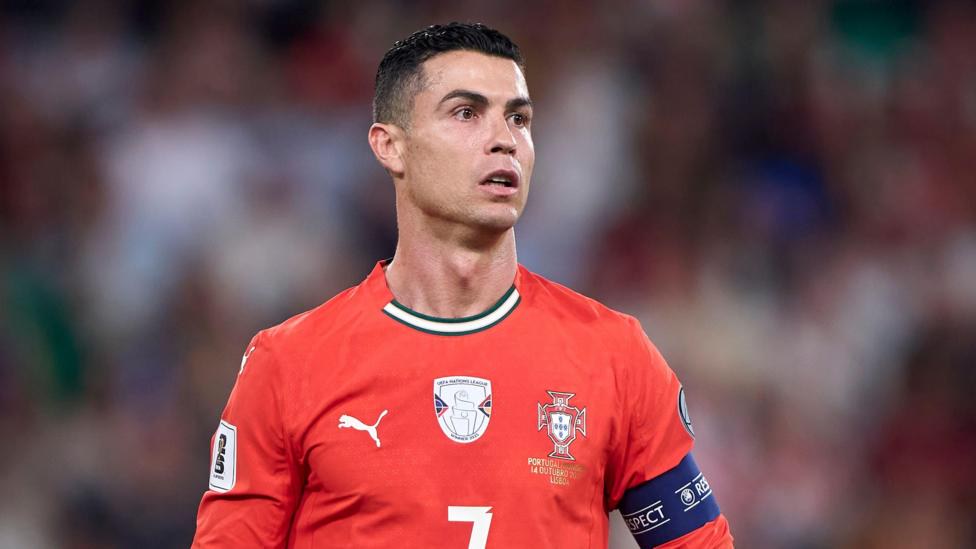
As Cristiano Ronaldo prepares for an unprecedented sixth World Cup at 41, Portugal is locked in a fierce debate over his starting role.
The grass was painted to hide its flaws. It was August 2003 in Chaves, a small town in northern Portugal, where a teenage boy with frost-tipped hair and frantic feet stepped onto a pitch against Kazakhstan. That night, 8,000 people witnessed the birth of an era that has spanned two decades and defined the modern identity of a nation. Today, as Cristiano Ronaldo prepares to board a plane for his sixth World Cup, that era faces its most scrutinising chapter yet. The boy from Madeira is now a 41-year-old statesman with 143 international goals, but for the first time, the question is being asked in hushed tones and loud broadcasts alike: is the legend holding the team back?
The Shadow of the Great Eusebio
For decades, Eusebio was the undisputed sun around which Portuguese football orbited. His nine goals in 1966 set a standard that felt immortal. Now, Ronaldo sits just one goal shy of that record, yet the comparison has become a source of friction among the old guard. Antonio Simoes, a titan of that 1966 squad, has recently voiced what many feared to say. He argues that while Eusebio played for the collective, Ronaldo increasingly plays to remain the central figure of the narrative. It is a harsh assessment for a man who has carried the national team’s expectations on his back since Euro 2004.
The tension lies in the shift from being a contributor to being the centerpiece. In Lisbon’s cafes and TV studios, the discourse has moved past reverence into tactical coldness. Critics argue that at 41, the physical demands of a high-pressing modern system do not mesh with a striker who, while still lethal, requires the team to be built entirely around his movements. The debate is no longer about his greatness—that is secure—but about his current utility in a squad brimming with young, fluid talent like Rafael Leao and Goncalo Ramos.
The Martinez Doctrine and the Numbers Game
Roberto Martinez, the man tasked with navigating this delicate transition, has little time for what he calls lift talk. To the Spaniard, the debate is noise that ignores the hard evidence of the scoresheet. Martinez frequently points to the statistic that Ronaldo has bagged 25 goals in his last 31 appearances for the Selecao. In the manager’s eyes, this is not a selection based on nostalgia or the five Ballon d’Ors gathering dust in a museum. It is a selection based on the clinical reality that Ronaldo still finds the net more consistently than almost any striker in the world.
Martinez has been firm in his public stance, insisting that Ronaldo is in the squad because he is performing at an elite level. Under his tenure, the captain has featured in nearly every match he was physically available for, suggesting that the hierarchy within the dressing room remains unchanged. The manager views Ronaldo’s presence not as a tactical burden, but as a psychological edge. He believes that the younger generation needs the gravity of a winner to keep them grounded during the high-pressure knockout rounds of a World Cup.
The Ghost of Qatar and the Bench Dilemma
The memory of the 2022 World Cup in Qatar looms large over this tournament. When Fernando Santos made the seismic decision to bench Ronaldo during the knockout stages, it triggered a national soap opera. The fallout was immediate, featuring social media broadsides from the player’s inner circle and a palpable tension that arguably contributed to Portugal’s exit and Santos’s subsequent departure. Martinez knows this history well. He understands that managing Ronaldo is not just a tactical exercise, but a political one that involves the Federation, the fans, and the player's own massive commercial footprint.
The debate intensified when Portugal recorded their most dominant victories of the current cycle in Ronaldo’s absence. A 9-0 demolition of Luxembourg and a 9-1 thrashing of Armenia served as fuel for those who believe the team plays with more freedom and unpredictability when they aren’t searching for their captain with every pass. Pundits like Sofia Oliveira argue that while Ronaldo’s goal count is high, the team’s overall ceiling might be higher without a fixed focal point. They point to the way the ball moves faster through the lines when the attack is fluid rather than structured around a single icon.
A Commercial Juggernaut and the FPF Future
Beyond the pitch, the lines between Ronaldo the player and Ronaldo the brand have blurred more than ever. The Portuguese Football Federation recently announced a partnership with AVA CR7, a physical recovery company owned by the forward. While the FPF was quick to clarify that Ronaldo was not involved in the negotiations and that no conflict of interest exists, the optics remain complex. It underscores the reality that Ronaldo is not just a captain; he is a primary revenue driver for Portuguese football, a brand that Pedro Proenca, the FPF president, admits overlaps with the federation itself.
Proenca has been clear that the federation is preparing for the natural end of this cycle without dramatising it. The financial stability of the FPF is secure, with record revenues projected regardless of when the captain hangs up his boots. However, the psychological transition will be much harder. For over 20 years, Portuguese children have grown up knowing only one leader. Replacing that level of global impact is a task that will take more than just a new tactical setup; it will require a complete reimagining of what it means to be a top-tier footballing nation without a superhero.
The Final Charge in North America
When Portugal kicks off their campaign against DR Congo on June 17, all eyes will be on the number seven. The speed might have dropped from 200km/h to 195km/h, as former teammate Ricardo suggests, but the predatory instinct remains. Former internationals like Abel Xavier believe that in the cauldron of a World Cup, experience is the only currency that matters. They argue that Ronaldo’s ability to understand the big moments is something that cannot be taught to the youngsters, no matter how much technical ability they possess.
Ronaldo himself has confirmed this will be his final act on the world stage. He arrives in North America not just to chase Eusebio’s record, but to claim the one trophy that has eluded him and Messi alike in their prime. Whether he starts every game or acts as a devastating weapon from the bench, his influence is the sun that Portugal still revolves around. The story that began on a shabby, painted pitch in Chaves is finally reaching its conclusion, and the world is waiting to see if the final chapter ends in the glory he has always believed was possible. more football news on MATCHLINE