From marking Gianluca Vialli to mentoring the next generation, Desmond Armstrong’s journey from 1990 to the 2026 World Cup defines American football.
When Desmond Armstrong sat before the global press in 1990, the United States was a footballing ghost. The Americans had not appeared at a World Cup since 1950, a forty-year exile that had rendered them an athletic curiosity rather than a competitive threat. But for Armstrong, a 25-year-old defender with a sharp mind and a relentless engine, the skepticism was not merely about the quality of the US squad. It was about his very presence as a black American in a sport that the domestic mainstream had yet to embrace. The opening question from the floor did not touch on tactics, fitness, or the miracle of qualification; instead, it cut straight to a crude stereotype: "Why aren't you playing basketball?"
For Armstrong, that moment was a distillation of the hurdles he had already cleared and the ones that remained. There was no congratulations for ending a four-decade drought, only an interrogation of his identity. He recalls now that the insinuation was clear: Americans should not be at the World Cup, and a black American certainly shouldn't be playing soccer. It was a sentiment born of ignorance, yet it fueled a fire that would see Armstrong produce one of the most disciplined defensive performances in the history of the national team just days later. The ripples of that tournament in Italy are still being felt as the United States prepares to host the world again in 2026.
The Miraculous Road to Rome
The journey to Italia '90 was forged in the wreckage of the North American Soccer League (NASL), which had collapsed in 1985. For Armstrong and his contemporaries, the professional pathway had vanished overnight. Without a top-flight outdoor league, the US Soccer Federation was forced into a radical, Eastern Bloc-style experiment, placing a core group of young players on full-time national team contracts. This makeshift squad, led by coach Bob Gansler, was a collection of college standouts and indoor soccer specialists who were tasked with the impossible. They had to fight for training pitches, play on artificial turf, and somehow find a way to compete with the giants of the global game.
The defining moment came on a humid Sunday in Port of Spain in November 1989. The United States needed a win against Trinidad and Tobago to qualify, a result few expected. While Armstrong watched from the sidelines due to an ankle injury, he felt every pulse of the match. When the final whistle blew on a -0 victory, the shockwaves were felt across the Atlantic. The United States had secured the final spot for the World Cup, a feat so unexpected that the Trinidadian government had already drafted plans for a national holiday in anticipation of their own qualification. For Armstrong, it was the validation of a career built on faith and the first step toward changing the American sporting narrative forever.
The Shadow of Gianluca Vialli
Entering the Stadio Olimpico in Rome for a group match against the hosts was the ultimate litmus test. Italy was the epicenter of world football, boasting a Serie A that featured the finest talent on the planet. The Azzurri lineup was a roll call of legends: Franco Baresi, Paolo Maldini, and Roberto Donadoni. Standing in the tunnel, Armstrong found himself staring down Gianluca Vialli, the lethal Juventus striker who was widely regarded as the most dangerous forward in the tournament. Armstrong’s assignment was simple but terrifying: he was to be Vialli’s shadow, a man-marking job that required absolute concentration for ninety minutes.
The match was expected to be a slaughter, a ritualistic humiliation of the American amateurs. Instead, Armstrong and his teammates produced a performance of immense grit. Though Giuseppe Giannini scored early for Italy, the floodgates never opened. Armstrong locked onto Vialli, making eye contact and signaling with his presence that no space would be given. He later performed the same task on Salvatore 'Toto' Schillaci. By the end of the night, the Italian press was in a state of indignation at their team's inability to break down the "plucky" Americans. For Armstrong, keeping the world's best strikers off the scoresheet was a turning point that proved American defenders belonged on the elite stage.
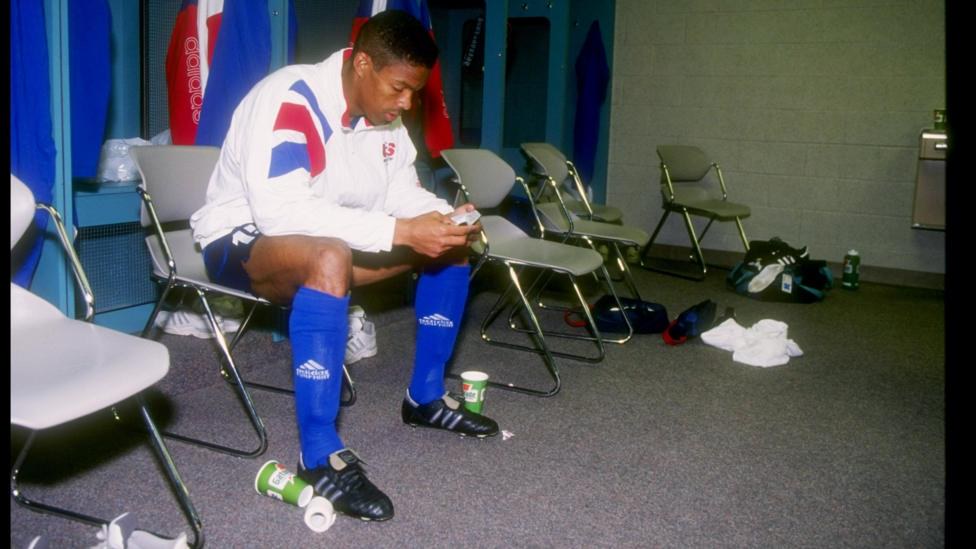
Breaking the Pay-to-Play Barrier
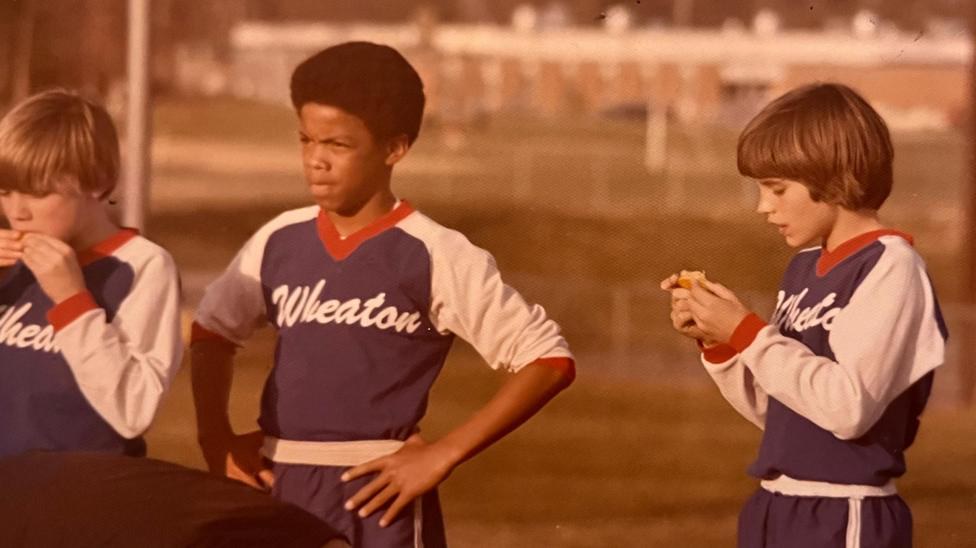
While Armstrong was making history on the pitch, he remained acutely aware of the socioeconomic factors that had allowed him to reach that summit. His story is one of narrow escapes and fortunate geography. Growing up in Maryland, a move to the suburbs placed him in a neighborhood where soccer was accessible. He remembers watching Pele on a television set, seeing a black man in a New York Cosmos jersey and finally finding a point of connection with a sport that often felt alien to his community. Had his family remained in the urban center of Washington DC, Armstrong is convinced he would never have picked up a soccer ball.
This highlight underscores a persistent flaw in the American system: the pay-to-play model. Unlike the meritocratic academies of Europe or the street-football cultures of South America, youth development in the US has long been a privilege of the affluent. The costs of club fees, travel, and equipment create a filter that often excludes the most talented players from less wealthy backgrounds. Armstrong has spent much of his post-playing career fighting this tide, recognizing that the game is at its best when it is the simplest and most accessible. His mission has been to ensure that the next generation of American talent isn't determined by a zip code or a bank balance.
The Brazilian Chapter and Pele's Legacy
The success of 1990 opened doors that had previously been bolted shut for American players. Armstrong became a pioneer once again when he signed a professional contract in Brazil, joining Santos, the legendary club of his idol, Pele. The transition was a whirlwind of cultural immersion. He arrived in Brazil without speaking a word of Portuguese, famously telling the gathered media at the airport that he would just have to "smile" to communicate. The charm worked, and he was embraced by a dressing room that included Pele’s own son, Edinho, who served as his interpreter.
His time in Brazil was a masterclass in the "method" of the game. Training at the same grounds where the greats had honed their skills, Armstrong absorbed the technical fluidity and joy that defines Brazilian football. It was a far cry from the grey skies and tea-drinking culture he had experienced during a brief stint at Luton Town in England. This international education informed his later career as a coach, giving him a global perspective on development that he would eventually bring back to the grassroots level in the United States. He remains the first American to have truly bridged the gap between the US and the heart of South American football.
A Mentor for the 2026 Generation
As the 2026 World Cup approaches, Armstrong's legacy is visible in the current national team squad, the most diverse and talented group in the country's history. He maintains a close bond with modern stars like Crystal Palace defender Chris Richards. In video calls that bridge the generational gap, Richards has expressed his gratitude to Armstrong for being the pioneer who cleared the path. Richards, an Alabama-born center-back, sees himself in the story of the 1990 squad, recognizing that the bravery of men like Armstrong and the late Jimmy Banks allowed black players to envision a future in the national team.
Armstrong’s work today is centered in the Antioch neighborhood of Nashville, a vibrant melting pot of immigrant communities. Here, he operates a grassroots club that bypasses the traditional barriers of US soccer. He drives children to games, funds kits from his own pocket, and provides a safe haven for families who feel marginalized by the current political climate. For Armstrong, the game is a common language that transcends borders and legal status. Whether he is talking tactics with Egyptian attendants at a petrol station or scouting talent in a Kurdish cafe, he is ensuring that the spirit of 1990 lives on in a more inclusive, more powerful American football landscape. more football news on MATCHLINE