
Xabi Alonso takes the reins at Stamford Bridge with a reputation for tactical innovation and a proven track record of transforming underperforming squads.
The appointment of Xabi Alonso as the new manager of Chelsea marks a significant shift in the BlueCo era, signaling a move toward a more sophisticated and tactically flexible approach. After a period of instability under Liam Rosenior, whose tenure was marred by a perceived lack of experience in handling a high-pressure environment, the London club has turned to a man who conquered Germany with Bayer Leverkusen and maintained the highest win percentage of any Real Madrid boss in a decade. Alonso arrives at Stamford Bridge not just as a head coach, but with the full authority of a manager tasked with rebuilding a fractured project from the ground up.
Alonso's success is built on a foundation of clear principles rather than rigid formations. At 44, he possesses a maturity that belies his relatively short coaching career, having already demonstrated an ability to adapt his philosophy to the specific strengths of his squad. His time at Leverkusen, where he took a team from the depths of the Bundesliga to an unbeaten title, has made him the most coveted tactical mind in Europe. At Chelsea, he inherits a squad brimming with young talent but lacking the structural cohesion necessary to compete for major honors. His first task will be instilling the same disciplined, possession-oriented identity that defined his success in the Rhineland.
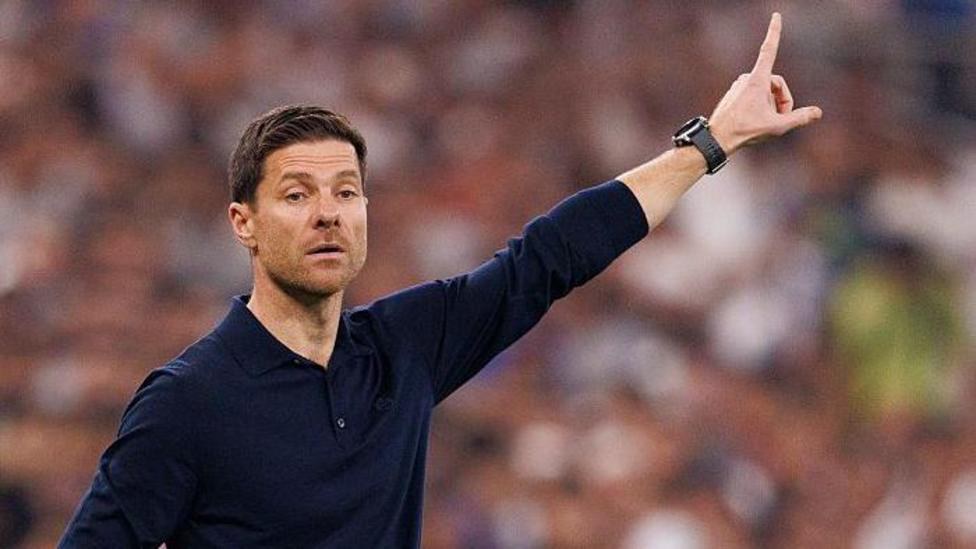
Adapting the Leverkusen Blueprint
Central to Alonso's tactical identity is the concept of fluid positioning. While many observers associate him with the 3-4-3 formation he utilized to devastating effect at Leverkusen, Alonso is far from a one-system coach. His history at Real Sociedad B showed a preference for 4-2-3-1 and 4-3-3, and his willingness to shift between these shapes based on the opposition is one of his greatest strengths. At Chelsea, this flexibility will be vital as he looks to integrate a diverse group of players into a cohesive unit. He views systems as living entities that must breathe and change according to the rhythm of the game.
In his Leverkusen side, the role of the wing-backs was paramount. Jeremie Frimpong and Alejandro Grimaldo were given the freedom to act as genuine attacking threats, often occupying positions high and wide to stretch the opponent's defensive line. Chelsea possesses players with similar profiles, such as Malo Gusto and Marc Cucurella, who have already shown a capability to drift into central areas under previous regimes. Alonso will likely look to replicate this dynamic, utilizing his wide defenders to create overloads in the final third while maintaining a solid base of three central defenders to guard against the counter-attack.
Out of possession, Alonso demands an aggressive press that begins with the front three. At Leverkusen, this often took the form of a 5-2-3 shape designed to squeeze the space in the middle of the pitch and force the opposition into hurried clearances. However, he also showed at Real Madrid that he can be pragmatic, occasionally dropping into a 4-4-2 block to accommodate star attackers who might lack the intensity for a full-game high press. Finding this balance at Chelsea, particularly with the arrival of several high-profile signings, will be one of his most delicate challenges.
The Hybrid Defensive Structure
One of the most intriguing aspects of Alonso’s management is his ability to transition between a back four and a back five mid-game. He doesn't see these as fixed choices but as responses to specific phases of play. When his teams are building from the back, they often resemble a three-man defense to ensure a numerical advantage against the opponent’s first line of pressure. As the ball moves higher up the pitch, one of the central defenders might step into midfield, or a full-back might tuck inside to create a compact central block that allows the creative players more freedom.
The current Chelsea squad is well-suited to this hybrid approach. Players like Levi Colwill and Axel Disasi have the technical proficiency to play as wide center-backs in a three or as traditional center-backs in a four. Meanwhile, the versatility of Marc Cucurella, who excelled as an inverted full-back toward the end of last season, aligns perfectly with Alonso’s desire for players who can thrive in multiple zones. This tactical fluidity is designed to make Chelsea unpredictable, forcing opponents to constantly adjust their defensive assignments as the Blues rotate through different shapes.
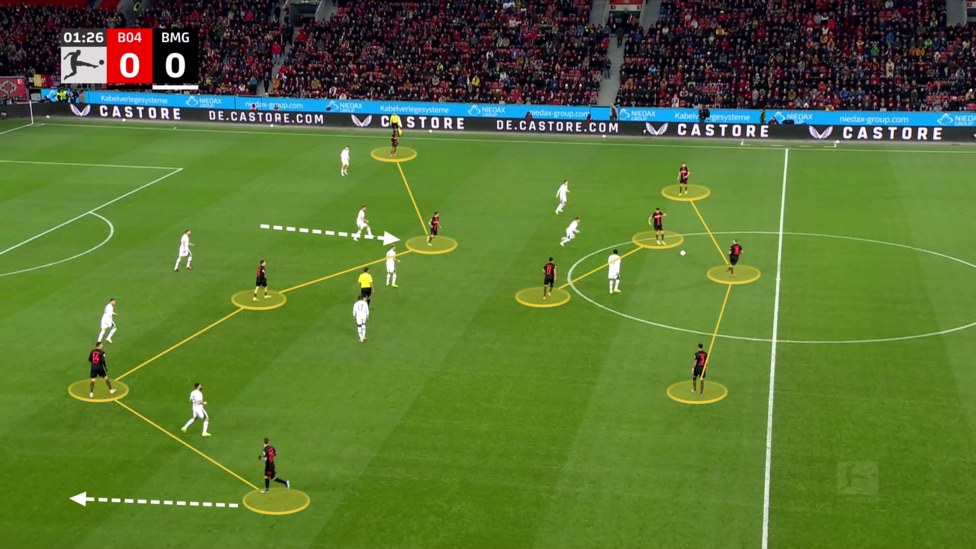
Crowding the Engine Room
Alonso’s offensive philosophy is rooted in what he calls 'small-space interactions.' He wants his teams to dominate the ball by playing numerous short passes in the opponent's half, effectively clustering around the ball to maintain control. This crowding of the center of the pitch is a deliberate tactic intended to pull the opposition's defensive block out of position. By positioning his midfielders and attackers close to one another, Alonso ensures that if possession is lost, his team is perfectly placed to immediately counter-press and win the ball back in high-value areas.
This approach requires technically gifted players who can operate under intense pressure. Chelsea’s recent recruitment has focused heavily on this profile, with the likes of Enzo Fernandez and Moises Caicedo expected to be the heartbeat of Alonso’s midfield. The goal is to create a suffocating environment for the opposition, where they are starved of the ball and constantly hounded when they manage to regain it. Alonso's sides are built to endure, keeping the ball for long periods to tire out the defense before exploiting the inevitable gaps that appear in a fatigued back line.
However, this style is not without its risks. High-intensity man-marking systems, such as those employed by Atalanta in the 2024 Europa League final, have previously caused Alonso’s teams problems. He has shown a willingness to adapt, sometimes opting to bypass the midfield and go long to a physical target man when the short-passing lanes are blocked. With Chelsea linked to more senior, Premier League-experienced strikers this summer, Alonso will have the tools to implement a 'Plan B' that was occasionally missing during his time in Germany.
Palmer and the Creative Freedom
While the structure is rigid in its principles, Alonso is known for granting his most talented players a degree of creative freedom. At Leverkusen, Florian Wirtz was the primary beneficiary of this approach, allowed to roam across the width of the pitch to find pockets of space between the lines. At Chelsea, Cole Palmer appears destined for a similar role. Palmer’s exceptional vision and ability to unlock deep-seated defenses make him the ideal candidate to be the focal point of Alonso’s attacking maneuvers.
The Spaniard understands that top-tier talent cannot be entirely constrained by tactical instructions. He provides the framework within which the players can express themselves. For Palmer, this could mean starting from a nominal wide position before drifting centrally to act as an auxiliary playmaker. The inclusion of young talents like Geovany Quenda, who is set to join from Sporting, will add another layer of dynamism to the attack. Alonso will likely use Quenda in a manner similar to Frimpong, using his explosive pace and dribbling ability to provide the width that allows Palmer and the other central attackers to thrive in the crowded interior spaces.
The challenge for Alonso will be ensuring that this freedom does not compromise the team’s defensive integrity. The balance between individual flair and collective discipline is what separates the great teams from the merely good ones. Alonso’s experience at Real Madrid, where he managed some of the biggest egos in world football, will serve him well as he attempts to mold Chelsea’s diverse group of attackers into a lethal and unified force.
The Long-Term Rebuild Project
Beyond the tactics, Alonso’s appointment as a 'manager' rather than a 'head coach' signifies a fundamental change in Chelsea’s internal structure. He will have a significant say in the club’s transfer strategy, working alongside the five sporting directors to reshape a squad that remains bloated in some areas and thin in others. This level of authority is a mark of the respect he commands and a recognition that the club needs a singular vision to guide its recruitment. The planned departures of several fringe players will create the financial and physical space for the two or three senior additions Alonso has requested.
Alonso is understood to be excited by the prospect of competing in the Premier League, viewing Stamford Bridge as the perfect stage to test his theories against the world’s best managers. While the project is undoubtedly a long-term one, the expectation at Chelsea is always for immediate progress. Alonso’s tactical acumen and leadership qualities make him the most qualified candidate to deliver that progress, provided he is given the time and the tools to implement his vision. As the new era begins, the blue half of London will be watching closely to see if the Spaniard can turn his tactical blueprints into silverware. more football news on MATCHLINE