Renee Slegers' side faces a summer of transition after early exits and a title race that slipped away during a congested and punishing campaign.
Stina Blackstenius poked home a 93rd-minute winner against Everton, but the celebration felt hollow. The strike, delivered in the dying embers of Arsenal’s penultimate Women's Super League fixture, provided three points that mattered little in the grand architecture of the season. For the Gunners, the 2025-26 campaign has been defined by a persistent sense of playing catch-up, a relentless pursuit of a Manchester City side that simply refused to blink. As City celebrated their first league crown since 2016, Arsenal were left to dissect a season where the biggest prizes remained frustratingly out of reach, continuing a title drought that stretches back to 2019.
The failure to secure the WSL title was compounded by disappointments elsewhere. While the club claimed the inaugural Champions Cup, they relinquished their grip on the Women's Champions League and saw their domestic cup runs halted prematurely. The quarter-finals of the FA Cup and the semi-finals of the League Cup proved to be the end of the road. Renee Slegers now faces a summer of profound reflection, tasked with diagnosing why a squad brimming with world-class talent could not sustain a challenge across the five competitions that ultimately stretched them to the breaking point.
The Autumn Malaise and Costly Early Points
Arsenal did not lose the title in May; they lost it in the damp, cooling months of autumn. A familiar and damaging trend resurfaced, where the team failed to find their rhythm in the opening stages of the league calendar. After an explosive start that saw them win their first two matches with a combined score of 9-2, the momentum evaporated. A return of just two points from the subsequent three fixtures, including a stinging 3-2 loss to Manchester City, set a tone of instability. Back-to-back draws against Chelsea and Tottenham in November further widened the chasm between Arsenal and the summit.
By the time the Christmas decorations were being packed away, the deficit stood at eight points after only 11 matches. In a league as clinical as the WSL, such a gap is rarely bridged. This early-season sluggishness is not a new phenomenon for the North London side. It has haunted their past three campaigns, forcing them into a desperate chase that leaves no margin for error. Former England forward Ellen White observed that this pattern of playing catch-up has become a recurring nightmare, preventing the team from dictating the narrative of the title race from a position of strength.
The statistical anomaly of Arsenal’s season is that they only suffered a single defeat. However, the accumulation of draws proved to be their undoing. While they were difficult to beat, they lacked the ruthless edge required to turn stalemates into victories during that critical September to November window. Priority number one for the next campaign must be a scorched-earth start to the season, ensuring they are the ones setting the pace rather than watching Manchester City's taillights disappear into the distance.
The Physical Toll of a Congested Calendar
Squad depth is often cited as a prerequisite for success, but Arsenal’s depth was tested beyond reasonable limits this year. In contrast to Manchester City, who benefitted from a lighter schedule after finishing fourth the previous season, Arsenal navigated a punishing itinerary of five different competitions. The expanded Champions League format and the introduction of the Champions Cup added significant mileage to a squad already battling the physical demands of top-flight football. On average, Arsenal players logged 481 more minutes than their counterparts at Manchester City.
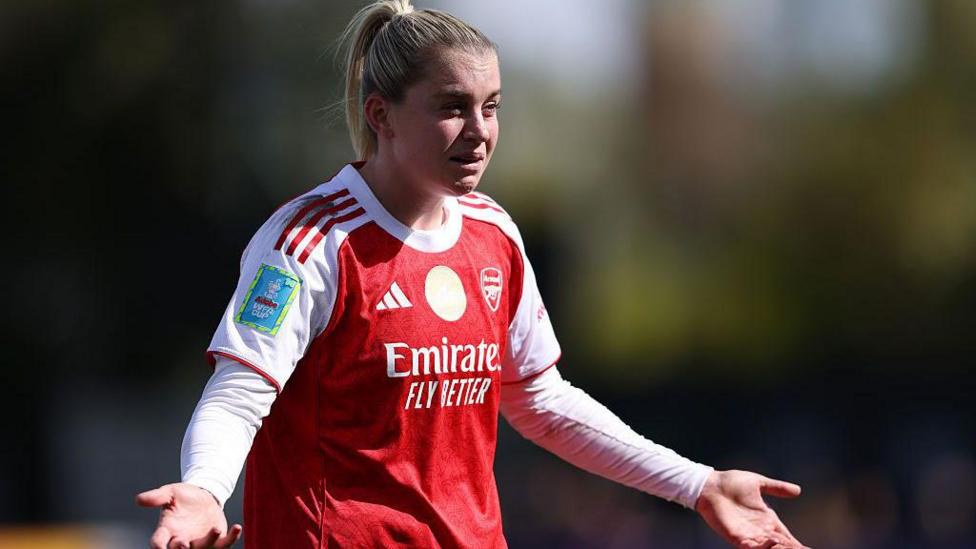
This disparity is most evident when examining individual workloads. Alessia Russo became the focal point of the Arsenal attack, racking up a staggering 3,150 minutes of competitive action. To put that into perspective, the league's top scorer, Khadija Shaw, played nearly eight and a half games fewer than Russo. That difference represents an enormous physical and mental burden. When the schedule condensed at the end of the season, with Arsenal playing six games in just 18 days, the fatigue became visible. The 1-1 draw at Brighton, coming just four days after a bruising European exit in Lyon, was the moment the tank finally ran dry.
The scheduling of postponed fixtures also played a role in the collapse. Former defender Jen Beattie pointed out that having the largest accumulation of games at the most high-stakes part of the season is a recipe for exhaustion. While City enjoyed the luxury of playing only twice in an 18-day window, Arsenal were constantly in a cycle of recovery and travel. This fatigue didn't just affect the legs; it clouded the decision-making in the final third, leading to dropped points against Brighton that mathematically ended their title hopes.
A Summer of High-Profile Departures
As the curtain falls on a disappointing year, the Emirates is bracing for a significant overhaul of the playing staff. The most seismic news is the confirmed departure of Beth Mead, a player who has become synonymous with the club’s modern identity. After nine years, 264 appearances, and 86 goals, Mead’s exit marks the end of an era. Her influence in the dressing room and her clinical finishing on the pitch will be immensely difficult to replace. The club also confirmed that defender Laia Codina and midfielder Victoria Pelova will move on, signaling a clear intent from the hierarchy to refresh the squad.
The exodus suggests a tactical and cultural shift is underway. Pelova and Codina, while valuable squad members, have struggled to maintain the consistency required to displace the stalwarts in Slegers’ preferred XI. Their departures free up space on the wage bill and in the squad list for the ambitious recruitment drive already being whispered about in the recruitment offices. The aim is to build a group that can handle the 50-plus game seasons that have become the standard for elite European clubs.
Transfer links have already begun to circulate, with Arsenal reportedly targeting world-class reinforcements to fill the voids. Georgia Stanway, currently of Bayern Munich, and Barcelona full-back Ona Batlle are names that carry the weight of immediate improvement. Bringing in players of this caliber would not just be about adding quality; it would be a statement of intent. Arsenal need winners who can handle the pressure of the Champions League while maintaining the focus required for a cold Wednesday night in the WSL.
The Brilliance of the Manchester City Machine
While Arsenal can point to their own shortcomings, any analysis of the season must credit the relentless excellence of Manchester City. Andree Jeglertz’s side was quite simply the superior force in English football this year. They topped the charts for matches won (17) and goals scored (58), while boasting a defensive record only marginally second to Arsenal’s. Their ability to dismantle opponents was terrifying, scoring four or more goals on six separate occasions and maintaining a league-high level of consistency.
City’s title charge was built on a historic 13-match winning streak that followed an opening-day defeat to Chelsea. By the time they thrashed the Blues 5-1 to establish an 11-point lead, the race felt effectively over. Even when they stumbled late against Arsenal or Brighton, the cushion they had built during their mid-season surge was more than enough. They possessed a balance that Arsenal lacked—a potent attack led by Khadija Shaw and a defensive structure that rarely looked flustered under pressure.
The gap at the top was not just about points; it was about the ease with which City controlled their matches. Arsenal often looked like they were fighting for every result, whereas City frequently played with a swagger that suggested they knew the win was inevitable. For the Gunners to bridge this gap, they must find a way to match City's clinical efficiency in front of goal and their ability to sustain a high level of performance across a grueling winter period. The standard has been set, and it is dauntingly high.
Mariona Caldentey and the Struggles for Form
One of the more frustrating aspects of the season for Arsenal was the inability of their star performers to hit the heights of the previous year. Mariona Caldentey, who entered the campaign as the reigning WSL Player of the Year, found the demands of the five-competition schedule particularly taxing. Having played 3,092 minutes, she looked like a shadow of the player who dominated the league twelve months ago. Her dip in form removed a creative hub from the Arsenal midfield, making their build-up play more predictable and easier for opponents to stifle.
Caldentey’s struggle highlights the risk of over-reliance on a small core of elite players. When she was tired or off the pace, there was no one of equal quality to step in and provide the same level of tactical intelligence. This exhaustion-led dip in form was a microcosm of the wider squad’s issues. The drop in output from key individuals meant that Arsenal often failed to kill games off, leading to the costly draws that ultimately surrendered the title to Manchester City.
Correcting this will require more than just new signings; it will require a better approach to load management and rotation. Slegers must trust her wider squad earlier in the season to ensure that players like Caldentey and Russo are fresh for the business end of the campaign. The lessons of this season are painful but necessary. If Arsenal are to return to the summit of English and European football, they must find the balance between ambition and sustainability. The search for that balance begins now, as the club prepares for a summer that will define their trajectory for years to come.

The physical burden on the squad was clear as players looked exhausted during the final weeks of the campaign. Photo: BBC Sport
As the Gunners look toward a busy transfer window to address their current shortcomings, the pressure will be on the coaching staff to deliver a more consistent title challenge. more football news on MATCHLINE