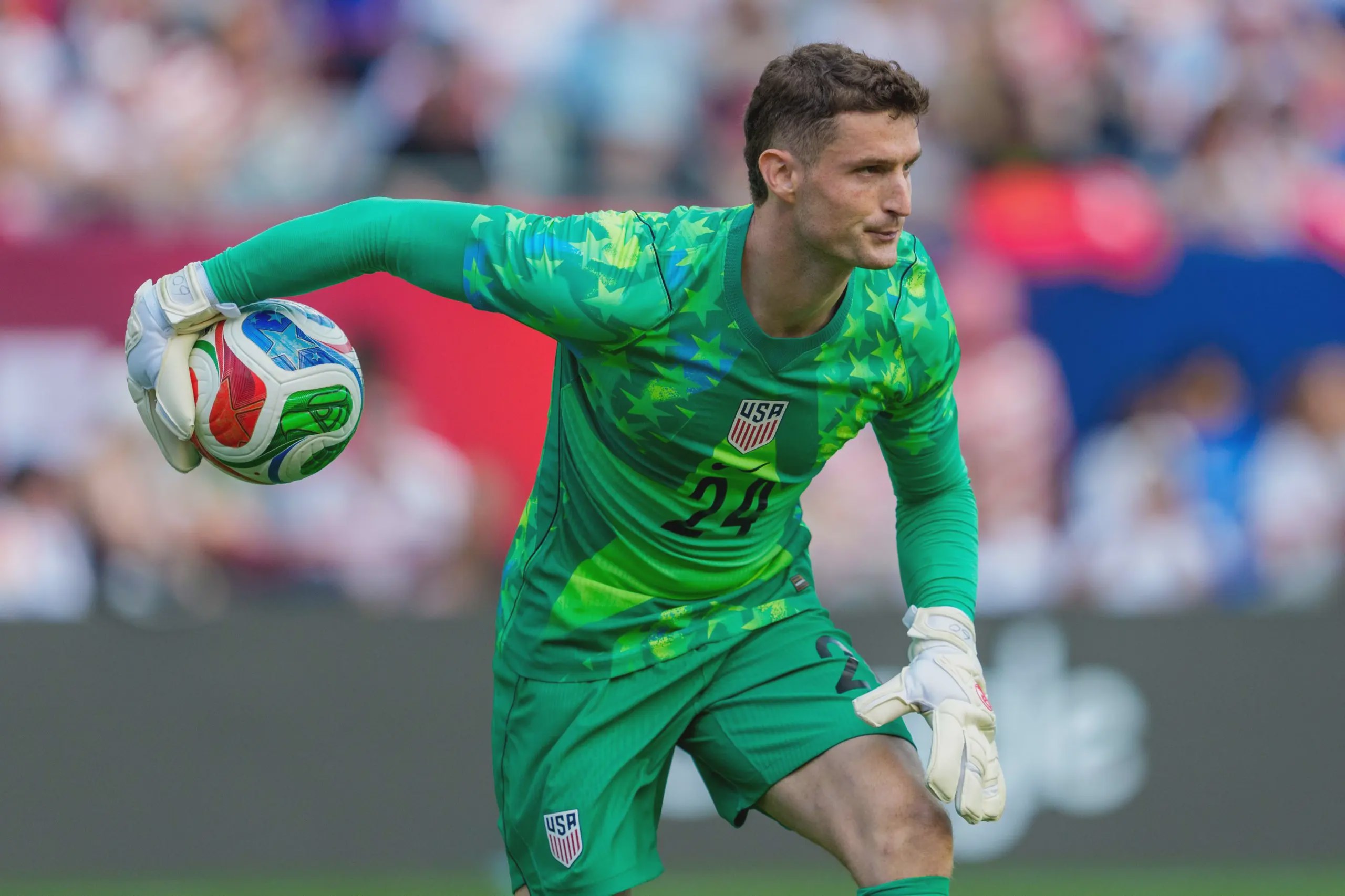
Alexi Lalas has called for Matt Freese to step up his game after a shaky performance against Germany left the USMNT's goalkeeping hierarchy in total chaos.
The 2-1 defeat to Germany at Soldier Field offered plenty of reason for optimism for Mauricio Pochettino’s United States side, but the gloss of a competitive performance was quickly tarnished by the recurring nightmare between the posts. Antonee Robinson’s spectacular strike and Christian Pulisic’s driving runs were the headlines, yet the post-match autopsy has focused almost exclusively on the man with the gloves. Matt Freese, handed the starting nod in Chicago, found himself the target of scathing criticism from former national team stalwart Alexi Lalas, who believes the current goalkeeping situation is a ticking time bomb just days away from the World Cup opener against Paraguay.
Goalkeeping has historically been the one position where the United States boasted an embarrassment of riches, often fielding elite talents who were among the best in the Premier League. However, the current era feels markedly different. The transition from the reliable hands of the past to the current crop of Matt Turner and Matt Freese has been fraught with inconsistency and a lack of authority. Against a German side that punished every lapse in concentration, Freese looked like a player still searching for his international feet, failing to produce the kind of miraculous stop that defines a true number one in a major tournament environment.
Lalas Pulls No Punches Over Defensive Command
The criticism from Lalas centered on a perceived lack of aggression and spatial awareness from Freese, particularly during Kai Havertz's opening goal. Lalas, speaking on his State of the Union podcast, expressed frustration with the goalkeeper's failure to dominate his six-yard box while the U.S. defense was high up the pitch. For Lalas, a high defensive line is a pact between defenders and their goalkeeper; the outfielders hold the line, and the keeper must be prepared to "clean house" in the space left behind. When Havertz ghosted in to score, Freese remained rooted, exposing his defenders to a disadvantage they could not recover from.
This lack of proactivity is what seems to separate the current options from the elite tier of global goalkeepers. Lalas argued that while some of the blame falls on the defenders for retreating late, the primary responsibility lies with the man who can see the whole pitch. If a goalkeeper is going to ask his back four to push fifteen yards away from goal, he must be the insurance policy. Freese’s hesitation allowed the German attackers to meet the ball in dangerous areas, turning a manageable set-piece situation into a goal-scoring disaster. It is a tactical nuance that Pochettino will need to address immediately if he intends to persist with his aggressive defensive philosophy.
The second German goal did little to restore confidence. While there was a minor deflection that changed the trajectory of the shot, Lalas was again unimpressed, noting that top-tier keepers find a way to make the saves they "shouldn't" make. In a World Cup, games are won and lost on these margins. The ability to pull off a save that defies logic is often the difference between a group stage exit and a deep run. To date, Freese has shown he is a capable shot-stopper, especially from the penalty spot, but he has yet to provide that "wow" moment in open play that earns the total trust of his teammates and the fans.
The Matt Turner Conundrum: From 2022 Hero to Question Mark
The debate is further complicated by the form and status of Matt Turner. Once the undisputed starter following his solid 2022 World Cup campaign in Qatar, Turner’s trajectory has flattened. Despite a respectable season back in MLS with the New England Revolution, he has struggled to regain the aura of invincibility he once possessed. Pochettino’s decision to split minutes between Turner and Freese in the friendlies against Senegal and Germany suggests that the manager is far from settled on his preference. This rotation, while intended to find the hot hand, may be contributing to a lack of rhythm and communication within the defensive unit.
Turner’s experience is his greatest asset, having played in high-stakes matches and demonstrated an ability to handle the pressure of the international stage. However, his recent outings have lacked the sharp edges of his 2022 form. He started the first half against Senegal but did not do enough to shut down the competition from Freese. The U.S. now finds itself in a precarious position where its two main options are both searching for confidence at the exact same time. This is a far cry from the days when the coaching staff had to choose between two giants like Kasey Keller and Brad Friedel, both of whom were undisputed starters for their respective European clubs.
The lack of a clear hierarchy is a problem that Pochettino must solve before the ball kicks off against Paraguay. Goalkeepers thrive on stability and the knowledge that they are the first choice. By keeping the competition open this late in the cycle, the manager risks creating an environment of anxiety where one mistake feels like a career-ending event. For now, the momentum seems to be slightly with Freese despite Lalas’s critiques, but the margin for error has narrowed to almost zero. The upcoming training sessions will be scrutinized for every catch and every command as the squad tries to find a leader for the backline.
Pochettino’s Tactical Dilemma and the High Line
Mauricio Pochettino has brought a clear identity to the USMNT, emphasizing a high press and a compact defensive structure. This style of play is modern and exciting, but it places an immense physical and mental load on the goalkeeper. As Lalas pointed out, the 10-15 yard gap between the goalkeeper and the last defender is a danger zone that requires a "sweeper-keeper" mentality. If the keeper is not comfortable coming off his line to intercept long balls or punch away crosses, the entire system collapses. Germany exploited this gap repeatedly, showing exactly how top-tier European sides will look to hurt the Americans in 2026.
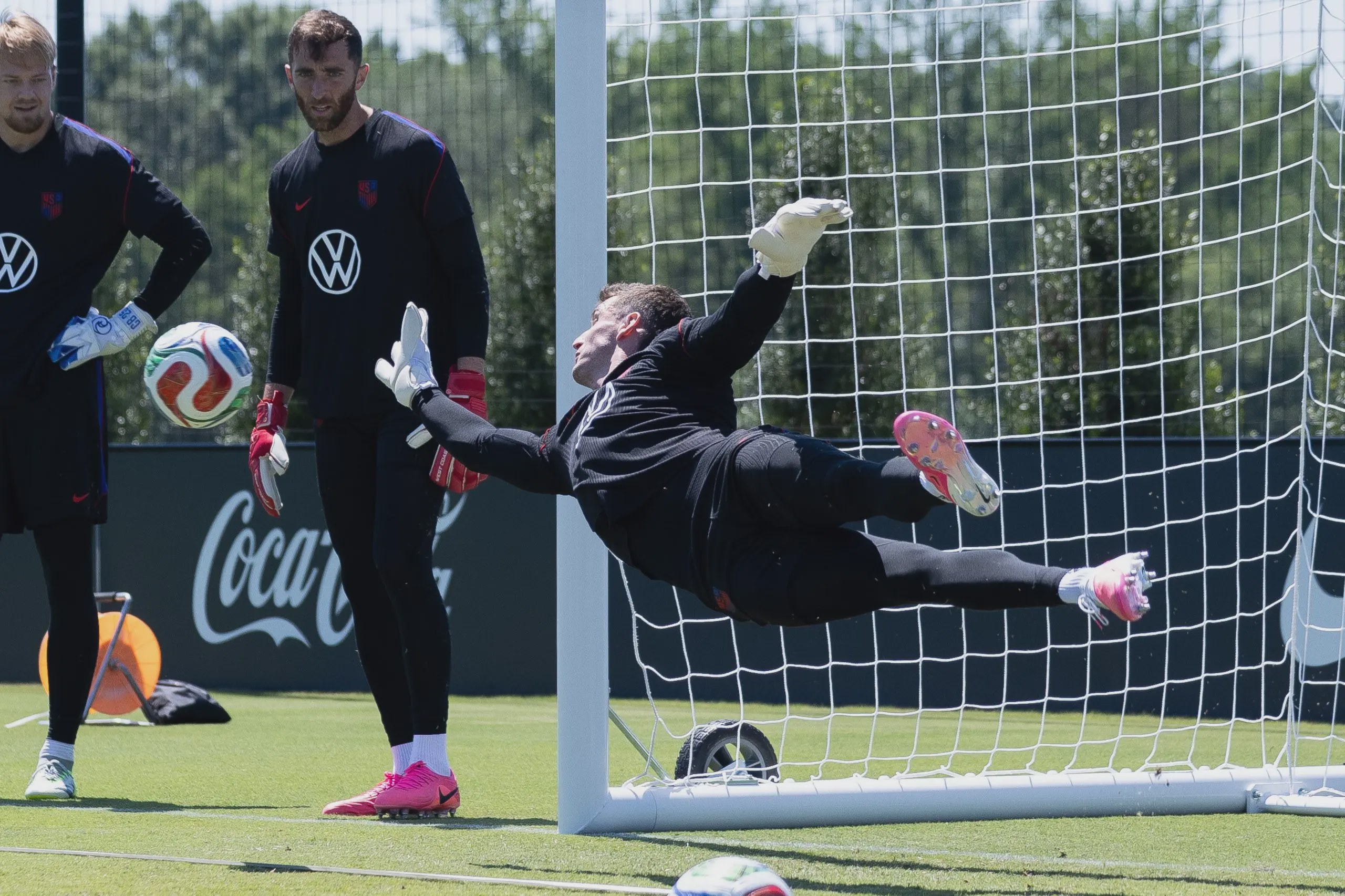
The manager has experimented with three different goalkeepers over the last two matches, a sign that he is still gathering data on who can best execute his vision. This experimentation is necessary but risky. Each goalkeeper has a different style of communication and a different range of distribution. For a backline that includes players like Antonee Robinson and Miles Robinson, having a consistent voice behind them is crucial for maintaining their positioning. Every time the goalkeeper changes, the defenders have to recalibrate their internal clock for when to expect support and when they are on their own.
Lalas’s frustration stems from a feeling that the U.S. is giving away cheap goals that could be prevented with better goalkeeping fundamentals. He believes that the current squad is close to its final World Cup form, with only a few minor adjustments needed in the outfield. However, if the foundation is shaky, the rest of the house will eventually fall. The tactical demand for a high line is not going to change under Pochettino, which means the goalkeeper must be the one to adapt. If Freese cannot become more aggressive in his penalty area, he may find himself relegated to the bench in favor of someone who can, even if they lack his shot-stopping reflex.
Chasing the Shadows of Howard, Keller, and Friedel
The current angst surrounding the position is amplified by the incredible legacy of American goalkeepers. For decades, the U.S. was known as a factory for world-class keepers. Tim Howard’s record-breaking performance against Belgium in 2014 remains the gold standard for what a USMNT keeper can achieve under siege. Before him, Friedel and Keller enjoyed long, successful careers at the highest levels of the game, providing a sense of security that the national team could always rely on. Comparing Freese and Turner to those giants is perhaps unfair, but it is the reality of the expectations placed on the role.
The current pool lacks that same level of proven international pedigree. While both Freese and Turner are talented, they have not yet reached the level where they are considered among the top twenty keepers in the world. This decline in goalkeeping depth is a concern for the long-term health of the program. It forces the manager to work with what he has rather than choosing from a list of elite options. The pressure on Freese to "step up" is not just about one match against Germany; it is about proving that he can uphold the tradition of excellence that has defined American soccer for thirty years.
As the World Cup opener looms, the spotlight will remain fixed on the goal frame. The match against Paraguay is not just about three points; it is a chance for one of these keepers to finally claim the jersey and end the debate. If Freese starts, as Lalas expects, he will need to deliver the performance of a lifetime to quiet the critics and prove he is ready for the sport’s biggest stage. The time for experimentation is over; the time for a hero is now. The United States needs a goalkeeper who doesn't just make the easy saves, but the ones that save the tournament. more football news on MATCHLINE