A rare Ebola outbreak and strict US travel mandates have forced DR Congo’s World Cup preparations into a sterile, spectator-free environment in France.
The roar of the crowd is the traditional lifeblood of a World Cup send-off, yet the Democratic Republic of Congo will find only the sterile silence of empty stands when they face Chile in Orleans. What should have been a celebratory final warmup has instead been clouded by a public health crisis and a web of administrative hurdles that have forced the match behind closed doors. The decision marks a somber turn for a nation celebrating its first qualification for the global showpiece in over half a century.
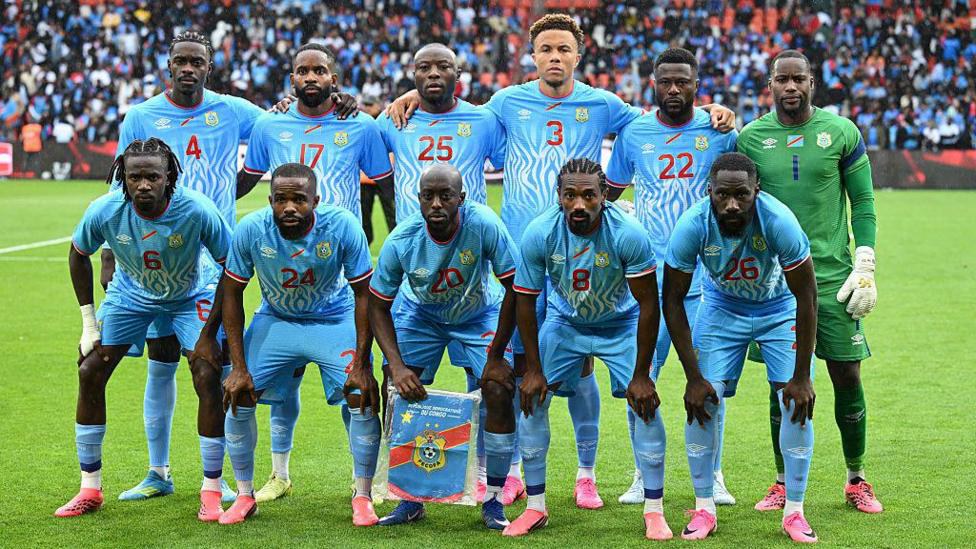
Yoane Wissa and his teammates represent a modern, European-based Congolese squad that has fought hard to return the Leopards to the world stage. However, the shadow of an Ebola outbreak back home has cast a long reach across the Mediterranean. While the playing squad is comprised entirely of professionals based outside the country, the presence of traveling support staff and a vocal diaspora has triggered a series of precautionary measures from local authorities and international governments alike. The England-based contingent finds themselves at the heart of a logistical puzzle as they attempt to balance peak physical performance with the anxieties of a looming medical crisis.
Health Concerns and a Mayor’s Decree
The road to Orleans was paved with diplomatic and administrative obstacles that began in Spain. Originally, the Leopards were scheduled to face Chile in the sun-drenched coastal city of Cadiz, a venue chosen for its facilities and climate. However, those plans were abruptly scuppered when the local mayor signed a formal decree preventing the fixture from taking place on Spanish soil. The move was described as a precautionary measure, reflecting the heightened sensitivity surrounding the rare Bundibugyo species of Ebola currently affecting eastern regions of the DR Congo.
This particular strain of the virus presents a unique challenge to health authorities because there is currently no viable vaccine available. While the World Health Organization has suggested that a jab could be developed within nine months, that timeline offers no comfort to those organizing a football tournament in the present. The decision to move the match to France and play without fans is a direct consequence of this uncertainty, as organizers seek to minimize any potential risk of transmission while ensuring the game can still provide the tactical test required by the coaching staff.
The 21-Day Mandate and US Entry Rules
The logistical nightmare extends far beyond the borders of Europe, reaching all the way to the World Cup host nation. The United States government has implemented a strict entry requirement for any individuals associated with the DR Congo delegation. To be permitted entry for the tournament, all players, coaches, and support staff must prove they have spent a minimum of 21 days outside of the DR Congo and remain entirely symptom-free throughout that period. This mandate has effectively dictated the team's entire pre-tournament itinerary.
For a squad that relies on players scattered across the top leagues of Europe, the rule has necessitated a lengthy and isolated residency in the West. The team has already completed a ten-day training camp in Belgium, which included a competitive goalless draw against Denmark, and they are currently finalizing their tactical work in the Spanish resort of Marbella. These camps serve a dual purpose: they are high-performance environments for tactical drill and physical conditioning, but they are also a form of medical quarantine, ensuring that every member of the traveling party meets the American entry criteria well in advance of their opening match.
Historical Context and the Legacy of Zaire
For the DR Congo, the 2026 World Cup is more than just a tournament; it is the exorcism of a long-standing sporting ghost. The nation has not appeared on this stage since 1974, when they competed under the name Zaire. That campaign remains a painful memory in African football history, characterized by three straight defeats against Scotland, Brazil, and Yugoslavia. The Leopards finished bottom of their group and became a cautionary tale of the difficulties faced by emerging nations in the global game.
The current generation is determined to write a different narrative. The 0-0 draw against Denmark provided evidence of a defensive solidity that was often lacking in Congolese teams of the past. By basing themselves in Houston during the tournament, the Leopards hope to build a home away from home, acclimating to the Texas heat before they open their Group K campaign. The transition from the rainy training pitches of Belgium to the humidity of the American South will be the final hurdle in a preparation period that has been as much about survival as it has been about sport.
Tactical Preparation in a Sterile Environment
The match against Chile in Orleans was intended to be the final piece of the tactical puzzle, a chance to test their mettle against South American opposition. Playing behind closed doors will undoubtedly sap some of the intensity from the occasion, but for the manager, the technical data remains the priority. The absence of fans may actually allow for a more focused atmosphere where coaching instructions can be heard clearly, though it will do little to prepare the players for the cauldron of a World Cup stadium.
With matches against Portugal, Colombia, and Uzbekistan on the horizon, every minute on the pitch is vital. The clash with Chile serves as a stylistic dry run for the Group K encounter with Colombia in Guadalajara. The technical staff will be looking for signs that the squad can maintain their discipline and shape under pressure, regardless of the quiet surroundings. It is a strange, muted end to their European residency, but one that is necessary to ensure the Leopards finally make their mark on the world stage after half a century in the wilderness.
Stay updated on every twist and turn of the road to 2026 by following more football news on MATCHLINE