Referees' chief Howard Webb backs the controversial decision to chalk off West Ham's equaliser against Arsenal, sparking a wider debate on grappling.
The final whistle at the Emirates Stadium on Sunday did not bring the usual sense of closure. Instead, it ignited a firestorm of debate that has reached the very top of the PGMOL. Arsenal’s narrow 1-0 victory over West Ham was preserved only by a last-minute VAR intervention that disallowed Callum Wilson’s equaliser, a decision that has left West Ham manager Nuno Espirito Santo fuming and Arsenal boss Mikel Arteta praising the "courage" of the officials. Referees’ chief Howard Webb has now stepped into the fray, appearing on Match Officials Mic'd Up to insist that the system worked exactly as intended, despite the chaotic scenes that unfolded on the pitch.
The Anatomy of a Foul
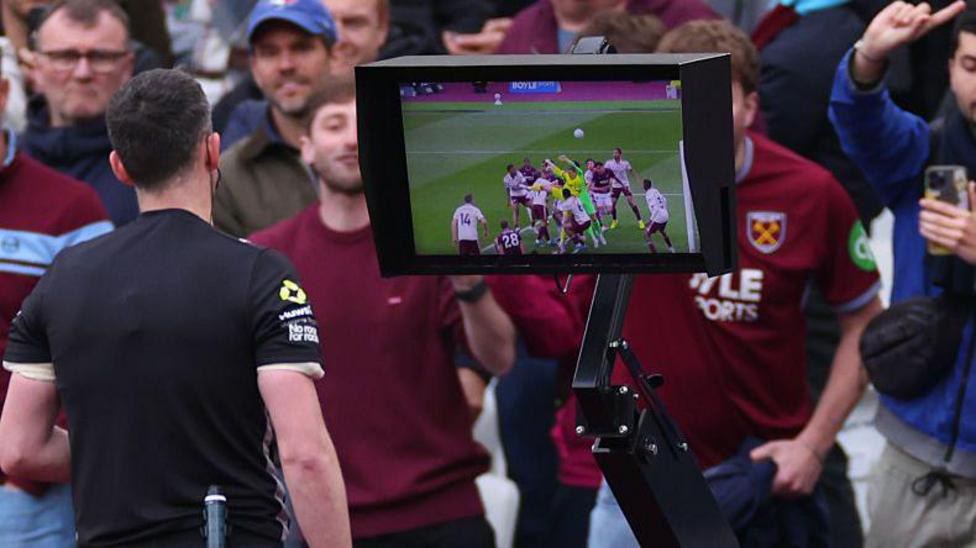
The controversy centres on a specific moment in the fifth minute of stoppage time. As a high ball was lofted into the Arsenal penalty area, West Ham’s Pablo appeared to impede Gunners goalkeeper David Raya. Webb’s explanation was clinical and uncompromising: if a goalkeeper is prevented from using their arms or hands, it is a foul, period. The audio from the VAR room revealed a team of officials meticulously dissecting the contact, looking for the specific moment where Raya’s ability to catch or punch the ball was compromised. Webb argued that this wasn't just incidental contact, but a targeted action that prevented the keeper from doing his job.
During the review, the VAR team, led by Darren England, considered several different angles, including a "pole-cam" view that provided a clearer look at the grappling. While there were other incidents occurring simultaneously—including a potential foul by Leandro Trossard on Pablo—Webb maintained that the foul on the goalkeeper was the primary and most impactful offence. By focusing on the sanctity of the goalkeeper's movement within the six-yard box, the officials reached a verdict that, while deeply unpopular in East London, followed the letter of the law established in pre-season briefings.
The Set-Piece Arms Race
This incident is merely the latest symptom of a growing trend in the Premier League: the rise of the set-piece coach. Clubs are now employing specialists to orchestrate what Webb described as "excessive grappling" in the penalty area. Players are being instructed to find marginal gains by holding, pushing, and blocking opponents, often operating right on the edge of legality. This has created a nightmare for referees like Chris Kavanagh, who must sift through a dozen different wrestling matches every time a corner is swung in. The sheer volume of contact makes it nearly impossible to penalise every infraction without stopping the game every two minutes.
Webb acknowledged that this season has been unique in terms of the intensity of these penalty area battles. The PGMOL has already penalised more holding offences this year than in the previous campaign, yet the perception of inconsistency remains. West Ham’s frustration stems from the belief that similar grappling often goes unpunished elsewhere. However, Webb’s stance is that the impact on the goalkeeper elevates this specific incident above the general chaos of the box. The intervention was necessary because the foul directly led to the ball entering the net from an area where the keeper should have been dominant.
Consultation and the Path Forward
In a move to address the growing frustration among fans and clubs, Webb confirmed that a formal consultation on grappling will take place at the end of the season. This process will involve clubs, fan groups, and other stakeholders to determine exactly how the game should be officiated moving forward. The goal is to find a balance between allowing the physical nature of the league to thrive and ensuring that "dark arts" don't become the deciding factor in major matches. There is a clear appetite for more clarity on what constitutes a "clear and obvious" error versus the natural jostling for position.
The VAR transcript provides a fascinating look into this struggle. The officials are heard discussing the "impactful" nature of the contact while also acknowledging that multiple fouls are occurring at once. One official is heard asking, "What are we saying about Trossard’s actions?" This internal debate highlights the difficulty of applying a binary "foul or no foul" decision to a dynamic, multi-player collision. Until the rules are refined or the threshold for intervention is adjusted, these high-stakes reviews will continue to be a source of friction for managers and supporters alike.
Consistency Under the Microscope
Nuno Espirito Santo’s criticism of a "lack of consistency" hits at the heart of the VAR debate. While Webb can justify the Raya decision based on the rules, the challenge lies in ensuring the same standard is applied in the first minute as it is in the ninety-fifth. The audio reveals the pressure the officials are under to get it right, with the VAR telling the referee to "just keep delaying" while they find the right angle. This meticulousness is what the system was designed for, but it often clashes with the emotional flow of a Premier League matchday.
As the season reaches its climax, every decision carries immense weight for the title race and the battle against relegation. Howard Webb’s willingness to go on camera and explain these calls is a step toward transparency, but it won't satisfy those who feel their team was robbed. The upcoming consultation will be a crucial moment for the league’s governance. If the Premier League wants to move away from these weekly controversies, it must find a way to police the penalty area that is both firm and predictable. For now, the debate over David Raya and Pablo will serve as the catalyst for a much-needed overhaul of set-piece officiating. more football news on MATCHLINE