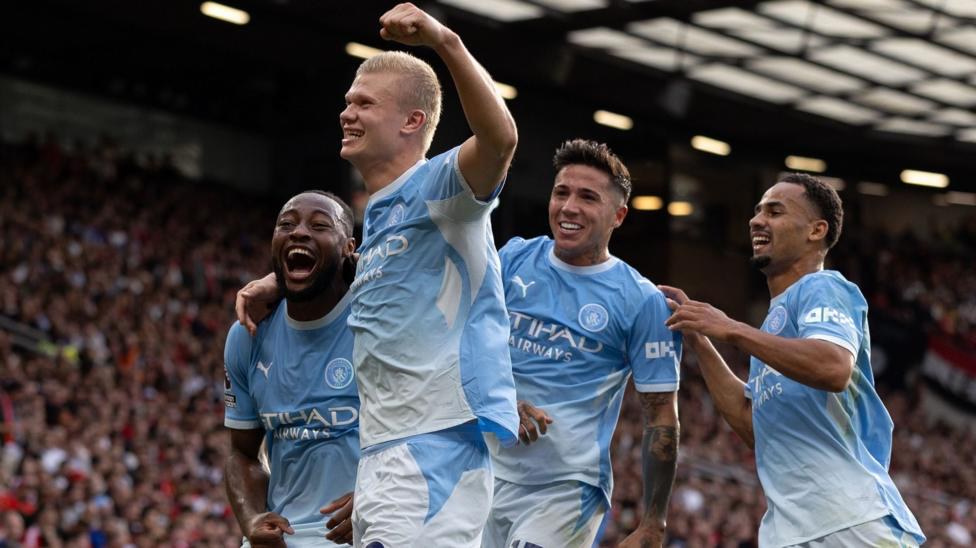
As Pep Guardiola prepares to leave Manchester City after ten years, we examine the career of a manager who didn't just win trophies, but changed the sport's DNA.
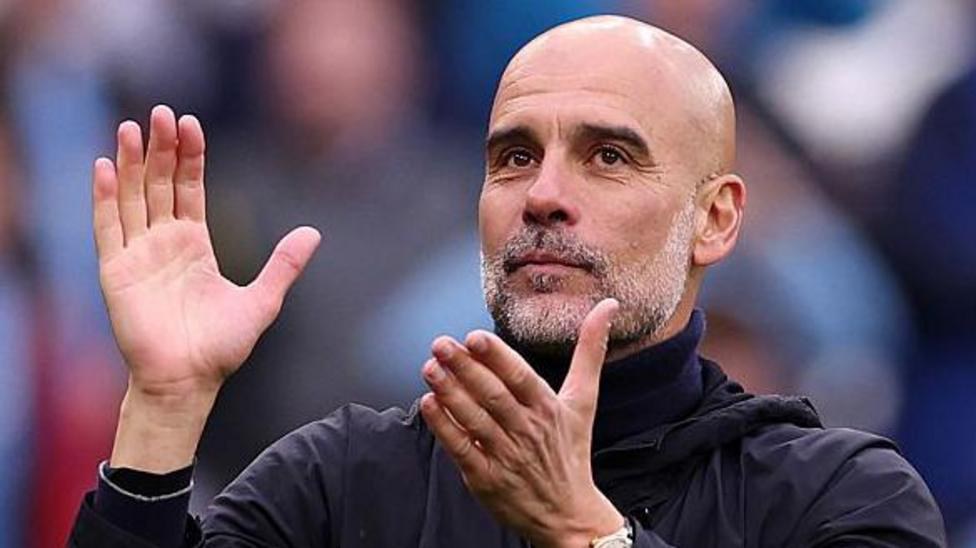
The announcement that Pep Guardiola will depart Manchester City marks the end of a decade that has fundamentally altered the landscape of English and global football. It is not merely the departure of a successful manager; it is the exit of an architect who spent ten years dismantling the established norms of the Premier League and rebuilding them in his own image. Guardiola arrived in Manchester with a reputation for genius and left having proven that his philosophy could not only survive the physical rigors of the English game but dominate them with a consistency that bordered on the surreal. The sport he leaves behind is unrecognizable from the one he entered in 2016.
The Statistical Supremacy of a Perfectionist
To understand the magnitude of Guardiola’s impact, one must first look at the sheer weight of silverware he has accumulated. In ten seasons at Manchester City, he secured 17 major trophies, a haul that includes multiple league titles and the club's inaugural Champions League crown. Over his 17-year managerial career, he has amassed 41 trophies in total, a staggering figure that places him in the rarest air of footballing history. When compared to Sir Alex Ferguson, who won 49 trophies across 39 years, the density of Guardiola’s success becomes clear. He has won at a rate that defies the natural ebb and flow of professional sports, maintaining a standard of excellence that never allowed for a transition year or a dip in intensity.
His record in league competitions is perhaps the most impressive metric of all, with 12 titles in 17 years across Spain, Germany, and England. While Carlo Ancelotti may boast more Champions League trophies, Guardiola’s dominance over the long haul of a domestic season is unparalleled. Winning at the highest level requires a specific type of entry fee, but Guardiola has paid that fee over and over again. He has turned league campaigns into relentless processions, demanding a level of focus from his players that often saw them finish seasons with points totals that were once thought impossible. He didn't just beat his opponents; he exhausted them with a standard of play they could rarely match.
Three Teams, One Constant Vision
One of the most significant marks of Guardiola’s greatness at the Etihad was his ability to build three distinct, world-class iterations of the same club. His first great City side was a collection of creative technicians who won league titles with a style of football so aesthetically pleasing it forced neutrals to stand and applaud. It was a team built on intricate passing and fluid movement. However, rather than resting on those laurels, Guardiola evolved. His second great team was a more battle-hardened version, featuring a robust back four often comprised of four center-backs and spearheaded by the record-breaking power of Erling Haaland. This was a side that could win by suffocating the opposition or by unleashing a direct, clinical force.
The third iteration, the one he leaves behind now, is still evolving, yet it remains capable of competing for the highest honors. This ability to refresh a squad, to move on legendary figures and integrate new talent without losing the core identity of the team, is what separates a great coach from a generational one. Guardiola never allowed the environment to become stale. He challenged his players to see the game differently every year, shifting their positions and responsibilities to keep them intellectually engaged. By the time he reached his tenth year, he had proved that his system was not dependent on a specific set of individuals, but on a collective adherence to his principles of space and control.
The Intellectual Legacy and the Coaching Tree
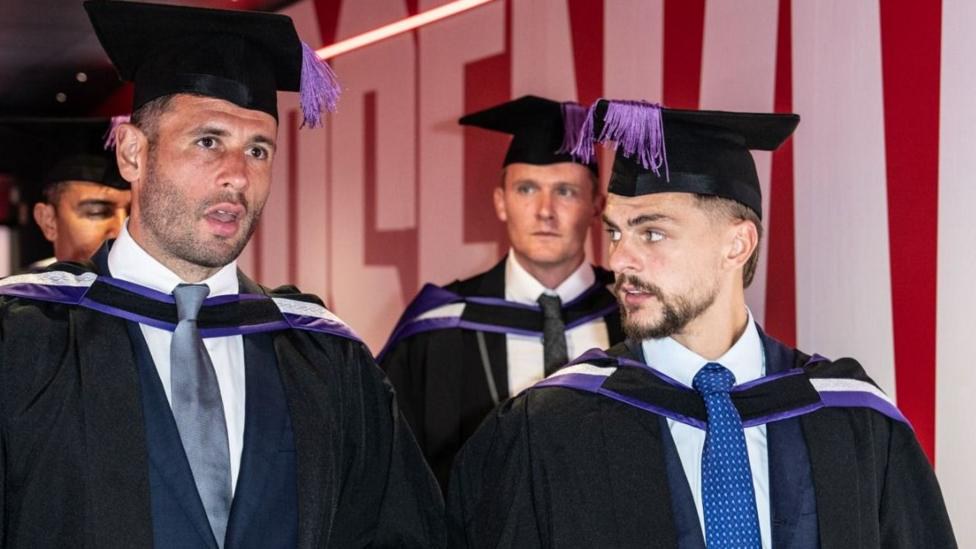
Guardiola’s influence extends far beyond the trophies in the City cabinet; it is visible on the touchlines across Europe. Unlike many legendary managers whose assistants struggle when they strike out on their own, Guardiola has cultivated a coaching tree that is actively shaping the future of the sport. Mikel Arteta, Vincent Kompany, Enzo Maresca, and Roberto de Zerbi have all, in some capacity, been influenced by his methods or worked directly under his guidance. They didn't just learn how to organize a defense; they absorbed a way of thinking about football that prizes intelligence and adaptability above all else. This has created a unique situation where Guardiola has often had to compete against the very minds he helped sharpen.
The fact that his most trusted lieutenants often returned to his staff before moving on again speaks to the collaborative and educational environment he fostered. He didn't just give orders; he provided a collection of solutions to the problems football poses. His rivals in the past, like Ferguson or Arsene Wenger, had profound influences, but Guardiola has shifted the intellectual framework of the game at scale. Whether in Spain, Germany, or England, he has left behind a generation of coaches who view the pitch through his tactical lens. This legacy is perhaps more valuable than any medal, as it ensures his ideas will continue to propagate long after he has moved on to his next challenge.
Revolutionizing the Phases of Play
From a tactical perspective, Guardiola’s revolution can be broken down into how he systematically reimagined the phases of the game. Most analytical frameworks look at four stages: building from the back, transitioning through the middle, creating chances around the box, and the final action of finishing. Guardiola has fundamentally changed how the first three are understood. He demanded that goalkeepers become playmakers and that center-backs possess the vision of midfielders. He turned the midfield into a zone of total control where possession was used as a defensive tool as much as an offensive one. He revolutionized the use of space in the final third, creating a geometry of movement that overwhelmed even the most organized defenses.
While he often joked that the fourth phase—the finishing—was down to the individual talent of the players, his systems were designed to make those finishes as high-probability as possible. Football is an instinctively conservative sport that often resists change, yet Guardiola was stubborn enough and intellectually relentless enough to force it to move. Supporters who have watched the game for half a century often remark that City’s football is unlike anything they have ever seen. They are right to say so, because Guardiola was not interested in replicating what came before. He was interested in what was possible. He pushed the boundaries of what a football team could be, and in doing so, he made every other coach in the world re-evaluate their own methods.
A Legacy Beyond the Touchline
As this chapter at Manchester City closes, the debate over whether Guardiola is the greatest of all time will continue to rage in pubs and television studios. For some, the lack of a higher volume of Champions League titles at City will be a caveat, a height they feel he should have reached more often given the resources at his disposal. Guardiola himself would likely agree that the difficulty of that competition makes it a necessary part of the conversation. However, the case for his supremacy rests on four pillars: his historic win rate in three different countries, the fundamental change in how football is played, the shift in how the game is thought about, and a style that will be studied for decades.
Ultimately, Pep Guardiola is less of a manager and more of an architect. He didn't just build a team to win a match; he built a system to win a decade. He leaves Manchester City with the club in a position of unprecedented strength, having even had a hand in identifying the successor who will carry his ideas forward. He is not a man who is ever truly done with the sport, and his next move will be watched with the same intensity that greeted his arrival in the Premier League ten years ago. He has changed the sport, and in doing so, he has ensured that his name will be synonymous with the very best the game has to offer. For more on the future of the Premier League and the search for the next great tactical mind, check out more football news on MATCHLINE.