
New Jersey and New York officials slash World Cup transport costs at MetLife Stadium after outcry over astronomical pricing for the 2026 tournament.
The 2026 World Cup was always going to be a test of scale, ambition, and logistics, but the early skirmishes are being fought over bus fares and train tickets rather than tactical formations or squad depth. In a significant victory for the travelling supporter, authorities in New Jersey and New York have executed a sharp climbdown regarding transport pricing to MetLife Stadium. The move follows a fierce backlash from fan groups and local politicians who labeled the initial price points as predatory and entirely out of step with the spirit of a global sporting festival.
For a tournament that promised to be the most accessible in history, the initial invoices sent a shiver through the bank accounts of fans planning to follow their teams across North America. The Meadowlands, the sprawling marshland complex that houses the stadium, is notoriously difficult to reach without a car, leaving thousands of international visitors reliant on public infrastructure that suddenly carried a premium price tag. However, the intervention of state governors and pressure from supporter organizations has forced a rethink that will see costs fall by more than 75 percent in some sectors.
The Meadowlands Retreat: Slashing the Price of Access
The headline reduction centers on the rail link between Manhattan’s Penn Station and the venue in East Rutherford. Under the revised pricing structure, a round-trip train ticket has been cut from a staggering $150 down to a more manageable $98. While still significantly higher than the standard $12.90 fare for a return journey, the reduction represents a major concession. Even more dramatic is the shift in shuttle bus pricing, which has plummeted from $80 to just $20. These shuttle services are expected to carry the bulk of the weight for fans staying in New York City who need a direct, reliable route to the stadium gates.
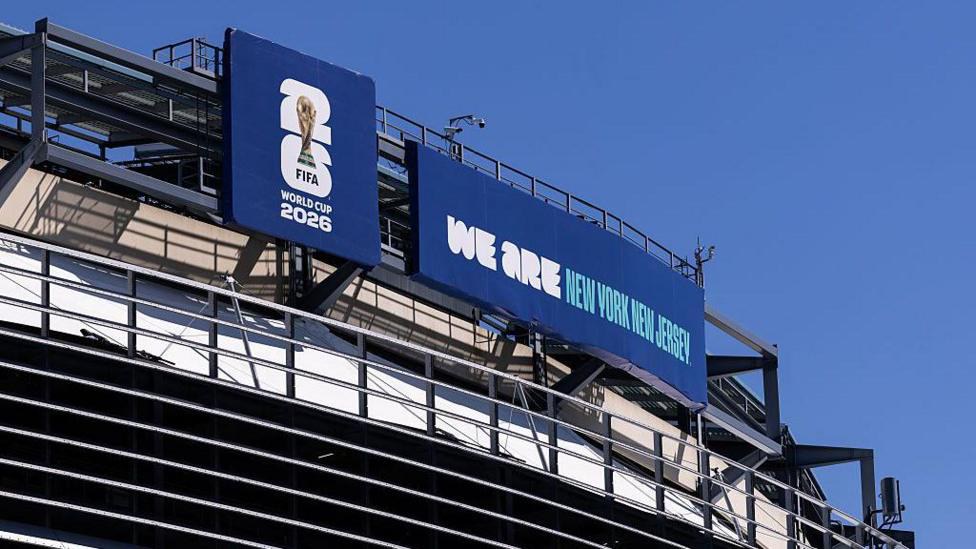
MetLife Stadium, which will be rebranded as the New York/New Jersey Stadium for the duration of the tournament to satisfy FIFA’s strict corporate naming regulations, is the crown jewel of the North American bid. It is slated to host eight matches, including one of England’s Group L fixtures and the tournament’s finale. The prospect of fans being charged $150 for an 18-mile train journey threatened to overshadow the prestige of the event. Thomas Concannon, a leading voice for the Football Supporters' Association (FSA) England fan group, had previously described the pricing as astronomical and completely divorced from the norm of major tournament travel.
A Broken Promise: From Free Travel to 'At Cost'
The pricing controversy is rooted in a fundamental shift in the hosting agreement. During the 2018 bidding process, the United States, Canada, and Mexico committed to providing free public transport for ticket holders, a perk that was successfully implemented during the World Cups in Russia in 2018 and Qatar in 2022. That commitment was seen as a cornerstone of the fan experience, ensuring that the vast distances and complex urban layouts of the host nations did not become a financial barrier for supporters.
However, a tweak to the agreement in 2023 quietly altered that landscape, shifting the goalposts to a policy where fans would travel at cost. This technicality allowed local transit authorities to seek full cost recovery for the increased frequency of services and security required for World Cup matchdays. FIFA defended the initial high prices by claiming there was no precedent for standard pricing during major events at MetLife Stadium, but local officials were quick to distance themselves from that logic as the public outcry grew. The realization that fans were being asked to foot the bill for infrastructure they were already promised for free created a PR nightmare that required immediate political intervention.
The Political Friction: Governors vs the FIFA Machine
The resolution of the pricing crisis in the New York area was largely driven by political maneuvering. New Jersey Governor Mikie Sherrill was a vocal critic of the initial costs, flatly refusing to allow local taxpayers to subsidize the transport requirements of a multi-billion-dollar organization like FIFA. Sherrill insisted that commercial sponsorships and partnerships should bridge the gap, rather than the wallets of fans or residents. Her announcement on Tuesday that commercial backing had successfully lowered the train tickets to $98 without utilizing taxpayer funds was a pointed message to the tournament organizers.
Across the Hudson River, New York Governor Kathy Hochul mirrored this sentiment, emphasizing that attending the World Cup should be as accessible as possible for everyone. In addition to the 75 percent reduction in round-trip bus fares, Hochul confirmed that 20 percent of tickets for New York-based matches would be reserved specifically for New Yorkers. This move acknowledges the logistical burden placed on the local population during the tournament while ensuring that the hosts themselves are not priced out of the festivities. It is a delicate balancing act between hosting a global event and protecting the interests of the local community.
The Boston Burden: A Tale of Two Cities
While fans heading to the Meadowlands have seen some relief, those traveling to Foxborough for matches in Boston are facing a much bleaker financial reality. Transport prices from central Boston’s South Station to the Boston Stadium at Foxborough are set to skyrocket by more than 300 percent. A journey that typically costs $20 will be priced at $80 for World Cup ticket holders. This disparity highlights the lack of a unified transport strategy across the different host cities, leaving fans at the mercy of localized pricing decisions.
This hike will hit British fans particularly hard. Steve Clarke’s Scotland are scheduled for two matches in Foxborough, facing Haiti on June 13 and Morocco on June 19. England will also visit the venue for their high-profile clash against Ghana on June 23. For supporters already grappling with transatlantic flights and inflated hotel prices, an $80 train ride for a relatively short domestic trip is a bitter pill to swallow. The contrast between the New Jersey climbdown and the Boston hike suggests that the battle for fair pricing is being fought on a city-by-city basis rather than through a central FIFA mandate.
Inconsistency Across the Map: Winners and Losers
The pricing map for the 2026 tournament is becoming a patchwork of inconsistency. While Boston hikes prices and New Jersey grudgingly lowers them, other cities are maintaining a more fan-friendly approach. Philadelphia has confirmed that its standard fare of $2.90 will remain in place for the tournament, a decision that has been praised as the benchmark for host city hospitality. Kansas City is also taking a middle-ground approach, offering return bus tickets to their stadium for $15, a figure that feels more in line with a standard sporting event.
For the England fans heading to MetLife Stadium to watch the Three Lions take on Panama on June 27, the $98 train ticket still represents a significant outlay, but it is a far cry from the $150 original proposal. These logistical details often determine the atmosphere of a tournament. When fans feel exploited, the joy of the occasion is replaced by resentment. By forcing these price cuts, officials have managed to lower the temperature of the debate, even if the underlying tensions regarding the commercialization of the fan experience remain. The 2026 World Cup is a massive undertaking, and as the kickoff approaches, every dollar saved on a train ticket is a win for the culture of the game.
Ultimately, the saga of the MetLife transport prices serves as a reminder that fan advocacy still carries weight, even when faced with the gargantuan commercial machine of a FIFA World Cup. The organized pushback from the FSA and the firm stance taken by state governors forced a tangible change that will benefit thousands of match-goers. As the tournament draws nearer, the pressure will likely shift to other host cities like Boston to justify their own pricing models or follow the lead of the New York and New Jersey authorities in prioritizing accessibility over maximum revenue extraction. more football news on MATCHLINE