Tony Pulis reflects on a season defined by managerial resilience, from Iraola’s Bournemouth revolution to the survival of the promoted guard.
In the high-stakes theater of the technical area, the currency of time has never been more devalued. Boards demand instant returns, fans crave immediate identity shifts, and the media cycle sharpens its blade after a mere fortnight of poor results. Yet, as the League Managers Association prepares for its annual honors, the narrative of the current campaign suggests that those who hold their nerve often find the greatest treasure. It is a lesson in the virtues of structural stability over the frantic urge to hit the reset button at the first sign of turbulence.
Reflecting on my own journey, particularly that 2014 campaign with Crystal Palace which earned me the Premier League Manager of the Season award, I remember the sheer weight of expectation. It remains one of my most cherished milestones, alongside the recognition I received at Gillingham nearly three decades ago. The divisional awards usually gravitate toward the champions—the Peps and the Mikels of this world—but the real texture of the season is found in those who defy the gravity of their budgets and the pessimism of the pundits. This year, the shortlist is populated by those who refused to blink during the inevitable winter storms.
The Bournemouth Blueprint and Iraola’s Resilience
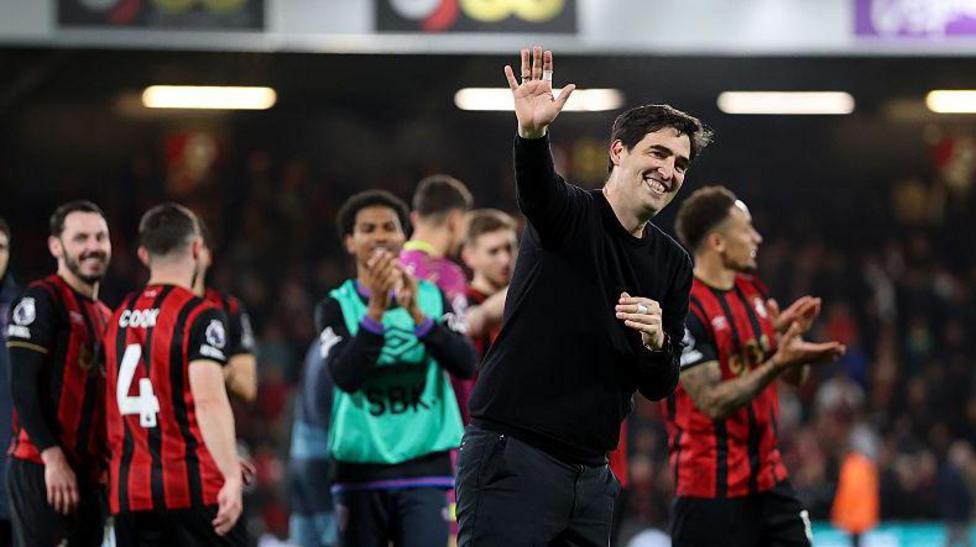
Andoni Iraola’s journey on the south coast is perhaps the definitive argument for boardroom patience in the modern era. When he arrived at Bournemouth in 2023, he was stepping into a club that had just performed a minor miracle under Gary O’Neil. To change the tactical DNA of a squad while simultaneously losing key assets requires a steady hand and a thick skin. Iraola did not find his feet immediately; in fact, he stumbled through ten attempts before tasting victory in the league. By late October, the noise around his position was deafening, yet the club stayed the course.
What followed was a masterclass in incremental improvement. Iraola didn't just stabilize the Cherries; he propelled them. Over a three-year build, he has transformed a side focused on survival into a European-bound outfit. Securing Europa League football is an achievement that transcends the usual mid-table aspirations of a club of Bournemouth's stature. It is a testament to a manager who understands that momentum isn't found in a single result but in the consistent application of a philosophy, even when the scoreboard suggests otherwise. He leaves behind a legacy of historic progress, proving that the "sacking season" mentality often robs clubs of their best possible futures.
The Survivalists: Farke and the Promoted Guard
For years, the Premier League has operated with a revolving door for promoted clubs. The gap in quality and finance often meant that the three teams coming up were the three most likely to go back down. This season, however, Daniel Farke at Leeds and Regis le Bris at Sunderland have shattered that expectation. Farke, in particular, looked to be in a precarious position as November drew to a close. The pressure at Elland Road is unique; it is a club with a top-six soul trapped in a perpetual battle for relevance. Farke’s ability to turn that tide and maintain top-flight status is a monumental feat of man-management.
The achievement of these managers is underscored by the sheer attrition of the division. To stay up is one thing, but to do so with a sense of tactical clarity is another. Farke didn't just park the bus; he found ways to win games that Leeds of previous years would have surrendered. Similarly, Le Bris has brought a continental pragmatism to Sunderland that has served them well. In an age where survival is often seen as a bare minimum, we must recognize that for promoted sides, it is the equivalent of a trophy. It requires a different kind of psychological steel to keep a squad motivated when losses are more frequent than wins.
EFL Excellence: From Bromley to the Imps
Beyond the glare of the top flight, the lower leagues have provided some of the most compelling stories of the season. Budgetary constraints are the ultimate equalizer in League Two, and what Andy Woodman has achieved with Bromley is nothing short of a fairy tale. A 21-game unbeaten streak starting in December is the kind of run that managers dream of but rarely execute. To transition from that kind of consistency into a title-winning climax requires a specific type of leadership—one that balances the emotional high of a winning run with the cold reality of the business end of the season.
In the Championship, the narrative has been equally gripping. While Ipswich were the pre-season favorites to secure a return to the big time, Coventry’s rise under Frank Lampard has been a story of consistency and clinical recruitment. The Sky Blues have been a fixture of the promotion conversation for the entire duration of the campaign, showing a level of fitness and tactical flexibility that exhausted their rivals. Meanwhile, at Lincoln, Michael Skubala has worked wonders. Nobody tipped the Imps to be in the mix, yet his ability to extract maximum value from a modest squad has made them the dark horses of the division. These are the crucibles where real coaching is tested, far away from the unlimited resources of the global elite.
The Return of Lampard and the Championship Grind
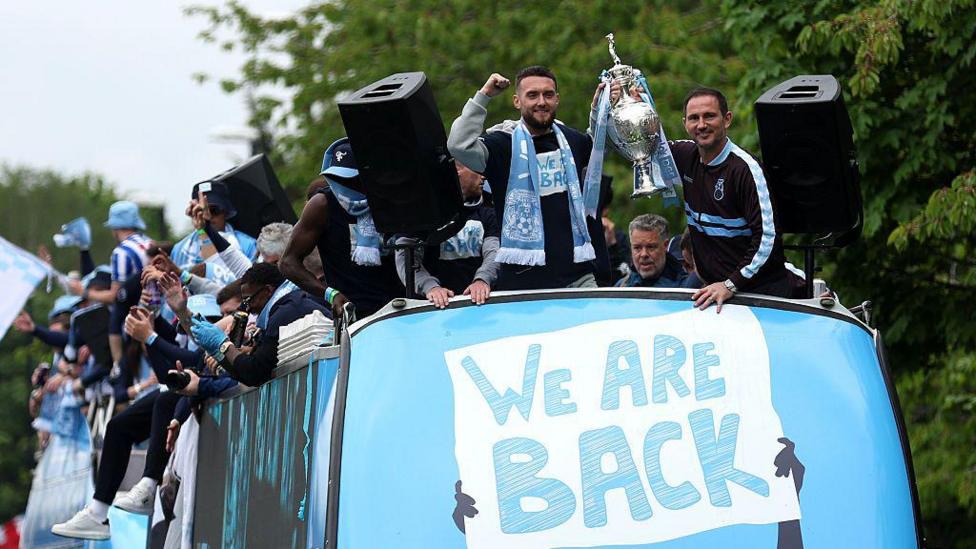
The appointment of Frank Lampard at Coventry was met with the usual mixture of excitement and skepticism that follows a high-profile name into the dugout. However, Lampard has answered his critics with the most convincing season of his managerial career. Navigating the Championship is a marathon that tests recruitment as much as coaching. Lampard’s ability to identify players who can handle the physical toll of 46 games while maintaining a technical edge has been the difference. He has matured in the seat, showing a willingness to adapt his systems to suit the personnel at his disposal.
Lampard celebrated as the Sky Blues ended their quarter-century wait for top-flight football under his stewardship. This success marks a personal redemption for a manager who has faced intense scrutiny at larger clubs. In the Championship, there is nowhere to hide; the games come every three days, and the margin for error is razor-thin. Lampard has shown that he can handle the grind, building a team that is as resilient as it is creative. As he prepares for the Premier League, his primary challenge will be ensuring that the recruitment which served him so well in the second tier can translate to the elite level, where one mistake can define a month.
The Coaching Culture and the Future of the Seat
There is a growing concern among the old guard about the erosion of the coaching community. In years past, we would gather at Lilleshall for FA seminars, sharing ideas over drinks and forging bonds that lasted careers. Today, that tradition has vanished, replaced by a more isolated, high-pressure existence. The modern manager is often an island, surrounded by data analysts and sporting directors, but lacking the peer support that used to define the profession. It makes the job more hazardous and the emotional swings more violent.
For the new crop of coaches breaking through, the learning curve is steep. My advice is always rooted in common sense, but nothing replaces the lived experience of being the one who has to make the final call. The job never truly stops; it is a 24-hour cycle of tactical planning, player ego management, and boardroom politics. Those who are still in their seats come next August should take a moment to breathe, for the cycle is relentless. Success in this industry is rarely about being the smartest person in the room; it is about being the most resilient one. Whether you are winning titles at the Etihad or fighting for points at Sincil Bank, the fundamental challenge remains the same: staying true to your vision when everyone else is losing theirs. more football news on MATCHLINE