Manchester City chairman Khaldoon Al Mubarak opens up on managing Pep Guardiola and the search for a successor after a decade of unprecedented success.
In the high-pressure corridors of the Etihad Stadium, the threat of Pep Guardiola walking away had become a recurring seasonal rhythm, a psychological ritual that Chairman Khaldoon Al Mubarak eventually learned to navigate with the patience of a seasoned diplomat. However, as the 55-year-old Spaniard finally confirmed his departure after a decade of absolute dominance, Khaldoon admitted that this time was different. The boy who cried wolf had finally reached the end of his tether, and the energy required to sustain Manchester City’s relentless winning machine had finally dissipated.
The Hundred Threats and the Chairman Psychiatrist
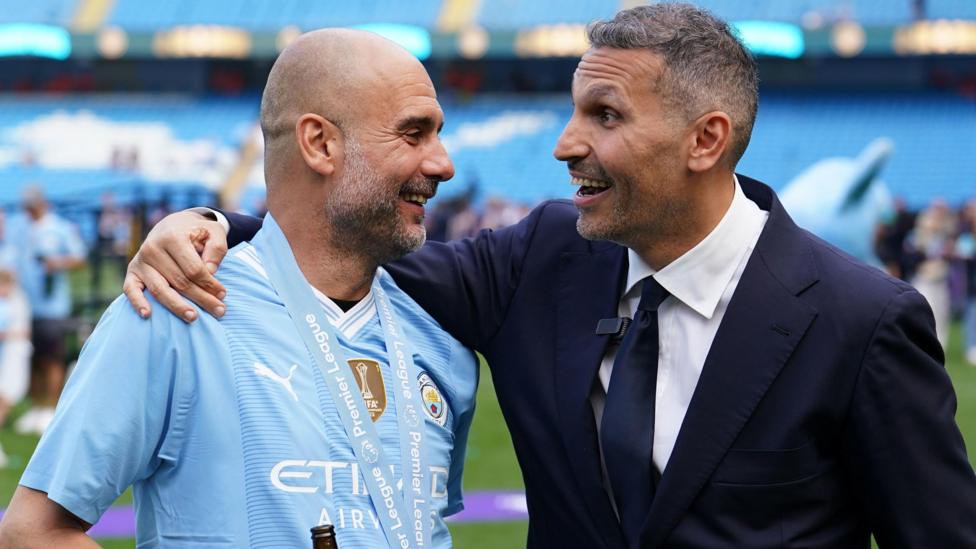
Khaldoon Al Mubarak has long been recognized as the steady hand behind City’s rise, but his annual interview revealed a previously hidden layer to his relationship with Guardiola. He described a dynamic that went far beyond the standard chairman-manager relationship, positioning himself as a part-time psychiatrist to the most intense mind in football. Over ten years, Guardiola reportedly threatened to quit 100 times during the inevitable emotional troughs that follow the crushing highs of elite competition. Khaldoon learned that in the heat of a difficult moment, Guardiola’s words were often an emotional release rather than a contractual intent.
This unique bond allowed City to weather several storms that might have fractured lesser clubs. Khaldoon spoke of the necessity of managing Pep’s temperament, understanding that the manager’s constant questioning of his own longevity was a byproduct of his perfectionism. Every few years, the same questions would arise: how much more time? How much more energy? In previous seasons, Khaldoon had always managed to talk him back from the ledge, convincing him that he remained the only answer for the club's future. But after 17 major trophies, the arguments for staying had finally been exhausted by the reality of a manager who had given everything he had to the cause.
The Natural Conclusion of a Triumphant Era
The signs of the end were subtle but present during the final weeks of the season. Despite a playful rebuttal at Wembley before the FA Cup final victory against Chelsea, where Guardiola insisted he had another year on his contract, the mood had shifted. The quick exits from press rooms and the cryptic references to the club needing new energy suggested a man who had already made his peace with the decision. When the question was put to him again after a draw at Bournemouth on May 19, his refusal to commit was the final signal. Three days later, the most successful era in the club's history was officially drawing to a close.
Guardiola's departure is not seen by the hierarchy as a failure of persuasion, but as a natural evolution. He had exceeded every expectation, not just in terms of silverware but in the fundamental transformation of English football's tactical landscape. He signed four separate contract extensions during his stay, each one a hard-won victory for Khaldoon. The chairman noted that Pep never originally intended to stay beyond four or five years, making his ten-year tenure a remarkable anomaly in modern football management. The decision to step away now, with the club at the summit of the game, was viewed by both men as the correct and respectful way to finish.
The Legacy of Seventeen Major Trophies
The statistical record Guardiola leaves behind is nothing short of staggering. Six Premier League titles and a long-awaited Champions League crown headline a haul of 17 major honors. Yet, for Khaldoon and the City board, the legacy is equally about the identity and standards he established. He moved City from being a team of high-priced stars to a cohesive, tactical juggernaut that redefined what was possible in terms of points totals and consistency. His influence permeated every level of the club, from the academy to the first-team recruitment strategy.
The intensity of those ten years is what Khaldoon believes ultimately led to this moment. Maintaining that level of focus requires a psychological toll that few can comprehend. The chairman noted that the ups and downs were extreme, and in the moments of defeat, Guardiola was often his own harshest critic. The 100 threats to quit were not tantrums, but the reflections of a man who refused to give anything less than 100 percent and feared the day he could no longer meet his own impossible standards. That day has arrived, and he departs with his reputation as the greatest of his generation firmly intact.
The Maresca Succession and a New Chapter
With the Guardiola era ending, attention has turned immediately to the future. Enzo Maresca has emerged as the leading candidate to fill the most daunting vacancy in football. The former assistant to Guardiola is understood to be in advanced negotiations, with City attracted to his intimate knowledge of the club's existing systems and his successful track record of implementing a similar style elsewhere. Khaldoon urged supporters to remain patient, promising an announcement soon that would reassure the fanbase of the club's continued ambition.
Choosing a successor who understands the Guardiola blueprint is a calculated move to ensure continuity. Maresca is seen as a coach capable of providing the "new energy" Pep spoke about without dismantling the tactical foundations that have been built over the last decade. The transition will be a delicate operation, but Khaldoon's confidence suggests that the club has been preparing for this eventuality for several seasons. The goal is to ensure that while the manager changes, the philosophy remains the same, allowing the winning culture to survive its primary architect.
A Friendship Forged in Silverware
As the interview concluded, Khaldoon's tone was more of a friend than an employer. He spoke of the deep personal bond they had developed, one that will persist long after Guardiola has left the training ground. The chairman's willingness to act as a psychiatrist, a confidant, and a foil for Pep's intensity was perhaps the secret weapon that allowed City to keep the manager for a full decade. It was a partnership based on mutual respect and a shared obsession with excellence.
The club now moves into an uncertain but exciting new phase. The shadow of Guardiola will loom large over the Etihad for years to come, but the foundations he has laid are deep and robust. As the managerial search nears its conclusion, the focus shifts to how the next man can build upon a legacy that includes nearly every major trophy available in the club game. For the latest updates on the Manchester City managerial hunt and all Premier League developments, check out more football news on MATCHLINE.