As Celtic and Hearts prepare for a high-stakes finale, the Scottish refereeing crisis reaches a breaking point with officials requiring police protection.
The silence at Fir Park on Wednesday night was not the quiet of a stadium drifting toward a stalemate, but the breathless pause that precedes a storm. When referee John Beaton was summoned to the pitchside monitor, the air in Motherwell thickened with the heavy, familiar scent of Scottish football suspicion. The decision that followed — a stoppage-time handball penalty awarded to Celtic after a VAR review — did more than just hand Kelechi Iheanacho the chance to secure a -3-2 win. It ignited a wildfire of conspiracy and vitriol that has, quite literally, brought the police to the front doors of match officials.
The High Cost of the Whistle
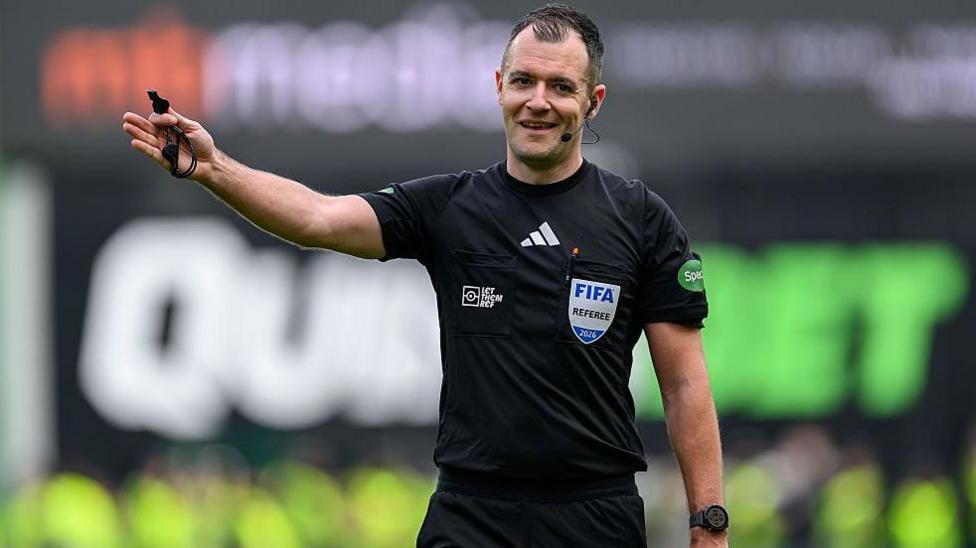
The fallout from that single moment at Motherwell has been nothing short of dystopian. Within forty-eight hours of the final whistle, the Scottish FA confirmed that John Beaton and his family were placed under police surveillance. Personal details leaked, digital mobs formed, and a standard sporting disagreement mutated into a legitimate safety concern. It is a grim indictment of the current climate in the Scottish Premiership, where the line between passionate support and criminal harassment has been entirely erased. The governing body's statement was uncharacteristically blunt, describing a environment of intolerance where referees are forced to treat staying at home with locked doors as a standard coping strategy.
Referees are used to being the most unpopular people in any stadium, but the escalation this season suggests a systemic collapse in respect. The SFA rightly pointed out that while strikers miss open goals and managers make tactical blunders, those errors are met with disappointment, whereas a referee’s mistake is met with a dossier of supposed bias. This hysterical narrative is not just a fan-led phenomenon; it is fueled by calculated post-match interviews and club statements that seek to deflect from on-field failure by casting the officials as the antagonists in a rigged script. When safety is compromised to the point of protecting children at school gates, the game has lost its moral compass.
The Psychology of the Big Two
In a league where the gravitational pull of Celtic and Rangers dictates the entire sporting economy, neutrality is often viewed through a warped lens. Every official is assigned a perceived allegiance by the court of public opinion. If a decision favors the green half of Glasgow, the official is branded a 'Celtic man'; if the blue half benefits, the labels flip. Former Celtic forward Chris Sutton notes that these conspiracy theories are woven into the very fabric of the Scottish game. It creates a psychological pressure cooker that few other European leagues can match, as referees know that a single subjective handball call will be analyzed not just for its accuracy, but for its hidden intent.
This tribalism extends deep into the family histories of the officials themselves. Take the case of VAR Andrew Dallas, whose father Hugh was once struck by a coin during an Old Firm derby. To a certain section of the internet, this historical trauma is cited as evidence that the son could never be impartial when officiating games involving the same club. It is a leap of logic that defies common sense but thrives in the echo chambers of social media. The narrative becomes a self-fulfilling prophecy, where any decision against a club is 'proof' of a deep-seated grudge, and any decision for them is merely a 'cover-up' for future bias.
Tactical Siege Mentality
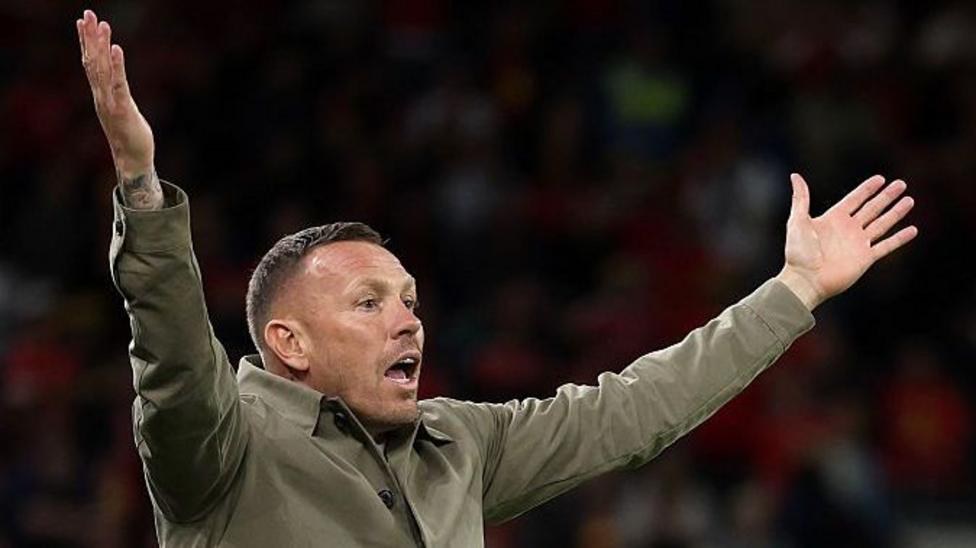
Derek McInnes, the Hearts manager, did little to lower the temperature following the midweek drama. Describing the penalty awarded to Celtic as 'disgusting', he successfully steered the conversation toward a perceived lack of fairness for his side. It is a classic managerial tactic — building a siege mentality to galvanize a squad ahead of a massive fixture. By suggesting that Hearts are 'up against everybody', McInnes isn't just talking about the eleven players in green and white; he is signaling to the match officials that they are under the microscope. This pre-emptive strike puts an immense burden on Don Robertson as he prepares to take the whistle for Saturday’s decider.
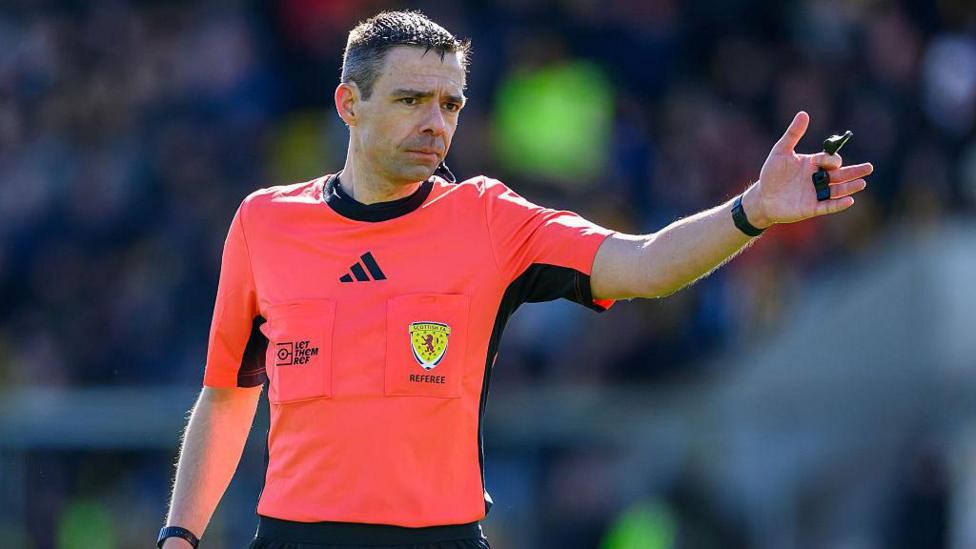
Robertson is a seasoned official who recently handled the Edinburgh derby, where he showed two red cards to Hibernian players. In the twisted logic of Scottish football rivalries, this could be interpreted as him being 'sympathetic' to the Jambos. Meanwhile, Kevin Clancy, the man assigned to VAR duties for the title decider, has long been the target of Rangers supporters who have dubbed him 'Father Clancy' in a nod to perceived Catholic or Celtic leanings. It is a exhausting cycle of character assassination that ignores the professional reality: these men are elite athletes in their own right, striving for accuracy in a game that moves faster than the human eye can often track.
The Shrinking Pool of Talent
Former referee Bobby Madden highlights a practical issue that compounds the pressure: Scotland simply doesn't have enough top-tier referees. The pool is so shallow that the same handful of officials are forced to manage the highest-stakes matches week after week. This over-exposure makes them easy targets for long-term narratives. When a referee is seen every other weekend by the same sets of fans, every past grievance is tallied and stored for future use. There is no anonymity in Scottish refereeing, and without anonymity, there is no shield from the storm.
Madden’s insight points to a looming crisis of recruitment. Who would choose to enter this profession when the reward for a decade of hard work is a police detail at your house? The 'impossible job' moniker is no longer a hyperbole; it is a literal description of a role that demands perfection while offering zero protection from the consequences of human error. If the current trajectory continues, the Scottish FA may find itself unable to staff its marquee fixtures with domestic officials, a move that would further erode the standing of the game in the eyes of the international community.
The Final Countdown at Parkhead
As the clock ticks down toward Saturday’s title showdown at Parkhead, the stakes could not be higher. For Celtic, a win secures another championship and reinforces their domestic dominance. For Hearts, it is a chance to disrupt the established order and write a new chapter in their history. But for Don Robertson and Kevin Clancy, the goal is far simpler and infinitely more difficult: they want to be invisible. They want a match decided by a moment of individual brilliance or a tactical masterstroke, rather than a controversial intervention from the VAR room at Clydesdale House.
The tension will be palpable from the moment the teams emerge from the tunnel. Every tackle will be scrutinized for excessive force; every block will be checked for a stray arm. The referees will be officiating not just the twenty-two players on the pitch, but the ghosts of every decision made since August. In the current climate, a clean, uncontroversial game would be a miracle. But in Scotland, where football is a secular religion and the referee is the ultimate scapegoat, miracles are in short supply. All eyes are on the pitch, but the real drama may well be happening in the ears of the men with the whistles. For more analysis on the Scottish game, visit more football news on MATCHLINE.