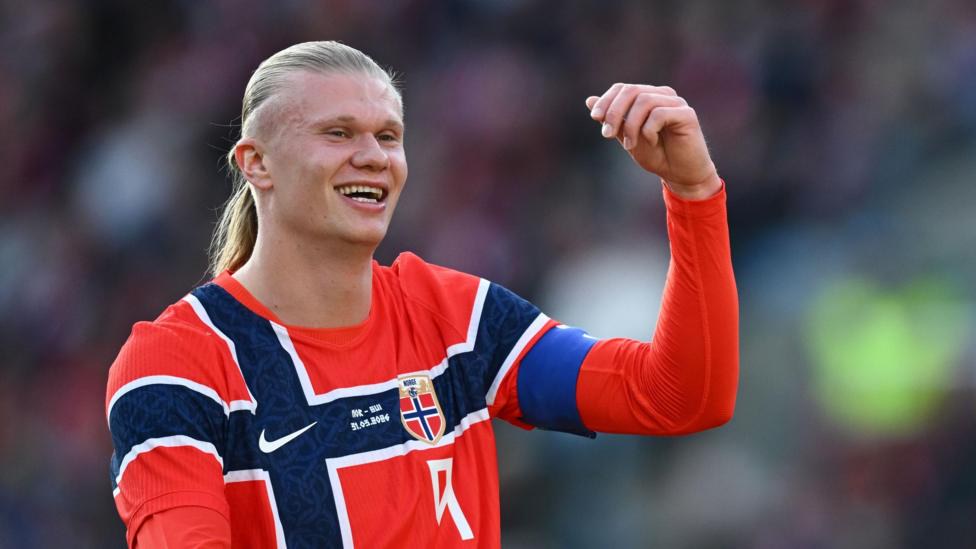
Erling Haaland has secured Norway's place at the 2026 World Cup, ending nearly three decades of heartache and carrying the dreams of a nation on his shoulders.
When the final whistle blew to confirm Norway's qualification for the 2026 World Cup, it did more than just book a plane ticket to North America. It exorcised the ghosts of twenty-eight years of failure and heartbreak for a nation that had begun to believe it was cursed to watch the greatest show on earth from the sidelines. At the center of this seismic shift stands Erling Haaland, a man who has transformed from a mere prolific striker into a national totem. Born in Leeds but forged in the wind-swept fields of Bryne, Haaland has shouldered the expectations of 5.5 million people with a casual shrug, and his sixteen goals across just eight qualifying matches have finally turned the impossible into the inevitable.
For the Scandinavian nation, the wait has been agonizing. The last time Norway competed on this stage, Haaland was not even a thought in his father Alf-Inge’s mind. The generation that famously defeated Brazil in 1998 had become a distant, grainy memory, replaced by a revolving door of talented players like John Arne Riise and John Carew who ultimately fell short of the summer festival. Now, Haaland has not only reached the summit but has done so with a statistical dominance that borders on the absurd. He enters the tournament not as a participant, but as a genuine global icon whose presence alone elevates Norway from European also-rans to a team that no heavyweight will want to draw in the group stages.
The Choice That Shaped a Nation’s Footballing Future
There was always a parallel reality where Haaland wore the white of England instead of the red and white of Norway. Born in Yorkshire during his father’s spell at Leeds United, the eligibility was there, and the temptation of joining a squad consistently reaching the latter stages of major tournaments would have broken a lesser man’s resolve. Yet, his affinity for his roots was never in doubt. This decision was not about the easiest path to a trophy; it was about the pull of home, the culture of the Nordics, and the desire to build something from the ground up in a nation that desperately needed a hero. He chose the hard way, and in doing so, he has earned a level of immortality in Oslo that no Premier League title could ever provide.
His path to this moment was meticulously crafted. From the early days at Bryne, where his physical frame first began to outgrow the opposition, to the tactical refinement under Ole Gunnar Solskjaer at Molde, every move was calculated for growth. Solskjaer often reflects on the raw power he witnessed in those early training sessions, a force of nature that just needed the right direction. By the time Haaland moved to Red Bull Salzburg and then Borussia Dortmund, he was no longer a prospect but a phenomenon. The national team felt the benefit of this upward trajectory immediately, as he brought a ruthless efficiency to a setup that had historically lacked a clinical edge in the final third.
Journalists in Norway point to his unwavering connection to his small hometown in Rogaland as the source of his strength. Despite the private jets and the global sponsorships, he is frequently seen back in Bryne, staying in touch with the community that first fostered his love for the game. He has even spoken openly about his desire to run a farm when he eventually hangs up his boots, a grounded ambition that contrasts sharply with the flashy persona of many modern superstars. This blend of the ordinary and the extraordinary is exactly why the Norwegian public has embraced him so fiercely, seeing him as one of their own who just happens to be the most dangerous player on the planet.
Beyond the One-Man Team Myth: Norway’s Golden Supporting Cast
While the headlines naturally gravitate toward the towering figure with the blond ponytail, it would be a mistake to view this Norway squad as a solo act. This is arguably the most technically gifted collection of players the country has ever produced, often referred to as a "golden generation" similar to the Belgian surge of the last decade. At the heart of the midfield is Martin Odegaard, the Arsenal captain whose vision and ball retention provide the platform for Haaland’s explosive runs. Their partnership is the heartbeat of this team, a combination of precision and power that has dismantled some of the sturdiest defenses in European qualifying.
The depth extends further than just the two superstars. Kristoffer Ajer provides a physical presence in the backline, while the emergence of Oscar Bobb at Manchester City has given Norway a creative spark on the wings that they previously lacked. Jorgen Strand Larsen offers a different profile in attack, ensuring that the burden of scoring does not rest solely on Haaland’s broad shoulders. This collective growth has allowed Norway to transition from a team that relies on set-pieces and defensive grit to a side that can dominate possession and hurt opponents in multiple ways. The tactical flexibility instilled by the coaching staff has maximized the individual talents at their disposal.
This supporting cast is vital because it prevents opponents from simply man-marking Haaland out of the game. When defenders double up on the City striker, it opens up the half-spaces for Odegaard to exploit or for Bobb to drive into the penalty area. The 2026 World Cup will be the ultimate test of this system, as they face diverse tactical challenges from across the globe. However, the confidence flowing through the squad is palpable. They no longer look like a team happy to be there; they look like a group that believes they belong in the knockout rounds, ending the long-standing inferiority complex that has plagued Norwegian football for a quarter of a century.
The Braut Identity and the Viking Persona
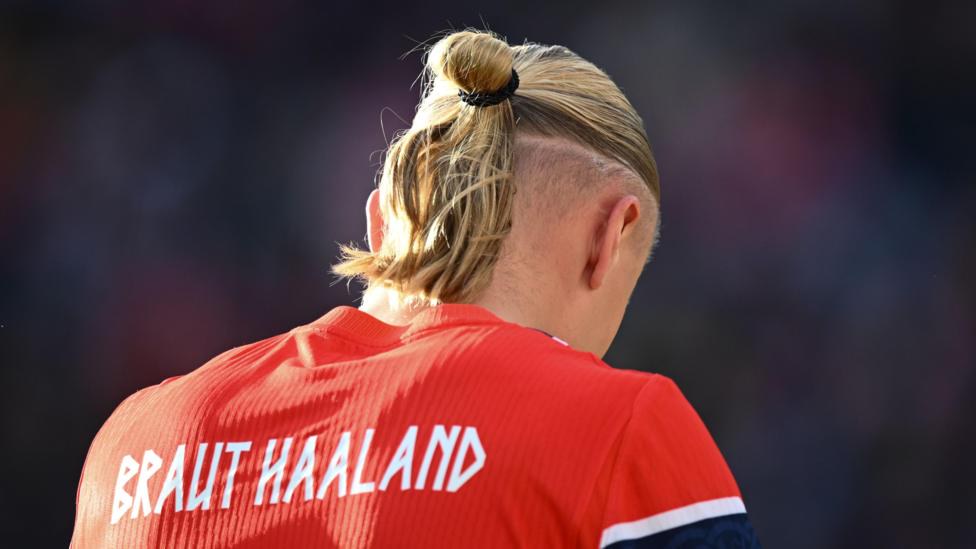
Haaland’s impact transcends the ninety minutes on the pitch. He has leaned heavily into his heritage, frequently sporting the name "Braut Haaland" on the back of his national team jersey. The inclusion of his mother’s maiden name is a nod to Norwegian tradition and a sign of the deep-seated respect he holds for his family lineage. This connection to his roots is not just for show; it is a fundamental part of his identity that resonates with a public that values humility and hard work. He has become the face of a modern Viking spirit, one that is confident, physically imposing, and utterly unapologetic about its ambitions on the world stage.
His personality is a fascinating departure from the typical Scandinavian trait of Janteloven, which discourages standing out or being too boastful. Haaland is brash, funny, and clearly knows his worth. He will openly complain if he is substituted and celebrates his goals with a ferocity that can be intimidating. This confidence has been infectious for the rest of the squad, shifting the mentality from one of modest participation to one of aggressive competition. He has redefined what it means to be a Norwegian athlete, showing that it is possible to be both a proud representative of a small nation and a global superstar who demands the center of the spotlight.
The commercial impact has been equally significant. From his YouTube channel with over a million subscribers to his upcoming role as the voice of a Viking in the animated film ViQueens, Haaland is a brand that extends far beyond the stadium. Every young kid in Oslo or Bergen is now wearing a number nine shirt, dreaming of mimicking that trademark meditative celebration. He has inspired a new generation of Norwegian talent who no longer see the World Cup as an unattainable dream but as a standard requirement. The economic boost to the Norwegian FA and the increased interest in the domestic league are tangible side effects of the Haaland era.
Escaping the Shadow of the Greats Who Never Qualified
By qualifying for 2026, Haaland has avoided the tragic fate that befell some of the greatest players in the history of the sport. The list of legends who never graced a World Cup because they were born into smaller footballing nations is a sobering one. George Best never made it with Northern Ireland, Ryan Giggs and Ian Rush were perennially absent with Wales, and Ballon d’Or winner George Weah never took Liberia to the grandest stage. Haaland was dangerously close to joining that list after Norway missed out on Euro 2024, but his determination during the World Cup qualifying cycle ensured that his prime years would not be wasted in summer hibernation.
This achievement cements his legacy in a way that club trophies cannot. Winning the Champions League with Manchester City is an exercise in elite engineering, but taking Norway to a World Cup is a feat of sheer will. It places him in a different category of greatness, one where the individual elevates the entire nation. When Norway lines up against Iraq in their opening group match on June 16, it will be a moment of immense pride for a player who could have taken the easy road but chose to lead his people back to the promised land. The weight of twenty-eight years is finally gone, replaced by the electric anticipation of what the Viking King can do on the world's biggest stage.
The journey to North America is just the beginning for this squad. With Haaland leading the line and a generation of talent entering their peak years, Norway is no longer content with just qualifying. They are heading to the tournament with the intent to cause chaos and perhaps replicate the heroics of 1998. Whatever happens in 2026, Haaland has already fulfilled his primary mission: he has put Norway back on the map. He has shown that a nation of 5.5 million people can produce the best player in the world, and more importantly, that the best player in the world can still find his greatest joy in the colors of his home country. more football news on MATCHLINE