England's new manager Thomas Tuchel traded a Stuttgart bar for the touchline, a journey sparked by injury and fueled by Ralf Rangnick's tactical vision.
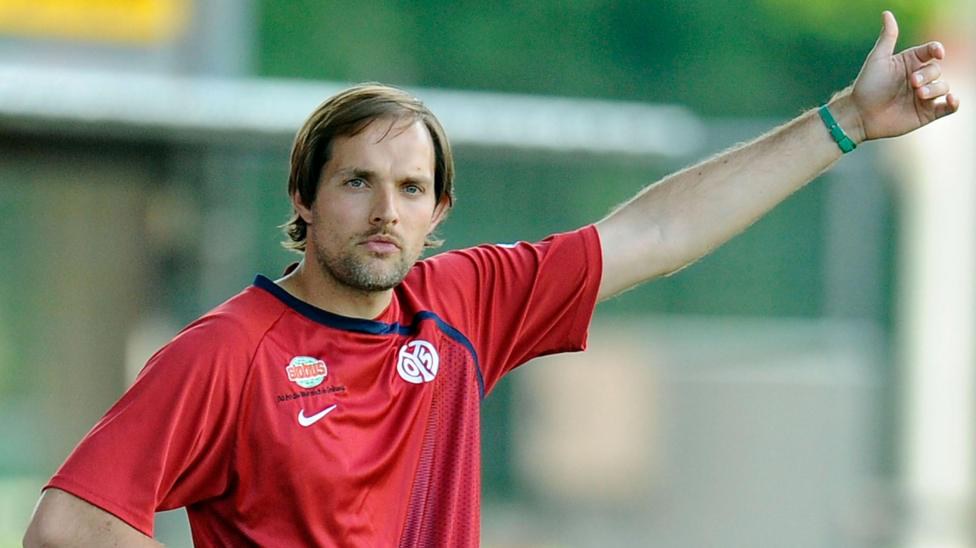
In the sweltering summer of 1998, as Glenn Hoddle’s England prepared for a World Cup campaign in France that would eventually end in heartbreak against Argentina, Thomas Tuchel was worlds away from the glare of international football. He was not in a training camp or a dugout, but behind a bar in Stuttgart, nursing the remains of a playing career that had been cruelly snatched away by injury. Today, the 52-year-old stands as the man tasked with finishing the job Hoddle and so many others could not. He is the obsessive analyst, the tactical chameleon, and the coach who found his voice while serving cocktails to the hip-hop elite of Germany.
Tuchel’s appointment as England manager represents a fascinating collision of cultures, but his path to the pinnacle of the game was forged in the most unlikely of settings. After a cartilage injury in his knees made even walking up a flight of stairs a painful ordeal, the young defender was forced into retirement at just 23. Left with no money and a failed first degree, he moved to Stuttgart to study business administration. It was here, in the iconic Radio Bar, that the future Champions League winner began to rebuild his life, one mojito at a time.
The Radio Bar was no ordinary drinking hole. Housed in the legendary Radio Barth building on Rotebuhlplatz, it was a cultural crucible for the burgeoning German hip-hop scene. Tuchel was a waiter and a bartender, a man who built his confidence by engaging with strangers who had no idea they were speaking to a former professional footballer. He befriended local musicians, including the famous rapper Max Herre, and immersed himself in a world far removed from the rigid structures of the Bundesliga. Yet, even as he mastered the art of the perfect cocktail, the pull of the pitch remained irresistible.
The Rangnick Intervention
The turning point arrived when Ralf Rangnick, the man often credited with the tactical revolution that defined modern German football, discovered Tuchel’s situation. Rangnick had coached Tuchel at SSV Ulm and had seen enough to know the young man’s brain was his greatest asset. Stunned that a talent like Tuchel was collecting empty glasses for a living, Rangnick made the call that changed everything. He challenged Tuchel to leave the bar behind and join him at VfB Stuttgart as a youth coach, marking the beginning of one of the most meteoric rises in modern coaching history.
At Ulm, Rangnick had already begun to dismantle the traditional German sweeper system in favor of zonal marking and aggressive pressing. Tuchel was a devoted student of this new philosophy. He admitted that Rangnick changed the way he watched the game, transforming it from a spectacle into a puzzle to be solved. When he moved into the academy at Stuttgart, he brought this analytical obsession with him. He didn't just want to win; he wanted to understand the mechanics of victory down to the smallest detail.
The Man with X-Ray Vision
Working under Hansi Kleitsch, the legendary academy director, Tuchel quickly earned a reputation for being ahead of the curve. Kleitsch famously dubbed him "the man with X-ray vision" because of his ability to dissect an opponent's weaknesses within minutes of kick-off. He wasn't just a theorist; he was a mentor. Future World Cup winners like Sami Khedira passed through his hands, witnessing firsthand the intensity and the fashion-forward style—Tuchel's old military parka became a cult item among the youth ranks—that would eventually take him to the top of European football.
Tuchel’s time at Stuttgart was the foundation of the manager we see today. His match plans were described as phenomenal, always finding the specific solutions needed to unlock a defensive block. This period of his life was defined by a hunger to reclaim the dream that injury had stolen. When he heard that his former club Ulm had been promoted to the Bundesliga while he was working a shift at the bar, the realization of what he was missing hit him like a physical blow. He walked out of that shift and never looked back, throwing himself into coaching with a fervor that has never dissipated.
From Stuttgart to Wembley
The lessons learned in that Stuttgart bar remain relevant as he prepares to lead England. Tuchel credits his time there with teaching him how to read people and how to build rapport outside of the football bubble. That emotional intelligence, paired with his renowned tactical flexibility, is what the Football Association is banking on. He has already shown he can handle big personalities and high-pressure environments, winning titles at Paris Saint-Germain, Chelsea, and Bayern Munich. Now, he faces the ultimate test: the weight of 1966.
As he steps into the England role, Tuchel remains as committed to the long-term vision as he is to the immediate results. His recent contract extension suggests a manager who is settled and focused on building a sustainable culture of winning. The detail-oriented coach who once obsessed over zonal marking in Ulm now has the riches of the English talent pool at his disposal. He has gone from a student collecting bottles to a man who could become the first foreign manager to lift the World Cup for England, a narrative arc that feels more like a screenplay than a career path.

The journey from the hip-hop parties of the late nineties to the technical area at Wembley has been anything but linear. It is a story of resilience, of a career saved by a mentor, and of a mind that never stops analyzing the space between the lines. Whether his "X-ray vision" can finally spot the path to World Cup glory remains the single most important question in English football. If he succeeds, they might just name a cocktail after him in Stuttgart. Until then, the focus is entirely on the pitch as he prepares his squad for the challenges of North America.
Tuchel’s arrival marks a new chapter for the Three Lions, and fans can follow more football news on MATCHLINE.