A record-breaking transfer promised the world to Liverpool and Newcastle, but a season of injury and tactical drift has left both clubs picking up the pieces.
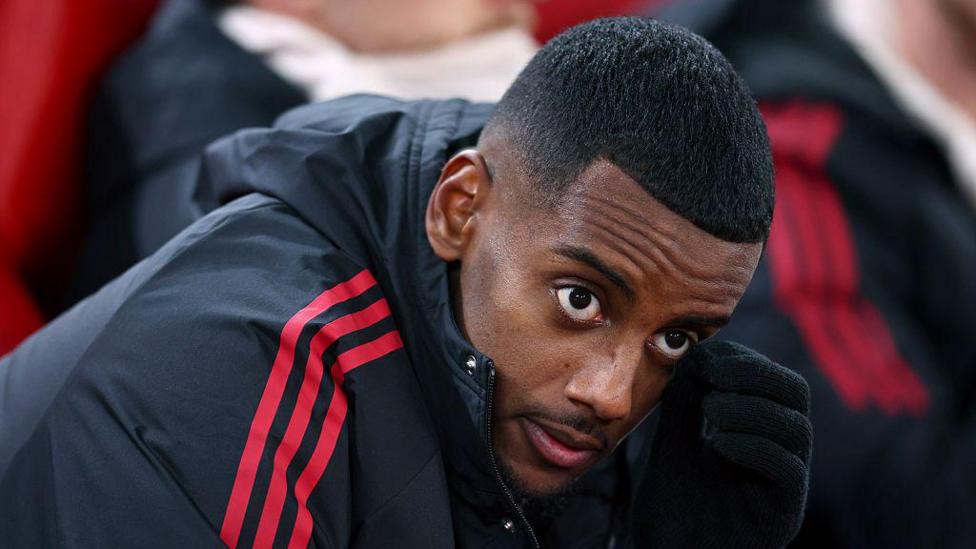
Alexander Isak’s recent social media post was more than just the standard end-of-season platitude. When the Swedish international wrote about looking forward to a much better campaign next year, the words carried the heavy weight of a man who has spent more time in the treatment room than the penalty area. His recent goal for Sweden against Norway in Oslo offered a tantalising glimpse of what Anfield has missed; a shimmering display of balance and technique that saw him weave through the Norwegian defence before looping a finish into the top corner. It was the kind of individual brilliance that convinced Liverpool to part with a British record £125 million, yet for much of the past nine months, those moments have been replaced by the sterile silence of rehabilitation clinics.
This was never the script Isak or his new club intended to follow. Arriving as the marquee signing of a summer window that saw Liverpool seemingly consolidate their status as Premier League champions, Isak was expected to be the final piece of a dominant puzzle. Instead, his first year on Merseyside has become a cautionary tale of how one high-profile deal can destabilise the foundations of two elite institutions. With just four goals to his name and a four-month absence through injury, Isak’s debut season at Anfield has been a series of frustrations that ultimately contributed to the sacking of Arne Slot and a disappointing fifth-place finish.
The Anatomy of a Broken Campaign
The fractured ankle and fibula Isak suffered in December acted as the primary catalyst for Liverpool’s slide. Up until that point, the Swedish striker was struggling to find his rhythm within a team that had undergone significant surgery. While Liverpool theoretically won the transfer window by landing Isak alongside the likes of Florian Wirtz and Hugo Ekitike, the reality on the grass was far less cohesive. Isak, who had famously gone on strike to force his move from Tyneside, arrived with a lack of match fitness that made him susceptible to the physical rigours of Slot’s high-intensity system. By the time the serious injury occurred, he had already become a peripheral figure in several key matches.
The lack of impact was nowhere more evident than in the Champions League quarter-final against Paris St-Germain. In 45 minutes of football at Anfield, a stadium that usually thrives on the energy of its strikers, Isak managed a mere five touches of the ball. He was isolated, static, and clearly struggling with the tactical demands placed upon him. As his fitness issues mounted, Liverpool’s medical staff grew increasingly cautious, refusing to risk him for minor knocks during the final stretch of the season. This protective stance, while perhaps necessary for his long-term career, left the squad without its most expensive asset during a period where they were desperately trying to salvage a top-four spot.
Now, the task of rehabilitating both Isak’s form and his confidence falls to a new regime. Negotiations with former Bournemouth manager Andoni Iraola suggest a shift towards a more structured attacking approach, one that might better suit Isak’s need for service and space. Those within the Anfield hierarchy are adamant that this season was a statistical anomaly. They point to his availability in previous years and his output for Sweden as evidence that the £125 million investment is not a bust. However, the pressure of that price tag will only grow if he does not hit the ground running when the new season commences.
The St James’ Park Vacuum
While Liverpool struggled to integrate their new star, Newcastle United found themselves haunted by his absence. For three years, the Magpies had orbited around Isak’s unique ability to conjure goals from nothing. He was the talismanic figure who had ended their seven-decade trophy drought by scoring the winner in the 2025 League Cup final. Losing him on deadline day was not just a blow to the squad’s depth; it was a psychological gut-punch that Eddie Howe’s side never truly recovered from. The subsequent slide to 12th place in the Premier League table told a story of a team that had lost its focal point and its identity.
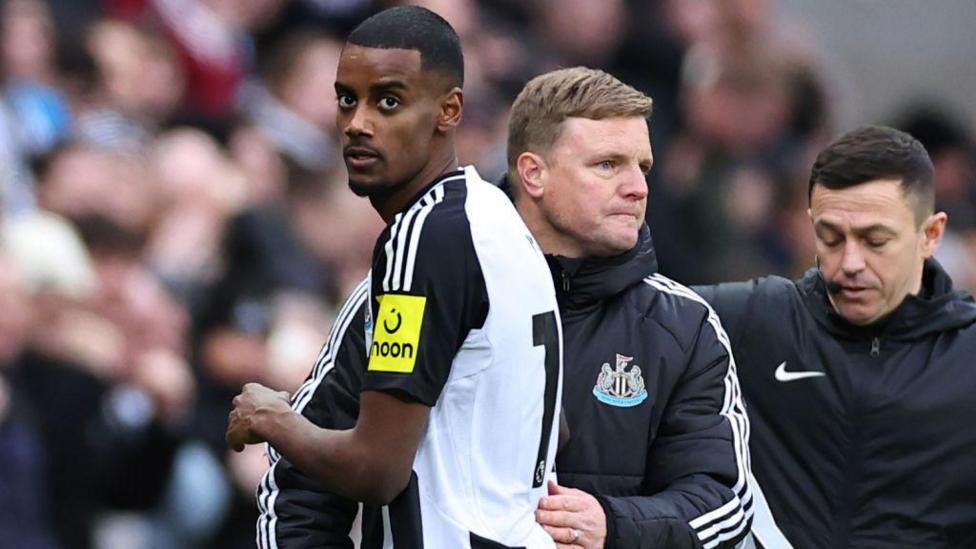
The fallout from Isak’s departure exposed significant cracks in Newcastle’s executive structure. At the time of the transfer, the club was operating without a sporting director, a vacancy that made the handling of Isak’s strike and eventual exit far more chaotic than it needed to be. Eddie Howe’s public admission that Isak was a one-of-a-kind talent reflected a private desperation within the coaching staff. Without him, Newcastle’s once-potent attack became predictable. The club has since moved to appoint David Hopkinson and Ross Wilson to senior roles, ensuring that future departures, like Anthony Gordon’s move to Barcelona, are handled with the professionalism that was lacking during the Isak saga.
The statistical drop-off in Newcastle’s efficiency without their Swedish spearhead is startling. In Isak’s final full season at the club, Newcastle boasted the third-best big chance conversion rate in the league at 41.1%. Isak himself was clinical, converting difficult opportunities with a regularity that masked other deficiencies in the squad. Without him, that figure plummeted to 34.4%, the fifth-worst in the division. Despite creating 90 high-quality openings, Howe’s men only converted 31 of them. It is no coincidence that a team lacking a world-class finisher also managed to throw away 27 points from winning positions, the highest in the top flight.
Tactical Shifts and Failed Experiments
In the wake of Isak’s exit, Eddie Howe was forced into a series of tactical experiments that failed to yield consistent results. The arrivals of Nick Woltemade and Yoane Wissa were intended to soften the blow, but neither possessed the gravity that Isak exerted on opposition defences. For much of the season, Newcastle lacked the ability to stretch games or hold the ball up under pressure. By the time William Osula was installed as the primary striker in the final weeks of the campaign, the damage to Newcastle’s European ambitions was already irreparable. Howe has been candid about the difficulty of building a new team in such a short window, but the reality is that the squad’s balance was fundamentally destroyed.
The struggle to respond to going behind became a recurring theme at St James’ Park. Without a striker capable of creating something from nothing, Newcastle’s play became increasingly lateral and easy to defend. The lack of a focal point meant that midfield runners like Bruno Guimaraes were often caught in possession, trying to do too much because they didn't trust the options ahead of them. While other clubs like Bournemouth have successfully rebuilt after losing key assets, Newcastle’s reliance on Isak was so total that his departure left a vacuum that no single signing could fill. It was a pivotal moment that marked the end of an era for Howe’s initial project.
Looking ahead, both clubs are facing a summer of introspection. For Liverpool, the priority is clear: they must find a way to make Isak the centerpiece of an attack that finally justifies his record-breaking fee. For Newcastle, the focus is on smarter recruitment and ensuring they are never again so dependent on a single individual. The Isak saga has served as a brutal reminder that in the Premier League, the biggest transfers often carry the biggest risks, and the cost of failure is measured in more than just pounds and pence. As Isak prepares for a pre-season that could define his legacy, the shadows of the past year still loom large over two of England’s most historic clubs.more football news on MATCHLINE