
A suspected fungus outbreak at Estadio de Balaidos has left Celta Vigo's opening match against Osasuna in doubt as La Liga officials prepare a final inspection.
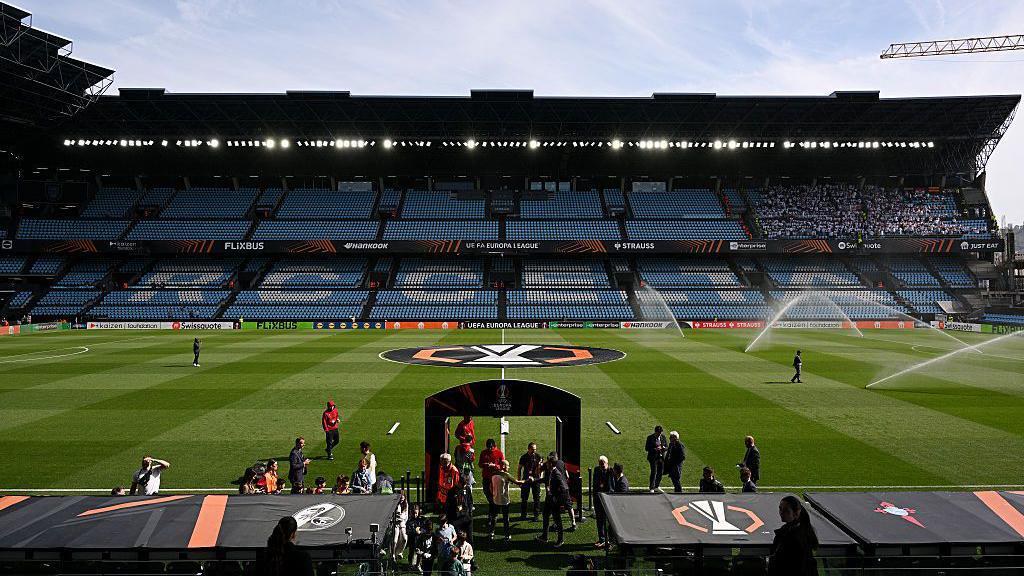
The lush green turf of La Liga is usually a source of pride for Spanish football, but at Celta Vigo's Estadio de Balaidos, it has become the site of a biological battleground. On the eve of the 2026-27 season opener, a suspected fungus outbreak has severely compromised the playing surface, leaving officials scrambling to determine if Sunday night's clash against Osasuna can proceed as planned. The timing could not be worse for a league still riding the wave of Spain's recent World Cup triumph, as the glare of the international spotlight turns toward a venue that is supposed to be a cornerstone of future hosting ambitions.
Celta Vigo, concerned for the safety of the players and the integrity of the spectacle, have reportedly requested a postponement of the fixture. However, their opponents Osasuna are currently leaning toward playing the match as scheduled, creating a diplomatic tension that La Liga must resolve within the next 24 hours. The situation has highlighted the fragile nature of stadium maintenance in an era of extreme weather and heavy fixture congestion, with the league's inspection team set to provide a final verdict that could reshape the opening weekend’s schedule.
The Nature of the Outbreak
While fungus infections on professional pitches are not uncommon, the severity of the situation at Balaidos suggests a deep-rooted issue that has rapidly escalated. Reports from Vigo indicate that large patches of the surface have turned brown and brittle, losing the necessary traction for high-intensity football. For a team like Celta, whose tactical identity is built on intricate passing and explosive movement from the wings, a substandard pitch is not just an eyesore; it is a direct hindrance to their style of play. The risk of injury is also a major concern, as uneven turf is a primary cause of non-contact ligament damage.
Groundstaff at the stadium have been working around the clock to treat the affected areas, but the recovery of professional grass is a slow process that cannot be rushed by chemicals alone. The humidity and heat of the Galician summer may have provided the perfect breeding ground for the spores to thrive, catching the club off guard during the final stages of pre-season preparation. If the inspection team finds that the roots have been compromised, the league will have no choice but to push the game back, regardless of the logistical headaches it creates.
World Cup Aspirations vs. Current Reality
The irony of the situation is not lost on the local community or the Spanish FA. Estadio de Balaidos has been undergoing a massive, decade-long renovation aimed at increasing its capacity to over 40,000 spectators. These upgrades are central to the stadium's inclusion as one of the 11 Spanish venues for the 2030 World Cup, which Spain will co-host alongside Portugal and Morocco. To have a pitch deemed unplayable just months after the national team celebrated their 2026 victory at the same venue is a PR nightmare for the regional authorities.
In June, the world saw a pristine version of Balaidos when Spain played a friendly against Iraq as a warm-up for their successful World Cup campaign. The decline of the surface in such a short period of time raises questions about the sustainability of the current maintenance regime during the final phases of construction. As the stadium prepares to host the world's biggest tournament in six years, the current crisis serves as a wake-up call for the investments required not just in the stands, but in the ground beneath the players' feet.
The Scheduling Chaos of the Opening Weekend
La Liga’s opening weekend was already under significant strain before the fungus outbreak in Vigo. Three major fixtures—Valencia v Real Betis, Real Madrid v Real Sociedad, and Barcelona v Athletic Club—have already been rescheduled for later in the month. This was a necessary concession to accommodate players who participated in the 2026 World Cup final, ensuring that the league's stars received adequate rest before returning to domestic duty. Adding a Celta Vigo postponement would further complicate a television schedule that is already tightly packed.
Celta themselves had the legal right to postpone the match earlier due to Borja Iglesias reaching the World Cup final with the national team, but the club chose to move forward, confident in their squad depth. For them to now seek a delay due to pitch conditions is a bitter pill to swallow. The league must balance the commercial interests of broadcasters, who have marketed the opening night heavily, with the basic necessity of providing a safe and fair environment for the athletes. A decision is expected to be announced by midday on Saturday.
The Tactical Cost for Osasuna
For Osasuna, the uncertainty is a major disruption to their tactical preparation. Managers plan their week around the specific dimensions and conditions of the away ground, and the possibility of a late postponement throws their travel plans and recovery cycles into disarray. Their willingness to play the game as scheduled suggests they believe they can adapt to the surface, perhaps utilizing a more direct, physical approach that is less dependent on perfect grass than Celta’s technical game.
The tension between the two clubs reflects the high stakes of the early season. In La Liga, every point matters, and teams are loath to give up any perceived advantage. Celta feels that playing on a ruined pitch negates their home-field advantage and ruins their attacking flow, while Osasuna likely wants to face a distracted opponent before they have the chance to fully integrate their returning internationals. The league's inspectors will have to cut through this gamesmanship to make a purely objective ruling based on the health of the turf.
Looking Ahead to the Final Verdict
As the sun sets over Vigo, the focus remains on the small patches of green that will dictate the weekend for thousands of fans. If the match is postponed, it will be a significant blow to the local economy and a frustrating start for the supporters who have waited all summer for the return of league football. However, if the game proceeds, it will be under a cloud of scrutiny, with every slip and misplaced pass blamed on the underlying fungus.
Ultimately, this incident serves as a reminder that for all the billions of euros in television rights and the architectural grandeur of modern stadiums, the sport remains at the mercy of nature. A microscopic fungus can bring a multi-million-euro industry to a standstill just as effectively as any boardroom dispute. Whether the ball rolls on Sunday or not, the lessons learned at Balaidos will likely lead to a league-wide review of pitch maintenance standards ahead of the 2030 World Cup. Get more football news on MATCHLINE.