Jose Mourinho weighs in on Trent Alexander-Arnold's midfield shift at Real Madrid after a gritty win over Inter Milan in the Champions League.
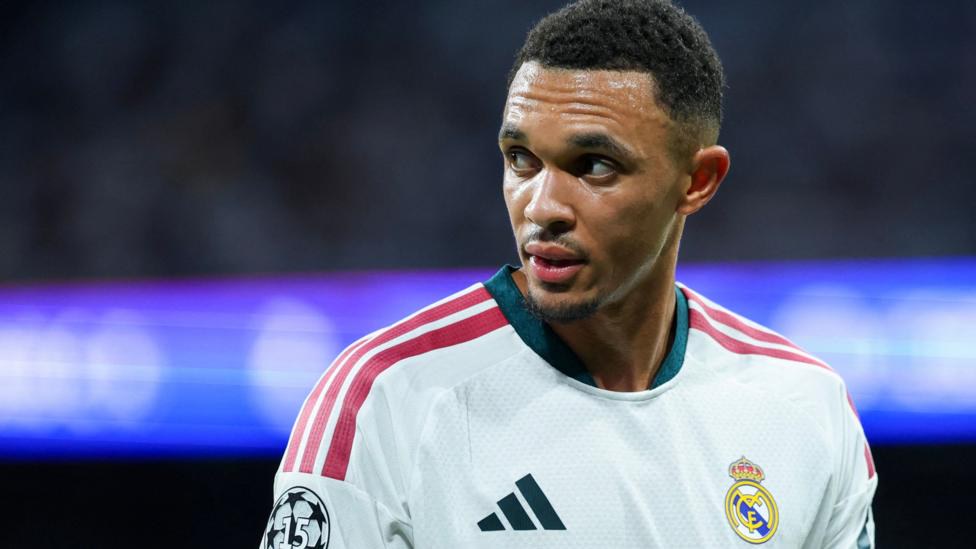
The tactical identity of Trent Alexander-Arnold has become one of the most debated subplots in modern European football. In the high-pressure environment of the Champions League, the 27-year-old found himself thrust into the heart of Real Madrid’s midfield for their 2-1 victory over Inter Milan. It was a role he knows well from various experimental phases with England and Liverpool, but at the Santiago Bernabeu, every touch is scrutinized with a unique intensity. The England international was tasked with conducting the tempo in a match that often felt like a physical grind rather than a showcase of technical elegance.
The 27-year-old looked eager to impress in only his second start of a campaign that has been punctuated by frustration on the sidelines. Since his move to the Spanish capital last summer, securing a permanent spot in the starting XI has proved difficult. This latest appearance in a central role was born of necessity rather than a long-term strategic shift, as Jose Mourinho dealt with a depleted squad. With Eduardo Camavinga, Arda Guler, and Bernardo Silva all unavailable through suspension, the Portuguese manager turned to the versatile Englishman to partner Federico Valverde in the engine room.
Tactical Friction and Mourinho's Verdict
Despite the victory, Jose Mourinho was quick to temper expectations regarding a permanent move for Alexander-Arnold into the midfield trio. The Real Madrid boss was vocal about the player’s contribution but stood firm on his biological footballing position. Mourinho acknowledged the effort and tactical intelligence required to fill the gap but insisted that Alexander-Arnold is not, by trade, a midfielder. It was a pragmatic assessment from a coach who values defensive structure as much as creative output, and he noted that the player's engine was pushed to its absolute limit.
The statistics from the evening painted a picture of a player still adjusting to the 360-degree demands of the center circle. While Alexander-Arnold attempted more crosses than any other player on the pitch and created two scoring opportunities, his defensive impact was virtually non-existent. He failed to win a single tackle throughout his time on the pitch, and his passing accuracy dipped to 83.3%. In the congested middle of the park, the time and space he usually enjoys at right-back were swallowed up by Inter’s aggressive press, leading to several uncharacteristic losses of possession.
The Shadow of Southgate's Experiment
The debate surrounding Alexander-Arnold’s position is not a new phenomenon. Gareth Southgate famously attempted to convert him into a central playmaker during Euro 2024, an experiment that was abandoned after just two group stage matches. That period of trial and error followed a successful outing in June 2023, where he wore the number 10 shirt and scored in a 4-0 win over Malta. Even then, the player admitted that while the role felt natural and comfortable, the transition required a different type of physical conditioning and mental awareness.
Southgate’s eventual retreat from the plan after a disjointed 1-1 draw with Denmark served as a cautionary tale. At the Bernabeu on Tuesday, there were echoes of that struggle. When Inter pulled a goal back in the 77th minute, Mourinho opted to withdraw Alexander-Arnold, a move met by whistles from the demanding Madrid crowd. Whether those whistles were directed at the tactical change or the general dip in team performance, it highlighted the precarious nature of playing out of position in the world's most unforgiving stadium.
Navigating the Right-Back Rivalry
The current situation at Real Madrid is further complicated by the battle for the right-back slot. Alexander-Arnold is currently competing with Denzel Dumfries for a regular starting berth, echoing the positional rivalry he shared with Dani Carvajal last season. The match against Inter marked the first time both Alexander-Arnold and Dumfries started a competitive fixture together, though their previous partnership in a pre-season friendly against Fiorentina saw the Englishman in his traditional defensive role while Dumfries pushed further forward.
Mourinho clearly values the flexibility Alexander-Arnold provides. The Portuguese coach has expressed admiration for the player's professional values and the unique dimension he adds to the squad. His ability to deliver world-class crosses and through balls remains a potent weapon, regardless of his starting coordinate on the team sheet. For Mourinho, the challenge is finding a way to harness that creative genius without compromising the defensive stability that top-flight football demands, particularly when the stakes are as high as a Champions League knockout environment.
A Question of Physicality and Engine
One of the primary concerns Mourinho highlighted after the Inter game was the physical toll of playing in the middle. He noted that the intensity of the work required in midfield differs significantly from the explosive, flank-based sprinting of a full-back. Alexander-Arnold left the pitch having given everything, but Mourinho pointed out that he lost balls because he was operating in a zone where the pressure is constant and the physical demands are relentless. This lack of a "midfield engine" might be the deciding factor in where his future lies under this management.
The lack of defensive interventions during the Inter match suggests that while he can spray passes and deliver set-pieces, the grittier aspects of the role do not come as naturally. In Mourinho’s system, every player must contribute to the collective defensive block. If Alexander-Arnold cannot provide the tackle-winning capability required to protect the back four, his time in the center may remain limited to emergency situations. He interprets the tactical requirements well, but the raw physical output required to dominate a Champions League midfield is a different beast entirely.
The Bernabeu Verdict
The whistling at the 77-minute mark serves as a reminder of the thin line between success and failure at Real Madrid. While the supporters are traditionally enamored with creative brilliance, they also demand control and defensive solidity. Alexander-Arnold’s performance was a mixture of his trademark vision and the vulnerabilities of a player out of his comfort zone. As the injured stars return to the squad, it is likely that the experiment will be shelved in favor of more specialized options in the middle of the park.
Ultimately, the win over Inter Milan provides Real Madrid with three valuable points, but it does little to settle the long-standing argument about their star recruit's best position. Alexander-Arnold remains a luxury weapon, a player whose right foot can unlock any defense in world football. Whether that foot is deployed from the touchline or the center circle will depend on Mourinho’s willingness to trade defensive security for offensive flair. For now, the "midfielder" tag remains a temporary label for a player who is still searching for his definitive identity in the famous white shirt. More football news on MATCHLINE.