
UEFA refereeing director Roberto Rosetti calls for a return to human-centric officiating as a new portal is launched to clarify the VAR threshold for fans.
Roberto Rosetti is drawing a line in the sand. The man who leads UEFA’s officiating department has spent years watching the slow-motion erosion of football’s soul by the very technology designed to protect it. At a high-level summit with directors from Europe’s most powerful leagues, Rosetti made his position clear: the era of forensic, sterile, and ultimately un-sporting video reviews must come to an end. He believes the game is being pulled away from its visceral roots and pushed toward a digital simulation that bears little resemblance to the physical reality on the pitch.
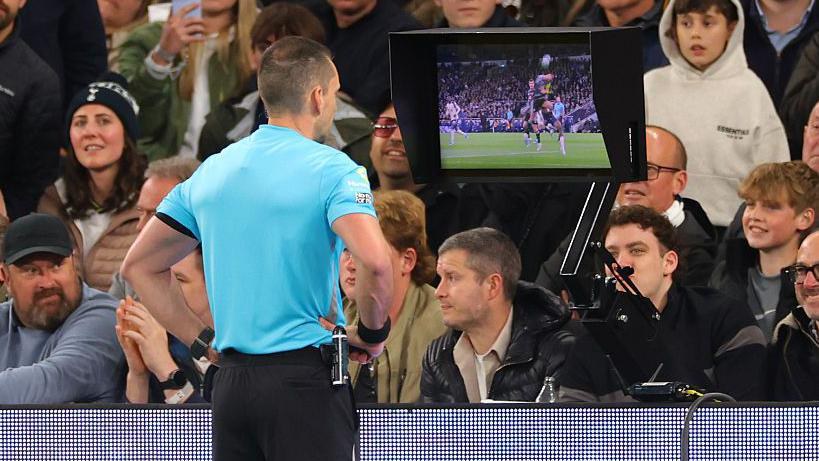
The central grievance is the way video assistant referees (VAR) have begun to hunt for infractions that the human eye would never naturally register. Rosetti’s critique was sharp, labeling these microscopic interventions as a detachment from the sport’s identity. When a match official is forced to stand before a flickering screen, isolated from the atmosphere and the rhythm of the game, the decisions reached often feel alien to those watching in the stands or playing on the grass. The drive for a more uniform, common-sense approach is now the primary objective for the governing body's refereeing department.
The 'PlayStation' Problem and the Quest for Reality
Rosetti’s use of the term "PlayStation" to describe current VAR trends is a deliberate jab at the hyper-analytical nature of modern officiating. During his meeting with lead referee officers from England, Spain, Germany, France, and Italy, the former Euro 2008 final referee emphasized that the technology was never intended to replace the intuition of the official. The goal was to catch the "howlers," not to deconstruct every micro-interaction between two athletes at twenty-four frames per second. By focusing on these minute details, the system has inadvertently created a version of football that feels choreographed rather than competitive.
The Italian chief argued that the context of an incident is far more important than a still image of contact. He noted that the footballing world is currently suffering from a lack of satisfaction regarding how video technology impacts the flow and emotional integrity of matches. To combat this, UEFA is pushing for a return to the original "clear and obvious" mandate. This means referees are being encouraged to trust their initial instincts and only yield to the screen when a mistake is so glaring that it requires no debate. The philosophy is simple: the referee must remain the primary arbiter, not a secondary operator waiting for a remote correction.
One of the most significant issues identified by UEFA is the way VAR interventions are beginning to warp player behavior. Rosetti pointed out that athletes are increasingly playing with the technology in mind, exaggerating contact or appealing for reviews in scenarios where they know a slow-motion replay might make a standard challenge look like a red-card offense. This tactical manipulation of the rules undermines the spirit of the game, turning every penalty box scramble into a potential litigation process rather than a test of skill and strength.
The 'Clear Line' Initiative: Educating the Fanbase
In a bid to bridge the gap between the VAR booth and the average supporter, UEFA has launched "Clear Line," a digital portal designed to demystify the decision-making process. Rosetti described the platform as a "library for the people of football," ranging from club executives and players to the fans who fuel the sport's economy. The intention is not to provide a secret manual for officials, but to offer a transparent guide that illustrates exactly why a goal was disallowed or a penalty was overturned. By providing specific video examples of confirmed decisions, UEFA hopes to foster a more informed dialogue about the rules.
The portal breaks down the complexities of VAR into five distinct categories: penalty decisions, red cards, attacking offences, factual decisions, and mistaken identity. Each section is populated with clips from recent Champions League matches, serving as a benchmark for what constitutes an intervention. Rosetti hopes that after a controversial midweek fixture, fans will visit the portal to see how a specific incident aligns with the established protocols. It is an admission that the current level of confusion is unsustainable and that clarity is the only way to restore the system's flagging credibility.
This move toward transparency is also a defensive measure against the constant cycle of outrage that follows every major match. By defining the parameters of an intervention so strictly, UEFA is signaling that they are comfortable with some mistakes going uncorrected if they do not meet the high threshold for a review. Rosetti is essentially asking for the public to accept a degree of human error in exchange for a more authentic and less interrupted experience. The belief is that a game with fewer, better reviews is vastly superior to one with frequent, pedantic interruptions.

The Handball Divide and Statistical Disparity
Perhaps the most contentious area of modern officiating remains the interpretation of handball. Rosetti’s data highlights a startling lack of consistency across the European continent. The Premier League stands out as the most relaxed environment for defenders, with a handball penalty occurring only once every 17.27 matches last season. At the other end of the spectrum, the French Ligue 1 saw a penalty for handball every 9.27 games, while the Champions League topped the list with a staggering frequency of one every seven matches. These numbers suggest that the same action can have vastly different consequences depending on the badge on the referee's sleeve.
The data from other major leagues further underscores this fragmentation. The German Bundesliga recorded a handball penalty every 10.93 games, followed closely by Spain’s La Liga at 10.56 and Italy’s Serie A at exactly 10.00. For Rosetti, these statistics are a clear call to action. While he acknowledges that local interpretations and cultural attitudes toward the game will always exist, such a wide gulf in the application of the laws of the game is detrimental to the sport's integrity. The "Clear Line" portal specifically targets these situations, using dozens of clips to show what should be considered a natural body position versus an illegal obstruction.
The discrepancy between the Premier League and the Champions League is particularly problematic for clubs competing on multiple fronts. Players are forced to adjust their defending style mid-week, knowing that what is tolerated in domestic play will be punished in Europe. Rosetti and Ifab technical director David Elleray are working to narrow this gap, but the Italian admits that football is not perfect. The goal is not to achieve a robotic, 100 percent success rate—which he deems impossible—but to ensure that the logic behind the decisions is at least consistent across borders.
The 90-Second Rule and the Integrity of the Screen
Time is of the essence in the new UEFA protocol. Rosetti believes that any VAR check that exceeds the 90-second mark risks losing all credibility with the audience. When a referee spends three or four minutes staring at a monitor, it suggests that the error was not, by definition, "clear and obvious." If an incident requires fifty different camera angles and a prolonged debate to find a foul, the governing body's stance is now that the original on-field decision should simply stand. This push for efficiency is aimed at preserving the emotional momentum of the match, which is often killed by long periods of inactivity.
To facilitate faster and more accurate reviews, a new collective protocol has been established for referees when they are called to the pitchside monitor. Under these guidelines, the official will first be shown a freeze-frame to identify the exact point of contact. This is followed by a half-speed replay to assess the trajectory and the nature of the movement. Crucially, the final stage of the review must be viewed at full speed to determine the intensity of the challenge. Rosetti insists that intensity cannot be judged in slow motion, as the lack of real-time speed makes every touch appear more violent and deliberate than it truly was.
This technical adjustment is a direct response to the "warped reality" created by high-definition, super-slow-motion replays. By forcing the referee to witness the incident at the speed it actually occurred, UEFA hopes to prevent the over-punishment of accidental or unavoidable contact. The emphasis is on personality and courage; Rosetti wants referees who are willing to stick to their guns if the video evidence is anything less than conclusive. The screen should be a safety net for the official, not a leash that pulls them away from their professional judgment.
Returning to the Spirit of 1986
In his address, Rosetti frequently referred to the "Hand of God," Diego Maradona’s infamous goal for Argentina against England in the 1986 World Cup. He cited this as the ultimate example of why VAR was created. The technology was built to stop the world from witnessing a blatant injustice that everyone—except the referee—could see. Somewhere along the line, that mission statement has been buried under a mountain of offside lines measured in millimeters and fouls detected by the brush of a jersey. Rosetti wants to strip away these layers and return to that original purpose.
By prioritizing the "big" moments, UEFA is attempting to de-escalate the tension that has built up between officials and supporters. The focus is shifting away from the pursuit of a perfect, error-free game and toward a system that simply ensures fairness in the most critical moments. Rosetti believes that if VAR can consistently catch the Maradona-style incidents while ignoring the trivial ones, the sport will be in a much healthier place. It is a philosophy of restraint, acknowledging that while technology can see everything, it doesn't always need to speak.
The meeting with the heads of the Premier League and other top divisions suggests a newfound unity in this approach. While the Premier League had the lowest intervention rate in Europe last season at 0.29 per game—compared to the Champions League’s 0.47—the trend across the board is toward less interference. The goal is to move the conversation away from the VAR booth and back to the players on the pitch. As Rosetti concludes, it’s about normal speed and context. It’s about football, and the people who run the game seem finally ready to let it breathe again.
The coming season will be the ultimate test for these new protocols as referees attempt to balance the demands for accuracy with the need for speed. For fans, the hope is that the 90-second threshold and the "Clear Line" portal mark the beginning of a more transparent and less intrusive era for the world's most popular sport. more football news on MATCHLINE