Liverpool defender Ibrahima Konate opens up about the psychological toll of losing teammate Diogo Jota and his father during a grueling final season.
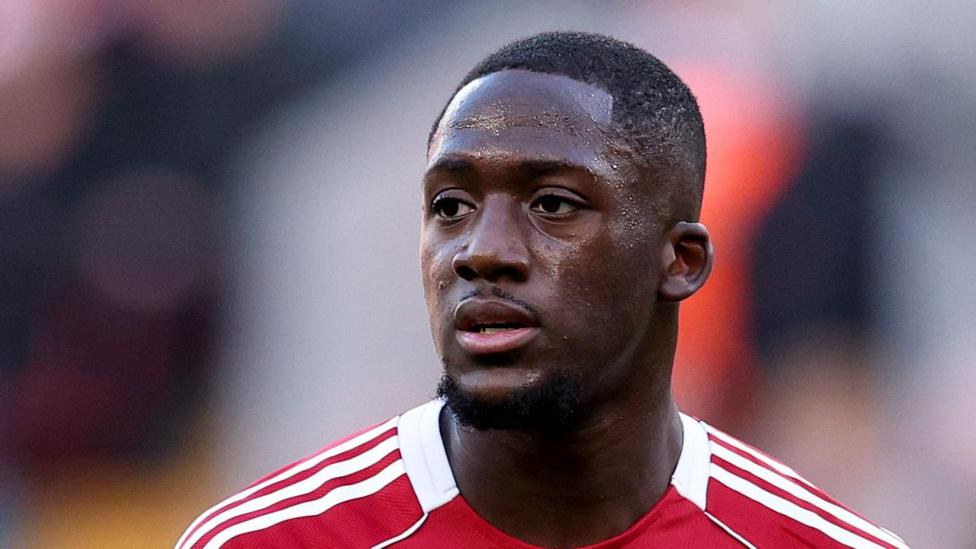
Modern football often treats its protagonists as armored icons, immune to the standard frailties of the human condition. Yet, the towering physical presence of Ibrahima Konate has recently served as a mask for a profound internal struggle. The France international has broken his silence regarding a harrowing period of clinical depression that shadowed his final year on Merseyside, triggered by a relentless succession of personal tragedies that would have buckled the strongest of wills.
Konate has articulated a journey through grief that began with the shocking death of teammate Diogo Jota and culminated in the loss of his father, Hamady. While the 27-year-old continued to anchor the Liverpool defense throughout the 2025-26 campaign, he has now admitted that the version of himself seen on the pitch was merely a shell, functioning on instinct while his mental health suffered a total collapse behind closed doors.
The Silent Erosion of Mental Health
The stigma surrounding mental health in elite sport remains a formidable barrier, one that Konate is determined to dismantle. Speaking with candid authority on France Inter radio, the center-back dismissed the notion that financial success or professional status offers any protection against psychological distress. He described depression not as a fleeting mood, but as a physiological takeover that starts in the heart before seizing the brain and the entire body. His insistence that players should feel no shame in admitting these vulnerabilities marks a significant moment for the modern game.
For Konate, the struggle was exacerbated by the external perception of the wealthy, successful athlete. He noted that fans often struggle to reconcile the idea of a high-earning footballer suffering from depression, but he labeled such logic as nonsense. By speaking out, he aimed to validate the experiences of others who feel trapped by the expectations of their profession. He explained that when the mind is clouded by such deep-seated pain, the mechanics of daily life, including the high-pressure environment of the Premier League, become almost impossible to navigate with any genuine passion or focus.
The Loss of a Neighbor and Teammate
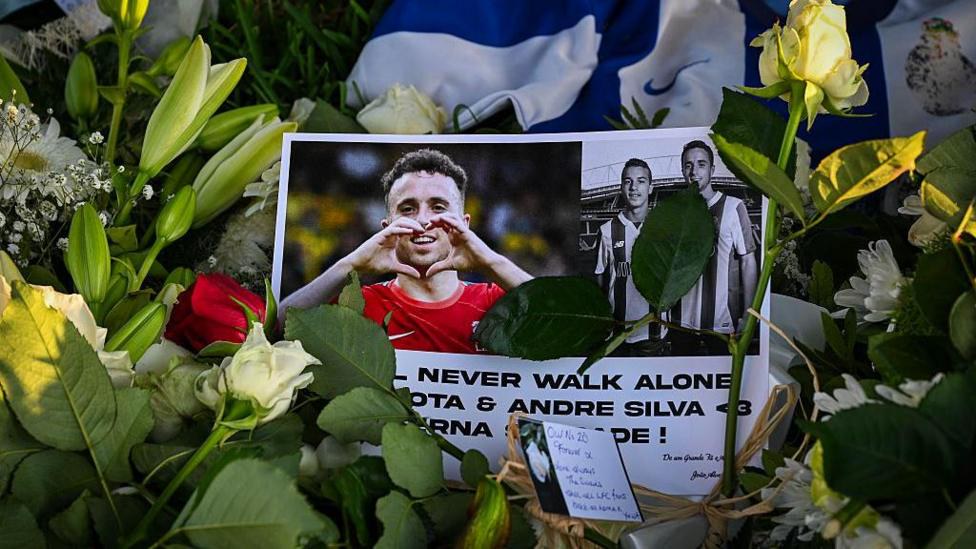
The catalyst for Konate's downward spiral was the tragic car accident last July that claimed the lives of Diogo Jota and his brother, Andre Silva. The loss was not merely professional for Konate; it was deeply personal. Jota was not just a fellow forward in the Liverpool squad but a close neighbor on Merseyside. The suddenness of the event left the Frenchman devastated, stripping away his interest in the very sport that had defined his life. He described the period following the accident as one where he lacked any motivation, yet was forced to continue by the rigid demands of his contract.
Navigating the return to the training ground at AXA Training Centre became a test of endurance rather than a pursuit of excellence. Konate admitted that while the squad felt a collective duty to play in honor of Jota and his family, the emotional weight was nearly unbearable. He noted that one does not truly get over such a loss but rather learns to exist alongside the void it leaves behind. The necessity of fulfilling his role as an employee often clashed with his need to mourn, creating a friction that eventually manifested in his mental well-being.
A Second Blow and the January Crisis
As Konate attempted to process the loss of Jota, he was simultaneously carrying the burden of his father's deteriorating health. Hamady Konate had been battling a long illness, and the defender found himself torn between his professional obligations and the desire to be with his family. This period of isolation was self-imposed; Konate admitted he did not know who to talk to and chose to keep his turmoil internal, a decision he now advises others to avoid at all costs. The pressure of knowing his father’s time was limited created a state of constant anxiety that coincided with one of the busiest periods of the football calendar.
When his father passed away in January, Konate was granted compassionate leave but felt compelled to return early to assist a Liverpool side ravaged by an injury crisis. While his commitment to the club was viewed as heroic by some, Konate now reflects on it as a time when he was never truly on the mend. Every time he felt he was regaining his footing, another wave of grief or professional pressure would pull him back under. He credited the Liverpool supporters and his family for their unwavering backing, but emphasized that the internal work of getting back on his feet was a solitary and grueling process.
Analyzing the On-Pitch Consequences
The data from the 2025-26 season tells the story of a player who remained a fixture in the starting lineup despite his internal collapse. Konate made 51 appearances across all competitions, with 49 of those coming as a starter. However, he was unable to replicate the dominant, imperious form that characterized his first four seasons at Anfield. Liverpool eventually finished fifth in the Premier League, missing out on Champions League qualification, as the team struggled for consistency in a defense that often felt exposed down the channels.
Tactically, Konate was asked to do more than ever, often covering vast spaces as the team pressed high up the pitch. While his physical output remained high, the sharpness and clinical decision-making that usually defined his game were intermittently absent. He admitted that he was never quite right during this period, despite the appearances he made. The mental fatigue of depression often leads to a split-second delay in reaction times, and in the elite environment of English football, those fractions of a second are the difference between a successful interception and being caught in possession.
The Road to Madrid and the World Cup
As Konate prepares for a high-profile move to Real Madrid this summer, the transfer represents more than just a new professional chapter; it is a necessary fresh start. After confirming his departure from Anfield, the defender is looking to leave the ghosts of a difficult year behind. He remains a vital component of Didier Deschamps' 26-man France squad for the upcoming World Cup, where Les Bleus are among the heavy favorites. For Konate, the international tournament offers a chance to reclaim his identity on the world stage, fueled by the memory of what his father would have wanted for him.
His advice to others in similar positions is perhaps his most important contribution of the year. He urges anyone feeling down to speak to those around them, stressing that internalizing such heavy emotions only deepens the cycle of depression. As he transitions to the Bernabeu, he does so with a clearer understanding of his own resilience and a commitment to maintaining the dialogue regarding mental health in the sport. Konate has proven that even when a player is struggling to keep their head above water, there is a path back to the surface through communication and courage. more football news on MATCHLINE