After years of financial turmoil and multiple relegations, Schalke are back in the Bundesliga, powered by a new humility and the veteran class of Edin Dzeko.
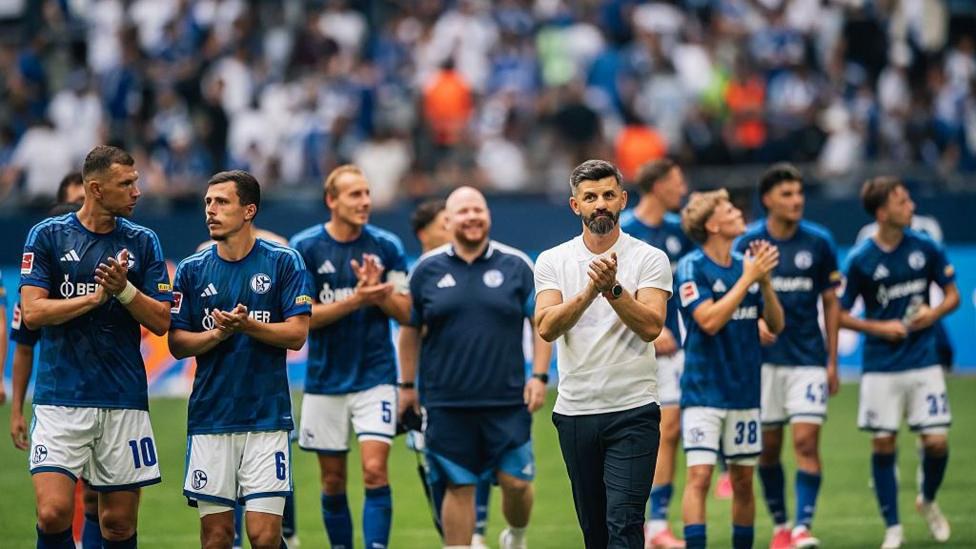
In Gelsenkirchen, football is not merely a pastime; it is the atmospheric pressure that defines the local weather. When Schalke play, the industrial heart of the Ruhr region beats to a different rhythm, as trams and streets fill with the iconic blue and white of a club that serves as the community's primary identity. Despite a heavy opening-day defeat to Augsburg, the 6,000 traveling fans who stayed long after the final whistle to serenade their players spoke volumes about the unbreakable bond between the club and its people. This is a return to the Bundesliga built not on the hubris of the past, but on a hard-earned humility.
The journey back to the top flight has been anything but linear. Schalke’s fall from grace was spectacular, driven by massive debts, failed European qualifications, and a disconnect between the boardroom and the pitch. At one point, insolvency seemed more likely than a promotion parade. However, after three seasons in the second tier, including a dismal 14th-placed finish that threatened even further decline, the club has finally found its footing. This resurgence is a testament to a radical restructuring that has prioritized character over cost, aiming to rebuild the club’s culture from the ground up.
The Religious Devotion of Gelsenkirchen
To understand Schalke is to understand a form of secular religion. In the Schalke-Nord area, the club’s crest is embedded in the very architecture of life, appearing even on the gravestones of the departed. For many locals, the club is the one constant in an ever-changing economic landscape. This deep-seated loyalty is what kept the institution alive during its darkest financial hours. When the club was relegated in 2021, the immediate fear was of total collapse, yet the fans remained, providing the season-ticket revenue and emotional support necessary to spark a comeback.
The Veltins-Arena remains one of the most intimidating cauldrons in European football, a 62,000-capacity theater where the ultras lead a relentless wall of sound. For the fans, the past few years have been a painful lesson in the dangers of chasing success beyond one’s means. There is now a collective understanding that the 'glory years' must be put aside in favor of a sustainable future. The objective this season is modest compared to the club’s historic stature, but for a fanbase that stared into the abyss of the regional leagues, simply existing in the Bundesliga is a victory in itself.
Miron Muslic and the Working-Class Press
The face of this new Schalke is Miron Muslic, a manager whose path to the Ruhr was as unconventional as the club’s revival. Previously a coach who suffered relegation in the English third tier, Muslic was met with skepticism upon his arrival. Yet, he has rapidly become a cult hero, winning over the doubters with a high-octane, high-pressing style that reflects the city’s working-class heritage. His tactical approach demands total commitment and physical effort, qualities that resonate deeply with a fanbase that values labor and resilience over tactical abstraction.
Muslic has successfully instilled a new mindset, one that embraces the 'underdog' status that Schalke currently holds. He has moved away from the star-driven recruitment of previous regimes, instead building a team of players who are eager to prove themselves. This 'new resilience' is the cornerstone of Muslic’s philosophy, turning a group of often-overlooked individuals into a cohesive unit that fights for every inch of grass. The manager’s infectious energy has provided the spark that the club lacked during its stagnant years in the second division, bridging the gap between the stands and the dugout.
Frank Baumann’s Mastery of the Minimal
While Muslic provides the energy on the touchline, the architectural work has been handled by Frank Baumann. The former Werder Bremen director of football joined in June 2025 and was tasked with building a competitive squad with virtually no budget. Baumann’s reputation as a shrewd, decent football man was exactly what the club needed after years of erratic leadership. He has managed to clear the deadwood and navigate the club’s ongoing financial constraints, performing what many local observers describe as a miracle of recruitment with minimal resources.
Baumann’s strategy has been to find value in players who have hit stumbling blocks elsewhere. This approach has led to a squad that is a blend of hungry youngsters and experienced veterans looking for a second chance. By focusing on personality as much as technical ability, Baumann has ensured that the dressing room is no longer a collection of high earners, but a group aligned with the club's new ethos. His work behind the scenes has provided the stability that has allowed Muslic to focus entirely on the tactical development of the team, creating a synergy that has been absent for nearly a decade.
Dzeko and Karius: The Veteran Pillars
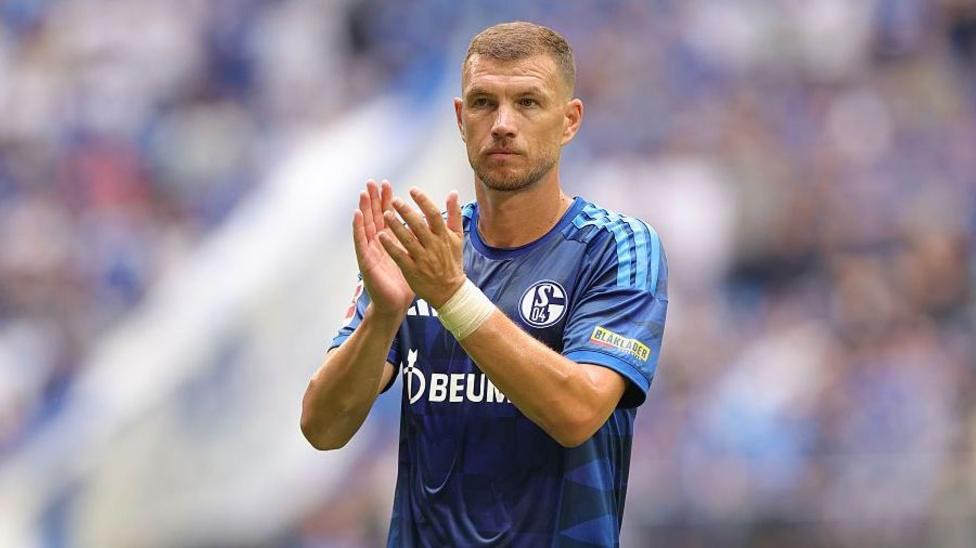
The most eye-catching addition to the squad is undoubtedly Edin Dzeko. At 40 years of age, the Bosnian legend arrived in January 2025 and immediately proved that class is permanent, netting eight goals in his first 13 appearances. For Muslic, Dzeko is more than just a goalscorer; he is a role model whose professionalism provides a standard for the younger players to emulate. His presence in the locker room has been vital in establishing a culture of accountability, ensuring that the team remains grounded even during the inevitable highs and lows of a top-flight campaign.
Similarly, the career of Loris Karius has found a new lease of life in Gelsenkirchen. The goalkeeper, whose career had been overshadowed by past mistakes and spells on the sidelines, has reclaimed a starting spot and become a symbol of the 'new Schalke.' His journey mirrors that of the club itself—one of redemption and the search for a safe haven. Together with Dzeko, Karius provides the veteran leadership necessary to stabilize a young squad that will face immense pressure as they host champions Bayern Munich in their first home game. The road ahead remains difficult, but for the first time in years, Schalke look like a club that knows exactly where it is going. To follow the giants of the Ruhr throughout the season, visit more football news on MATCHLINE.