Enzo Maresca has defied the 'impossible' tag by winning his first five games at Manchester City, bringing a new cultural rhythm to the Etihad.
When Pep Guardiola finally called time on his era-defining tenure at Manchester City, the consensus across the footballing world was that his successor would be walking into a trap. History is littered with the remains of high-reputation managers who tried to fill the void left by giants, from David Moyes at Manchester United to the rotating door of post-Wenger aspirants at Arsenal. Yet, in the early weeks of his residency at the Etihad Stadium, Enzo Maresca has not only survived the transition; he has thrived. With five wins from his first five matches across the Premier League and Champions League, the Italian has dismantled the notion that the post-Pep period would be defined by a painful regression.
The aura around the training ground has shifted, but the results remain as relentless as ever. Maresca’s start is more than just a statistical quirk; it is a calculated masterclass in managing expectations while subtly re-engineering the culture of a triple-winning squad. While the world expected a period of mourning or a messy adjustment to a new tactical identity, Maresca has maintained City's position at the summit of the Premier League alongside Arsenal. It is a beginning that suggests the title race will once again be a familiar two-horse sprint, though the man in the dugout is bringing a decidedly different rhythm to the pursuit.
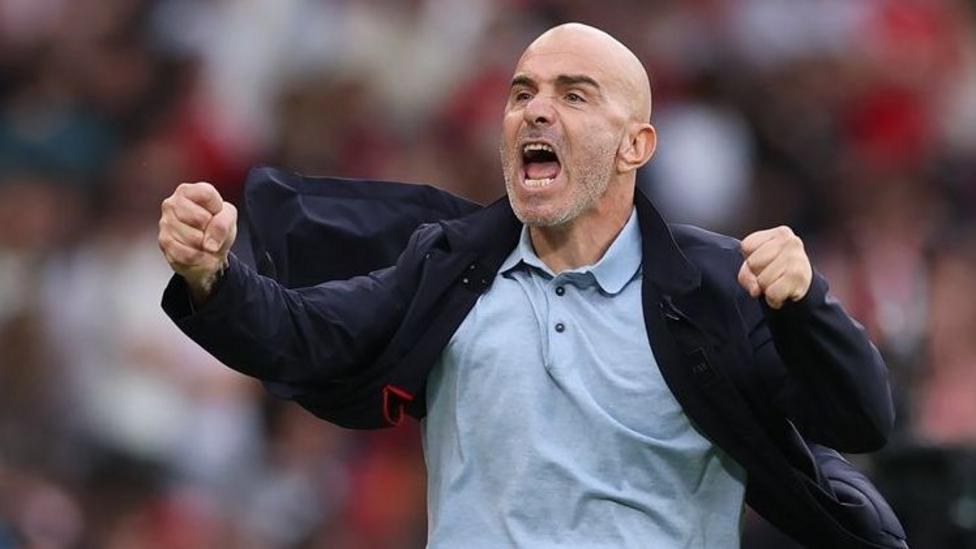
The Calmness of Old Trafford
The definitive moment of Maresca’s infancy in the role came on Sunday at Old Trafford. For any City manager, a Manchester derby is the ultimate litmus test, but the circumstances of this particular 1-0 victory demanded a level of psychological fortitude that few expected so early in his tenure. When Phil Foden was shown a red card, many managers would have succumbed to the cauldron of noise and the tactical chaos that usually follows a dismissal in a high-stakes rivalry. Instead, Maresca remained a picture of stoicism on the touchline, a stark contrast to the frantic energy often displayed by his predecessor.
This composure was not accidental. Maresca himself pointed back to a traumatic afternoon last September when he was at the helm of Chelsea. On that occasion, his goalkeeper Robert Sanchez was sent off within five minutes at the same venue. The young manager had panicked then, burning through two substitutions within seven minutes and retreating into a defensive shell that eventually collapsed. A year later, the growth was visible. He did not rush into drastic changes after Foden’s exit, choosing instead to assess the flow of the game before executing a precise tactical shift that allowed his ten men to absorb United’s pressure and emerge with all three points.
Tactical Evolution in Real Time
Maresca’s ability to pivot mid-match has already become a hallmark of his management style. At Old Trafford, his decision to slide Rayan Cherki into a wider right-sided role provided the necessary outlet to relieve pressure, but it was his half-time intervention that truly secured the win. Replacing Cherki with Iliman Ndiaye was a bold move that prioritized ball retention and defensive discipline over individual flair. It was the kind of tweak that rewards a manager’s bravery and validates his authority in a dressing room filled with world-class veterans who have seen and won it all.
While the tactical fundamentals—high pressing and positional dominance—remain the bedrock of City’s play, Maresca is adding his own layers. Ruben Dias, the club’s captain and a vocal leader within the squad, has noted that while the philosophy feels familiar, the details are distinctly Enzo’s. The way the team triggers its press and the specific structural requirements in defensive transitions have been overhauled. It is an evolution rather than a revolution, a continuity of excellence that ensures the players are not overwhelmed by change while still being challenged by new ideas.
Culture, House Music, and Erling Haaland
Perhaps the most visible change under Maresca is the atmospheric shift at the City Football Academy. The intensity of the Guardiola era was legendary, but it often came with a weight of stress that was palpable in every press conference. Maresca has introduced a lighter, more jovial touch. His training sessions are now accompanied by the thumping bass of loud house music—what he describes as the "boom, boom, boom" type—designed to make the players feel more positive and work with a smile. It is a psychological gambit that seems to be paying dividends, particularly with the squad's most potent weapon.
"Happy wife, happy life. For us, happy Erling, happy life," Maresca joked after Haaland’s latest match-winner. This lightheartedness extends to the media, where Maresca’s beaming presence is a departure from the often-guarded and weary persona Guardiola adopted in his final months. By fostering an environment where the players feel "more happy," the Italian is betting on the idea that a relaxed squad is a more effective one. It is a philosophy that removes the suffocating pressure of the "impossible job" and replaces it with the simple joy of elite-level competition.
Slaying the Ghost of David Moyes
Every successor to a legendary figure is haunted by the specter of David Moyes. When Alex Ferguson left Manchester United, the club entered a decade-long tailspin from which it has yet to truly recover. Maresca was well aware of this history, referencing both Ferguson and Arsene Wenger during his unveiling. He acknowledged that clubs often struggle when long-serving icons depart, but he has treated the challenge as a privilege rather than a burden. While Moyes lasted only ten months at United, buckling under the weight of the badge, Maresca looks entirely at home in the Etihad technical area.
The pressure of being the only target the club pursued to replace Guardiola could have paralyzed a lesser coach. Instead, Maresca has used it as a platform. He has batted away comparisons to his predecessor with ease, insisting that the external narrative of the "toughest job in football" does not affect his internal focus. By winning five straight games, including a tricky Champions League trip to Porto, he has effectively silenced any early questions regarding his credentials. The shadow of the previous regime is still there, but Maresca is beginning to cast a significant one of his own.
The Road Ahead
Despite the perfect start, Maresca knows that the Premier League season is a marathon, not a sprint. The early 3-0 defeat to Arsenal in the Community Shield served as a timely reminder of the standards required to stay at the top. However, the response has been impeccable. With a Carabao Cup defense beginning against Norwich and a home fixture against Sunderland on the horizon, the opportunity to cement this historic start is within reach. If City can maintain this momentum, the "impossible job" might just look like the most inspired appointment in the club’s modern history.
The integration of new squad members and the refinement of his tactical tweaks will continue to be the focus. For now, the house music continues to blare at the training ground, and the points continue to accumulate. Maresca has proven that while you cannot replace a legend, you can certainly lead in their wake with your own distinct voice. As long as Haaland is happy and the results remain clinical, the blue side of Manchester can look to the future with the same confidence they held during the height of the Guardiola years. more football news on MATCHLINE