Animal rights organization PETA urges Crystal Palace to retire their live eagle mascot, arguing that stadium environments cause unnecessary stress to birds.
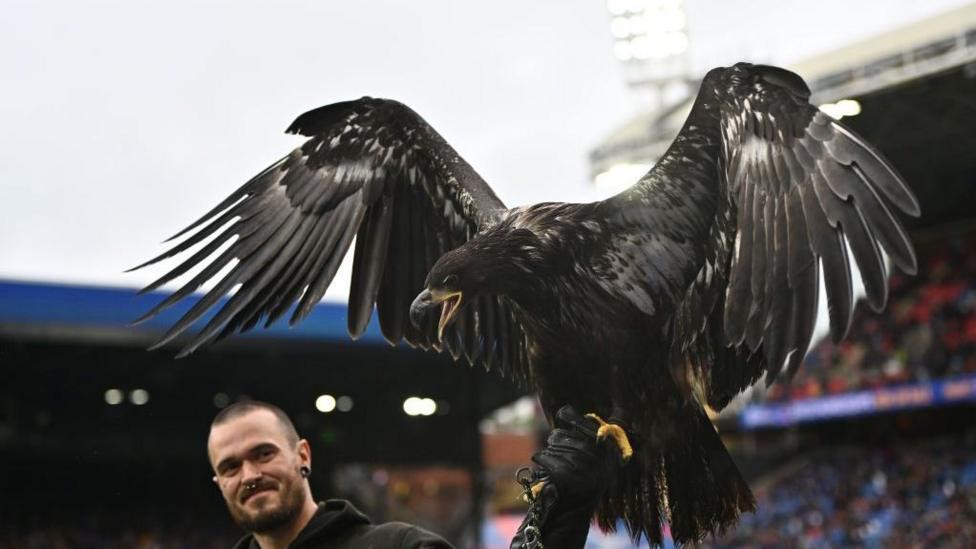
The sight of a bald eagle soaring across the turf at Selhurst Park is a ritual that has defined the pre-match experience for Crystal Palace supporters for more than a decade. It is a moment of raw, natural theater designed to evoke power and majesty, grounding the club's Eagles nickname in a tangible, flapping reality. However, this long-standing tradition is now facing its most significant challenge yet. PETA, the global animal rights organization, has issued a formal demand to the club's executive leadership, insisting that the practice of using live birds as mascots be terminated immediately to protect the animal from the stresses of professional football.
The Modern Conflict of Tradition and Ethics
In a direct letter addressed to Crystal Palace Chief Executive Sharon Lacey, PETA pulls no punches in its assessment of the bird's welfare. The organization argues that the sensory assault of a modern Premier League stadium is fundamentally incompatible with the natural instincts of a bird of prey. A cauldron of piercing floodlights, booming public address systems, and tens of thousands of vocal fans creates an environment where a bird can easily become frightened and disoriented. Phoenix, the current eagle in residence, is now at the center of this ethical storm, having only recently taken over the role following the death of the club’s long-serving mascot.
The group insists that such displays are no longer appropriate in a modern sporting context. They claim that birds like Phoenix are often overwhelmed by the noise and visual chaos of a matchday. When a bird is placed in these conditions, it is denied the ability to engage with its natural environment and is instead treated as an entertainment prop. Dr. Carys Bennett, PETA’s senior corporate projects manager, has been vocal in stating that bald eagles are widely recognized as symbols of freedom and deserve a life away from the roar of a football crowd. The pressure on the club is building as fans and animal advocates alike weigh the value of the spectacle against the potential for animal suffering.
A History of Wings Over Selhurst Park
The branding of Crystal Palace as the Eagles was a masterstroke of psychological marketing by the legendary Malcolm Allison in 1973. Allison wanted to shed the Victorian, somewhat dusty image of the Glaziers and replace it with something predatory, sleek, and modern. While the logo and the nickname were instant hits, it was not until 2010 that the club decided to introduce a live bird to the pre-match ceremonies. This move was intended to bridge the gap between the club’s history and a live, breathing symbol that fans could rally behind before kickoff.
For many supporters, the presence of a live eagle is a point of pride that separates Palace from other London clubs. It represents a connection to a specific era of the club’s evolution and provides a unique visual identity. However, PETA argues that this rebranding can be maintained through logos, merchandise, and human mascots without the need for live animal participation. The organization points out that most professional sports teams successfully engage their fanbases using only willing humans in costumes, suggesting that the live bird is a relic of a different era of entertainment that has now been outgrown by contemporary standards.
The Legacy of Kayla and the Arrival of Phoenix
Before Phoenix, there was Kayla. For ten years, the North American bald eagle was a fixture at Selhurst Park, becoming so popular that she was often the star of her own photography sessions and promotional videos. Kayla’s death in 2020 left a void in the club’s matchday routine, and her passing was mourned by the fanbase as if she were a former player. It took four years for the club to introduce her successor, with Phoenix making her debut during the clash against West Ham in August 2024. The introduction of a new bird has reignited the debate that had largely simmered during the years the club went without a live mascot.
Phoenix's arrival was intended to signal a return to the club's full matchday pageantry, but it has instead acted as a catalyst for renewed criticism. While the club prides itself on the care provided to these birds by specialist handlers, advocates argue that no amount of expert care can compensate for the unnatural environment of a top-flight stadium. The transition from Kayla to Phoenix has highlighted a shift in public sentiment, with more voices questioning whether the tradition should have been laid to rest alongside the club’s original avian star rather than being restarted for a new generation.
Psychological Impact and Biological Needs
From a biological perspective, the life of a stadium mascot is an extreme departure from the existence a bald eagle would lead in the wild. PETA’s concerns are rooted in the fact that these birds possess highly sensitive hearing and vision, designed for hunting in open, quiet landscapes. In the confines of a stadium, the acoustic pressure from thousands of fans can be physically distressing for a raptor. The organization suggests that the frustration of being unable to escape these stimuli leads to significant psychological stress, which may not always be visible to the casual observer.
Furthermore, the birds are trained to fly specific routes for food rewards, a behavior that PETA claims suppresses their natural instincts. When a bird of prey is used in this manner, it becomes a performer rather than an animal. The stress is not just limited to the minutes of flight before the whistle blows; the transport to and from the stadium and the presence of crowds in the tunnels and sidelines all contribute to a cumulative effect. The demand for Phoenix’s retirement is based on the idea that an apex predator should not be subjected to a life of scripted performances in exchange for food while surrounded by thousands of humans they would naturally avoid.
Evaluating Safety Risks and Past Incidents
The safety of both the bird and the spectators is a recurring theme in PETA’s argument. They have compiled detailed records of incidents where live mascots have been injured or caused injury. In the high-stakes environment of a football match, anything from a stray ball during warm-ups to a sudden movement from a fan can cause a bird to deviate from its intended path. There are documented cases of birds colliding with glass partitions or stadium walls after becoming startled. PETA notes that even the most well-trained bird can act unpredictably when panicked, which poses a risk to fans in the front rows.
One of the most cited arguments for ending the practice is the 2015 incident involving a Charlton Athletic supporter who was later found guilty of attempting to punch Kayla the eagle. This event serves as a stark reminder that animal mascots are vulnerable to the actions of hostile or intoxicated individuals within a crowd. Placing an animal in a position where it can be targeted by a human is, in the eyes of rights groups, a failure of the club's duty of care. While the eagle was not seriously hurt in that instance, the potential for a far more tragic outcome remains as long as live animals are brought into the volatile atmosphere of a football derby.
The Alternative: Pete the Eagle and Human Mascots
Crystal Palace already possesses a viable alternative to Phoenix in the form of Pete the Eagle, the club’s human mascot who wears a traditional padded costume. Pete is a staple of the community, visiting local hospitals, engaging with young fans on the pitch, and leading the crowd in chants. PETA argues that Pete provides all the excitement and branding value the club requires without any of the ethical complications. Human mascots are willing participants who can interact with fans safely and represent the club's spirit without the risk of distress or injury.
The move toward phasing out live animal mascots is part of a broader trend in global sports, where teams are increasingly sensitive to animal welfare concerns. Many clubs that once utilized live animals have transitioned to high-quality digital displays, human mascots, or animatronics to maintain their traditions. For Crystal Palace, the decision to retire Phoenix would be a statement that the club prioritizes modern ethics over a specific pre-match spectacle. Whether the board will heed the call from PETA or continue to defend the flight of the eagle as an essential part of their heritage remains the major talking point in South London.
For more football news on MATCHLINE, visit more football news on MATCHLINE.