Mandatory hydration breaks are transforming the rhythm of the 2026 World Cup, sparking intense debates between tactical masterminds and traditionalists.
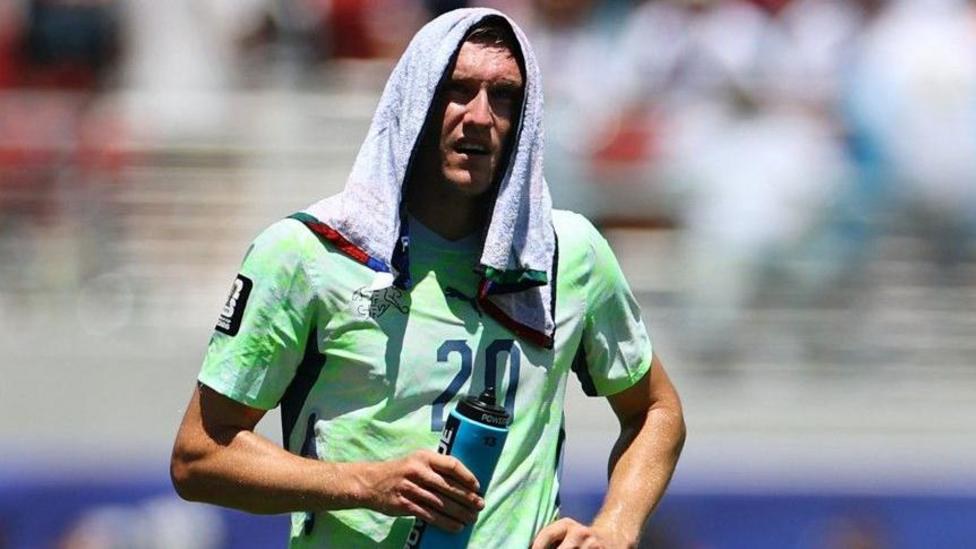
The rhythm of elite football has always been a delicate, fragile thing. Managers spend months drilling patterns of play designed to exhaust an opponent, hoping that the natural flow of 45 minutes will eventually crack the defensive line. Yet, at the 2026 World Cup, that flow is being deliberately severed. Every match, precisely 22 minutes into each half, the referee’s whistle shrills not for a foul, but for a mandated three-minute hydration break. Across 104 matches in Mexico, Canada, and the United States, this pause has become the most debated tactical variable of the summer.
While FIFA insists these measures are essential for player welfare in the face of stifling North American humidity, the implementation has had immediate, tangible consequences on match results. This is no longer just about water; it is about momentum, psychological reset, and the opportunity for a manager to drag his team back from the brink of disaster. Severe heat and high humidity levels have forced officials to implement mandatory cooling periods across all host cities.
The Ancelotti Effect: Coaching in the Interval
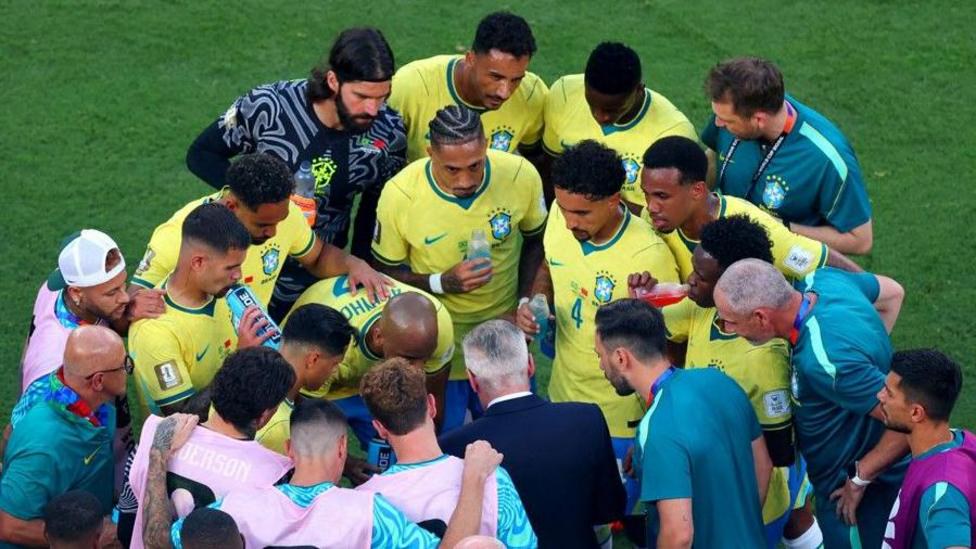
Perhaps no team has benefited more from this new regulation than Brazil. During their high-stakes encounter with Morocco at the New Jersey New York Stadium, the five-time world champions looked utterly lost. Trailing 1-0 after a lethargic opening, the Selecao were being bypassed in midfield and looked physically intimidated by the Moroccan press. When the 22-minute whistle blew, it was not just a chance to drink; it was a tactical lifeline. Carlo Ancelotti, a man who has won everything in the European game, didn’t waste a second. He gathered his squad around him, pulling his wingers inside and issuing stern directives to his midfield pivot.
The impact was almost instantaneous. Six minutes after the restart, Vinicius Jr cut inside and unleashed a venomous strike into the roof of the net to equalize. The tactical tweaks made during the three-minute hiatus had shifted the balance of power. Ancelotti acknowledged as much after the final whistle, noting that the break allowed him to explain systemic problems to his players in real-time. In a sport where managers usually have to wait until half-time to fix a broken structure, these mini-intervals have become a playground for the world’s most astute tacticians.
Ancelotti acknowledges that the mandatory stoppage served as a lifeline. Standing in the technical area, the Italian gathered his squad, using the three-minute window to deliver fresh instructions and radically tweak his system. The five-time world champions, who had looked lethargic and disjointed, suddenly possessed the tactical clarity to turn the game on its head.
The Momentum Killers: Winners and Losers
For every team that finds its feet during a hydration break, another sees its hard-earned dominance evaporate. Emma Hayes, currently leading the United States women’s national team, has been vocal about the damage these pauses do to the spirit of the game. Labeling them "momentum breaks," Hayes argues that the team on top is inherently penalized. When you have an opponent pinned in their own final third, the last thing you want is for them to have three minutes to catch their breath, rehydrate, and recalibrate their defensive shape. It is a sentiment echoed by 2010 World Cup winner Juan Mata, who insisted that as a player, he would have loathed the interruption.
The data from the opening rounds supports this theory of momentum shifting. Canada found an equalizer against Bosnia-Herzegovina shortly after a second-half break, with Cyle Larin profiting from a defensive lapse that followed the restart. Similarly, Scotland secured a narrow victory over Haiti thanks to a goal scored in the immediate aftermath of a cooling period. These are not coincidences; they are the results of a game being played in four quarters rather than two halves. The ability to concentrate immediately after a restart is now a vital skill, and those who switch off during the break are paying a heavy price on the scoreboard.
The Curacao Tragedy and the German Resurgence
The most brutal example of the break’s impact occurred in Houston, where World Cup debutants Curacao were providing the story of the tournament. The smallest nation ever to qualify for the finals was holding the mighty Germany to a 1-1 draw, playing with a fearlessness that had the crowd on their feet. They were in a state of flow, their adrenaline masking the physical gap between the two squads. Then came the 22nd-minute whistle. The three minutes of cooling allowed the Germans to regroup, lose the panic that was creeping into their play, and identify the gaps in the Curacao midfield.
When play resumed, the narrative changed completely. Germany, refreshed and tactically reorganized, dismantled the island nation, eventually running out 7-1 winners. The break acted as a pressure valve, releasing the tension for the heavyweights while draining the energy from the underdog. It was a similar story for the Czech Republic, who dominated the opening exchanges against South Korea only to lose their rhythm entirely after the hydration pause. They eventually slumped to a 2-1 defeat, unable to recapture the intensity they had established in the opening twenty minutes.
Commercial Conflict and the Broadcaster's Role
While FIFA maintains the breaks are purely for player health, a shadow of commercial skepticism looms over the tournament. Former England forward Ian Wright was blunt in his assessment, suggesting the breaks are a thinly veiled excuse to shoehorn more advertising into the broadcast. In the opening match between Mexico and South Africa, US broadcaster Fox faced criticism for overrunning advertisements during the hydration period, cutting back to the action only seconds before the restart. For purists, the fear is that the American model of televised sport—heavy on stops and starts—is being grafted onto football under the guise of medical necessity.
This suspicion is fueled by the fact that these breaks are mandatory even in stadiums featuring retractable roofs and advanced climate control systems. In venues where the temperature is strictly regulated and the humidity is non-existent, the 22nd-minute whistle still blows. It raises a difficult question: if the conditions are not extreme, why is the game being stopped? The financial value of a mid-half commercial window is astronomical, and for many fans who have paid thousands of dollars to attend, the artificiality of the pause feels like an affront to the sport’s traditional continuity.
The Management Divide: Pochettino vs. De la Fuente
The coaching fraternity is deeply split on the issue. Mauricio Pochettino, now leading the United States, has taken a firm stance against the universality of the breaks. While he accepts their necessity in extreme conditions, he finds them redundant when play is taking place in comfortable environments. For a manager whose style depends on high-intensity pressing and physical attrition, an artificial break allows the opposition to recover their lungs, effectively nullifying his tactical advantage. Pochettino’s preference is for football to remain a game of endurance, where the fittest teams prevail in the closing stages of each half.
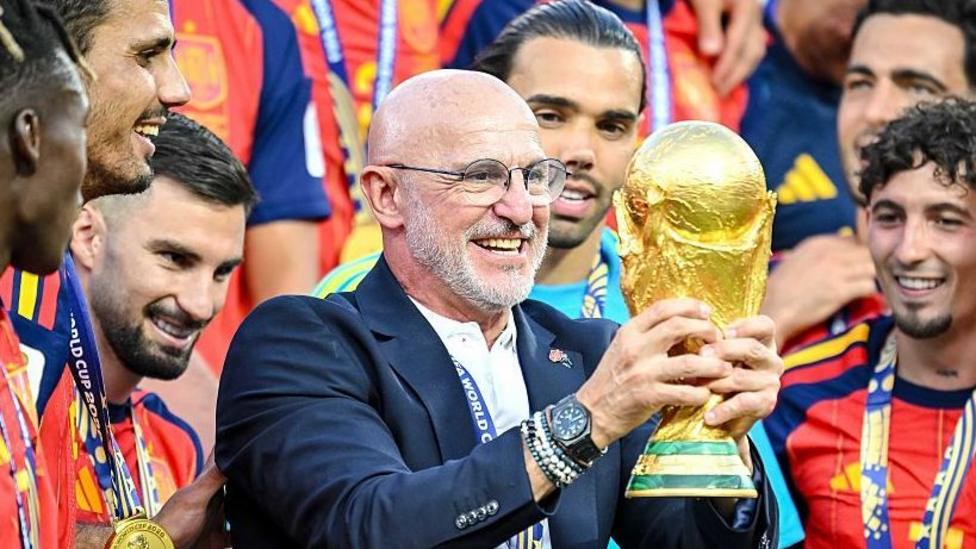
Conversely, Spain boss Luis de la Fuente has emerged as a staunch defender of the cooling periods. Even ahead of Spain’s clash with Cape Verde in the temperature-controlled environment of Atlanta, De la Fuente argued that the breaks are a vital measure for player health. His perspective is that even a two-minute window to breathe and take on fluids can prevent long-term fatigue over a grueling seven-match tournament. For Spain, a team built on ball retention and technical precision, the pause is less of an interruption and more of an opportunity to ensure his players remain sharp enough to execute their intricate passing patterns under pressure.
The Future of the Global Game
As the tournament progresses into the knockout stages, the hydration break will only become more significant. In a single-elimination scenario, a tactical adjustment made in the 22nd minute could be the difference between a golden generation lifting the trophy or a plane ride home. The "momentum breaks" have fundamentally changed how managers prepare for matches, with many now treating the game as a series of short sprints rather than a marathon. Whether this is a temporary adjustment for the North American climate or the beginning of a permanent shift in football's structure remains a point of fierce contention among the game's elite. more football news on MATCHLINE