UEFA's 11-word ultimatum and Concacaf's rejection have left Gianni Infantino’s presidency in turmoil. Is global football heading for a historic schism?
The earthquake that struck Zurich at 16:00 BST on Thursday was not seismic in the geological sense, but its aftershocks threaten to level the very foundations of the global game. In a statement that carried the weight of a declaration of war, UEFA issued an 11-word ultimatum that has effectively frozen the gears of international football governance. By declaring that the governing body and its national associations will not participate in FIFA competitions, European football has done more than just object to a business proposal; it has signaled that the current leadership of the world game is no longer tolerated by its most powerful constituents.
This unprecedented fracture stems from Gianni Infantino's aggressive pursuit of a plan to sell a 20% stake in a new subsidiary company. This entity would be tasked with managing FIFA’s most lucrative assets, including the World Cup, using injections of private capital from investors such as Joshua Kushner. For a president who once styled himself as the reformer of a disgraced organization, Infantino now finds himself accused of the very same lack of transparency and high-handedness that historically plagued the corridors of FIFA. The backlash has been swift, coordinated, and remarkably broad, leaving the 56-year-old president more isolated than at any point since he assumed power in 2016.
The High Price of Private Investment
The core of the dispute lies in the commodification of the World Cup. Infantino’s vision involves a $40 billion product that would ostensibly enrich national associations, offering an immediate $20 million cash injection to any country that backs the proposal by September 19. To many, this looks less like a strategic investment and more like a desperate attempt to buy loyalty. The inclusion of private equity, specifically with links to American political circles, has raised alarms regarding who will actually control the scheduling, format, and commercial direction of the world’s most watched sporting event.
Critics argue that the move represents a permanent surrender of football's soul to private interests. By carving out a 20% stake, FIFA would be beholden to profit-driven investors whose priorities may not align with the long-term health of the sport or the players. European leaders have been particularly vocal, suggesting that there are far better ways to raise capital that do not involve selling off the crown jewels to friends and associates. The lack of consultation with the very confederations that provide the majority of the talent and commercial revenue has only served to fuel the fires of rebellion.
The financial lure of $20 million per association is designed to win over smaller nations in Africa, Asia, and Oceania, potentially creating a voting bloc that could steamroll European opposition. However, this strategy appears to be backfiring. By creating a binary choice between a quick payout and the integrity of the game, Infantino has forced a confrontation that he may not be able to win. The resistance is no longer just about the money; it is about the right to be heard and the fundamental question of who owns football.
A Transatlantic Revolt
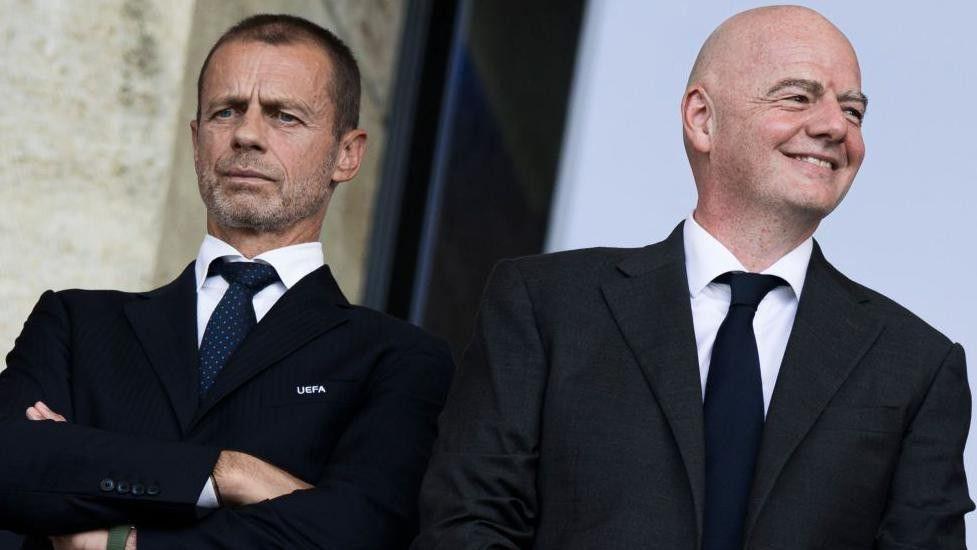
Infantino might have expected resistance from Europe, where he has long had a frosty relationship with UEFA president Aleksander Ceferin, but the rejection from Concacaf has proved to be a far more damaging blow. As the governing body for North and Central America, Concacaf has traditionally been a reliable ally for FIFA leadership. The fact that their 41 members collectively rejected the funding plan indicates a profound loss of faith. For a region that recently hosted the men's World Cup, this move signals that even Infantino’s traditional strongholds are beginning to crumble.
The Football Association in England has also taken a firm stand, with chair Debbie Hewitt making it clear that they stand shoulder to shoulder with their European colleagues. This is significant because Hewitt also serves as a FIFA vice-president, highlighting the internal dissent within Infantino’s own cabinet. Similarly, Scottish FA president Mike Mulraney, who chairs the FIFA finance committee, has voiced unequivocal agreement with the boycott threat. When the people responsible for the organization's finances are speaking out against the president’s primary financial plan, the situation has moved beyond a mere policy disagreement into a full-scale leadership crisis.
This level of coordination between UEFA and Concacaf is rare and suggests that the move to find a replacement for Infantino is gaining momentum. While previous challenges to sitting FIFA presidents have been few and far between, the sheer scale of the current anger is unprecedented. Sources within these confederations suggest that the patience for Infantino’s unilateral decision-making style has finally reached its limit. The rejection from the Americas, in particular, removes the narrative that this is simply a European attempt to protect its own interests.
Collateral Damage and the Women’s Game
The most immediate and potentially heartbreaking consequence of this power struggle involves the Women's World Cup. With the U20 tournament in Poland set to begin in early September, there is a very real possibility that European teams could be forced to withdraw mid-competition if the boycott is triggered. This would be a catastrophic outcome for players who have spent years preparing for a moment that is now being used as a pawn in a high-stakes political game. The threat is not empty; the September 19 deadline sits right in the heart of the international calendar.
UEFA vice-president Laura McAllister has pointed out the inherent unfairness of the situation, noting that nations like Wales are on the verge of qualifying for their first major tournament. The play-offs scheduled for October could be rendered meaningless if the boycott remains in effect. McAllister has been quick to lay the blame at FIFA’s door, accusing the organization of creating a problem that forces national associations into a corner where they must choose between their principles and their participation. This sentiment is echoed across the continent, where the feeling is that FIFA has effectively held the players' dreams hostage to force through a controversial business deal.
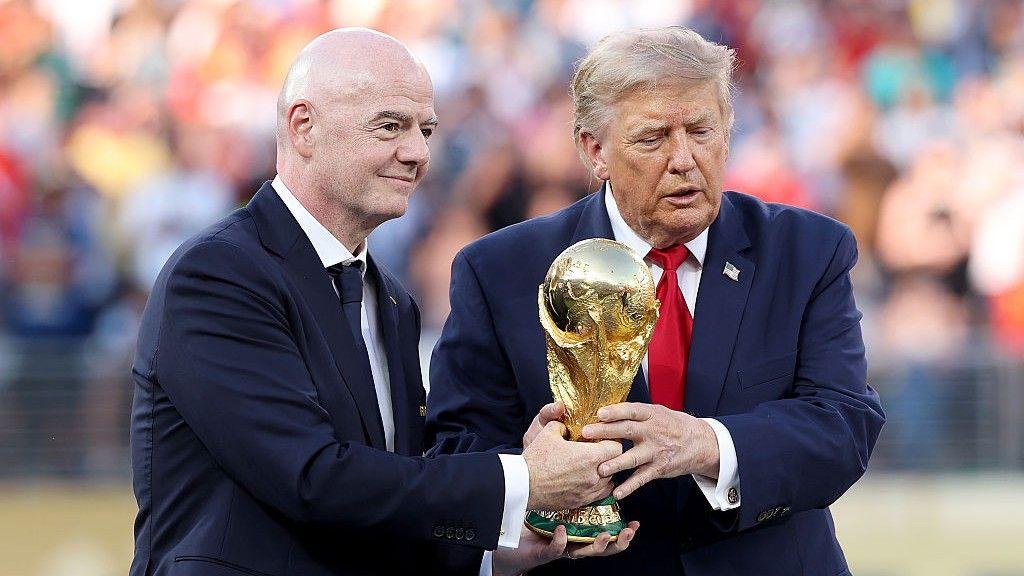
Infantino's decision to pivot toward the United States for financial backing has changed the political landscape of the sport. His visible presence alongside high-ranking American political figures has often suggested a shift in FIFA's traditional power center. This move towards the American market and private equity is seen by many in the European establishment as a betrayal of the traditional sporting model. The alignment with the Kushner family’s interests has added a layer of political complexity that many football executives find deeply uncomfortable, especially given the existing tensions within global sports governance.
The Al-Khelaifi Question
As the walls close in on the incumbent, the search for a successor has naturally begun. One name that has surfaced with increasing frequency is Nasser Al-Khelaifi. The Qatari executive is already one of the most influential figures in the world, serving as the president of Paris Saint-Germain and the chairman of European Football Clubs. His role in navigating the aftermath of the European Super League disaster in 2021 proved his ability to hold together disparate interests during a crisis. He has expanded the reach of his organization to over 800 members, creating a power base that is arguably as strong as FIFA itself.
However, those close to Al-Khelaifi insist that he has no desire to move into the FIFA presidency. He has reportedly expressed a preference for his current roles, where he can exert influence without the baggage that comes with leading a global governing body. Despite his denials, the fact that his name is being discussed highlights the vacuum of leadership at the top of the game. If Infantino is to be challenged in the March election, the opposition needs a candidate with global name recognition and the commercial acumen to match the incumbent’s promises. Without a viable alternative, the boycott remains the only lever the opposition can pull.
Historically, challenging a sitting FIFA president is a fool’s errand. The last time an incumbent was defeated in an election was in 1974, when João Havelange ousted Sir Stanley Rous. Since then, the machinery of FIFA has been designed to protect the leader, using the distribution of development funds to ensure a loyal voting base in smaller nations. But the current situation is different. The threat of a boycott from the most commercially successful confederations would render FIFA a hollow shell. A World Cup without England, Spain, Germany, and France is not a World Cup that sponsors will pay billions to associate with.
The Road to a Historic Schism
We are now witnessing a classic game of brinkmanship where neither side can afford to blink. David Bernstein, the former FA chairman, has accurately described the situation as a lose-lose scenario. FIFA cannot survive without the elite European and American nations, and those nations would suffer immensely from being excluded from the global stage. Yet, the level of fury expressed by the Scottish and Welsh FAs suggests that this is not just a tactical bluff. The sense of betrayal regarding the lack of consultation is a visceral emotion that won’t be easily pacified by minor concessions.
If Infantino does not back down, the sport faces its most significant schism since the formation of FIFA in 1904. The potential for a breakaway organization, or at least a permanent boycott of FIFA events, is no longer a fringe theory. It is a documented threat from the organizations that hold the most power. For Infantino to survive until March, he will likely have to perform a humiliating U-turn on his funding plans or find a way to offer the European and North American associations a level of control they currently do not possess. The deadline is approaching fast, and the future of the World Cup hangs in the balance.
The coming weeks will determine whether the world governing body can remain intact or if the greed of private equity has finally pushed the stakeholders too far. For the fans and the players, the hope is that a compromise can be found that preserves the integrity of the tournament while ensuring the governing body remains accountable to its members. Until then, the shadow of a boycott looms large over the international break, casting doubt on every upcoming fixture on the FIFA calendar. For more updates on the evolving situation in world football governance, check out more football news on MATCHLINE.