Scotland's alarming decline under Sebastien Pocognoli has reached a critical juncture, leaving the Tartan Army and the dressing room questioning the future.
The cold wind whistling through Hampden Park lately has carried more than just the usual Scottish chill. It carries the unmistakable scent of a project in decay. Scotland’s national team, once buoyed by a sense of collective purpose and a hard-earned seat at the table of major tournaments, now finds itself caught in a demoralizing period of stagnation. The appointment of Sebastien Pocognoli was meant to signal a modernization of the Scottish game, a tactical pivot toward a more sophisticated European style, yet the reality on the pitch has been a series of disjointed performances that have left supporters checking their watches long before the final whistle.
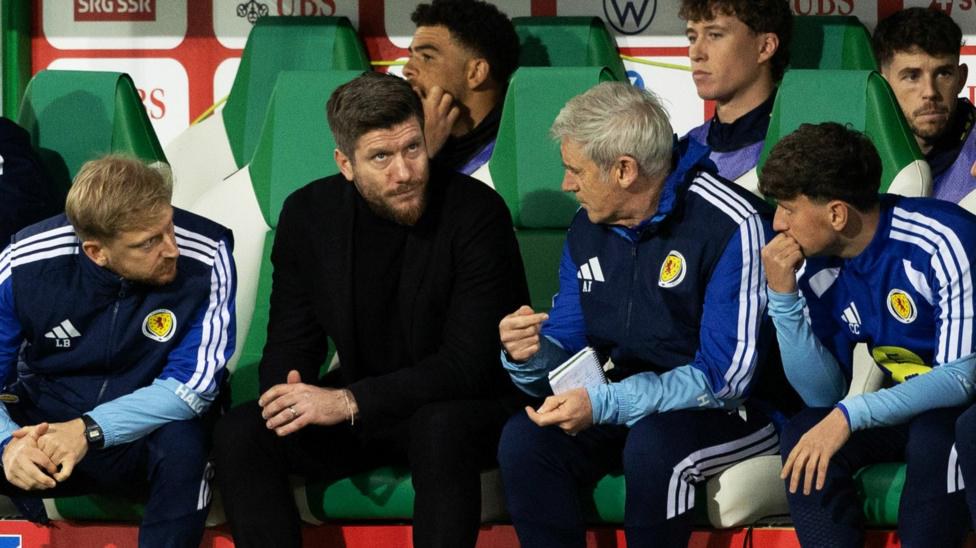
Standing on the touchline with a furrowed brow and arms folded tightly against the elements, Pocognoli has become a figure of increasing isolation. The technical area, which should be a cockpit of strategic adjustments, has instead looked like a stage for a manager struggling to communicate a failing vision. The energy that once defined this group of players—a grit that compensated for any perceived lack of world-class technical ability—has evaporated, replaced by a tentative, almost apologetic approach to possession. As the results continue to slide, the fundamental question is no longer about when the next win will come, but whether the man in charge has the capacity to stop the bleeding.
The Illusion of Progress and the Reality of the Drift
When the SFA leadership decided to move in a new direction, the allure of a young, modern coach like Pocognoli was obvious. There was a belief that Scotland had reached a ceiling under the previous regime and that a fresh perspective was required to transition the squad from mere participants to genuine competitors. However, the promised evolution has felt more like a regression. The "drift" currently afflicting the national side is not just a lack of points on the board; it is a total loss of identity. Scotland currently looks like a team caught between two worlds, unable to sit deep and defend with their old-fashioned stubbornness, yet incapable of dictating games with the ball.
This lack of direction has led to a palpable anxiety whenever the opposition moves into the final third. The defensive cohesion that was the bedrock of recent successes has crumbled, exposing individual errors that were previously masked by a well-drilled system. In midfield, the talent is undeniably there, with players performing at high levels for their respective clubs, but they appear shackled when they pull on the dark blue jersey. The transitions are slow, the passing is sideways, and the creative spark that should ignite the Hampden crowd is nowhere to be found. It is a sterile brand of football that has drained the optimism from the stands.
To fix a problem, one must first acknowledge its depth. Pocognoli’s public utterances have often leaned toward the analytical, citing underlying metrics and the long-term nature of his project. But international football is a results-driven business where the luxury of time is rarely granted. The drifting sensation is compounded by a feeling that the manager is doubling down on a philosophy that his current personnel are either unable or unwilling to execute. Without a sharp correction in course, the drift will inevitably lead to a collision with the harsh reality of a failed qualification campaign.
Winning Back the Dressing Room
Perhaps the most concerning aspect of the current malaise is the suggestion that Pocognoli needs to win back the trust of his players. In any international setup, the manager’s greatest asset is the buy-in of the squad. When players travel across the continent to represent their country, they need to believe that the plan they are asked to implement gives them the best chance of success. Reports of frustration within the camp suggest that the clarity of instruction has diminished, leaving senior figures in the dressing room searching for answers that the coaching staff has yet to provide.
Body language on the pitch often tells a more honest story than a post-match press conference. During recent outings, the sight of frustrated gestures and heated exchanges between teammates has become a recurring theme. The unity that was once the hallmark of this Scotland era is fraying at the edges. When a manager loses the players, the tactical nuances become irrelevant because the physical effort required to execute them is no longer there. Pocognoli must find a way to simplify his demands and restore the confidence of a group that looks increasingly burdened by the weight of their own shirts.
Bridging this gap requires more than just a change in formation. It requires a human connection that seems to have gone missing. If the players feel that the current path is a dead end, they will naturally start to prioritize their club careers, and the international breaks will become a chore rather than a privilege. The upcoming camp will be the ultimate test of Pocognoli’s leadership. He needs to prove to his senior core that he has the tactical flexibility to accommodate their strengths rather than forcing them into a rigid system that highlights their weaknesses.
The Hampden Factor and Fan Discontent
The Tartan Army is famously loyal, often sticking by the team through decades of heartbreak, but that loyalty is not a blank check. There is a specific type of silence that falls over Hampden Park when the crowd realizes the team has no plan to score. It is a silence born of boredom and disillusionment, and it is far more damaging than a chorus of boos. Fans are seeing a team that lacks the fire and the forward-thinking intent that should be a prerequisite for any Scotland side playing at home.
For Pocognoli, the task of winning back the supporters is monumental. The perception is that he is a manager more comfortable with a laptop than a megaphone, a coach who prioritizes structure over the raw emotion that often drives Scottish football success. While modern football demands data and analysis, it also demands a team that reflects the character of its people. At the moment, there is a total disconnect between the supporters' expectations of bravery and the team’s cautious, risk-averse performance levels.
The atmosphere at recent home games has turned toxic in the closing stages, with the frustration boiling over as soon as the fourth official’s board goes up. Fans are savvy; they recognize when a manager is out of ideas. The social media discourse, while often reactionary, has settled on a consensus that the current path is unsustainable. If the stadium remains a place of misery rather than a fortress, the SFA will find it impossible to ignore the commercial and sporting implications of a dwindling and disgruntled fanbase.
A Historical Context of Missed Opportunities
Scotland has a long and storied history of managerial tenures that started with hope and ended in the gloom of "what if." Looking back at previous eras, the most successful managers were those who understood the limitations of the Scottish player pool and built a system that maximized collective work rate. Pocognoli’s attempt to transplant a high-possession, intricate style onto a squad that lacks the technical depth of a top-tier European nation feels like a historical misstep we have seen before.
There are echoes of the Berti Vogts era in the current situation—a foreign manager with a respectable pedigree struggling to translate his ideas to a unique footballing culture. While the talent level under Pocognoli is arguably higher than it was in the early 2000s, the lack of synergy is strikingly similar. The risk is that Scotland will waste a "golden generation" of midfield talent by sticking with a manager who is trying to fit square pegs into round holes. History suggests that when the drift starts, it rarely reverses without a radical change in leadership.
The comparison to his predecessor is also unavoidable. While the previous regime eventually ran out of steam, it was built on a foundation of clarity and defensive solidity that the players understood implicitly. Pocognoli has dismantled that foundation but has yet to build anything substantial in its place. We are seeing a team that has forgotten how to win while trying to learn how to play a way that doesn't suit them. This transition period has lasted too long, and the historical precedents for a turnaround at this stage are vanishingly thin.
The Tactical Trap of Modernity
The obsession with playing out from the back has become a particular point of contention. While it is the standard in elite club football, the limited time available in international windows makes it a high-risk strategy for a team like Scotland. We have seen time and again that under Pocognoli, Scotland is often caught in possession in their own third, inviting pressure that they are not equipped to handle. The reward for this risk has been negligible, with very few goals resulting from these elaborate build-up phases.
Modernity should not come at the expense of common sense. If a team is struggling to create chances, the first step is often to get the ball into the final third more quickly and allow the creative players to work closer to the opposition goal. Instead, Scotland’s play is bogged down in a perpetual loop of 50-yard passes that lead nowhere. The manager’s refusal to adapt his tactical blueprint to the reality of his players' current form is a stubbornness that could ultimately cost him his job.
There is also the issue of the striking department. Scotland has struggled for a consistent goalscorer for years, but the current system does very little to provide the service required for a lone forward to thrive. The wing-backs are often too deep to provide crosses, and the central midfielders are too busy trying to maintain possession to make late runs into the box. It is a tactical trap that Pocognoli has set for himself, and unless he finds a way to liberate his attackers, the goal drought will continue to haunt his tenure.
The Final Verdict: A Ticking Clock
The SFA now finds itself in a precarious position. The financial cost of a managerial change is always a factor, but the cost of missing out on major tournament revenue is significantly higher. There is a sense that the decision-makers at Hampden are waiting for a definitive moment—a catastrophic result or a public rebellion—before they act. But as the source of the current malaise suggests, the drift itself is the crisis. Allowing the situation to fester only makes the eventual rebuild more difficult.
Pocognoli’s tenure has reached the point where every match is a referendum on his future. He no longer has the luxury of talking about the long-term; he needs immediate, tangible evidence that his methods can work. This means not just winning, but winning with a performance that restores the fans' faith and the players' fire. Anything less will simply be seen as a stay of execution. The clock is ticking, and the shadows over his technical area are growing longer with every passing day.
Ultimately, football is a game of belief. At this moment, very few people around the Scotland national team truly believe that Sebastien Pocognoli is the man to lead them to the next level. The drift has become a drag, pulling the team away from the progress they fought so hard to achieve over the last few years. If the manager cannot find a way to anchor this team and give them a clear sense of direction, then his departure will be a matter of when, not if. For more analysis and updates on the international scene, check out more football news on MATCHLINE.