The legendary football used by Diego Maradona to score his infamous 'Hand of God' goal against England in 1986 has sold for £2.5 million at a US auction.
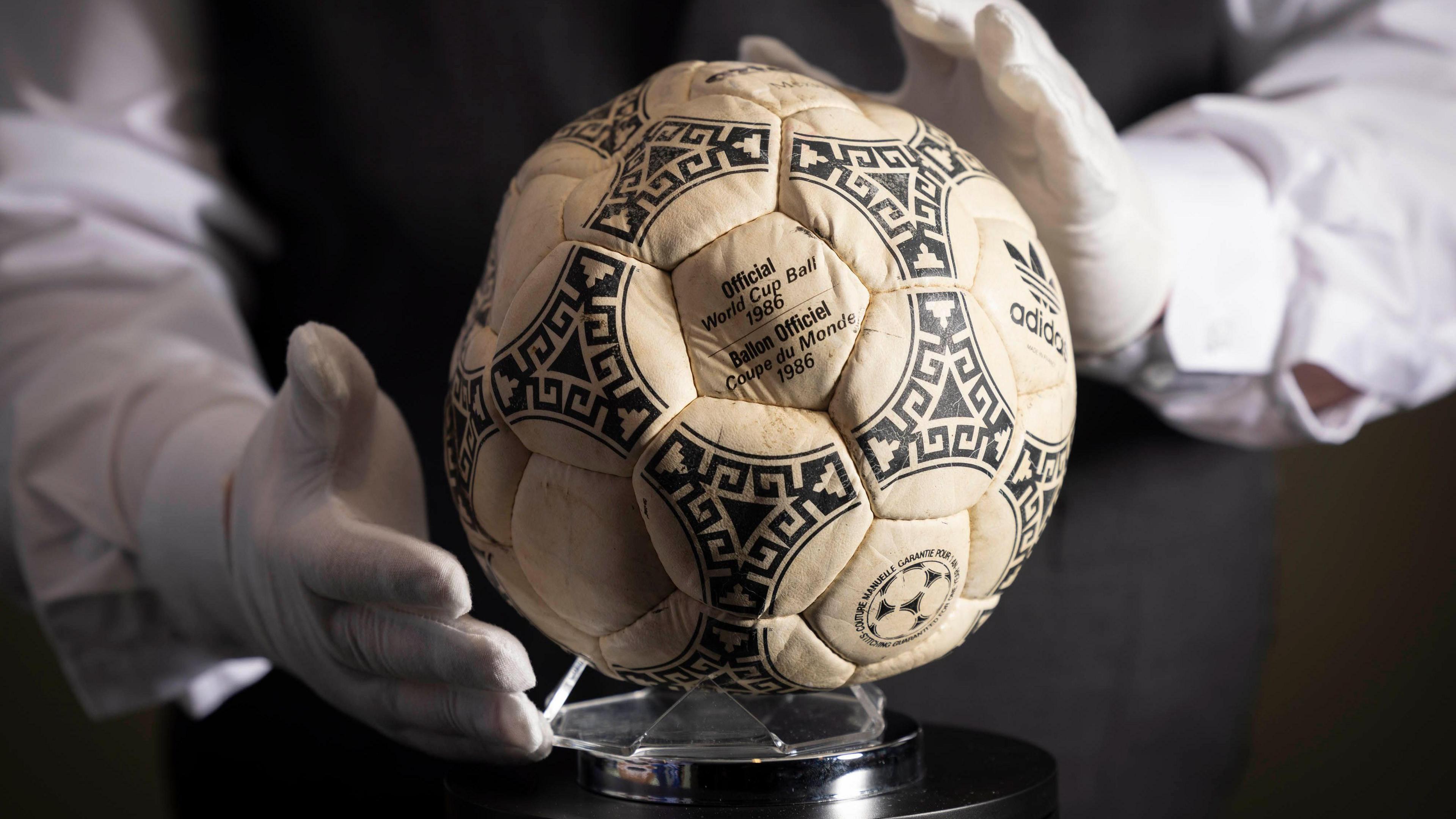
The ghost of the Azteca stadium returned to the spotlight this weekend as one of the most polarizing artifacts in sporting history changed hands. The weathered Adidas Azteca ball, which Diego Maradona famously punched into the net during the 1986 World Cup quarter-final between Argentina and England, has sold for £2.5 million ($3.3 million) at Heritage Auctions. It is a staggering sum for a piece of leather, yet it underscores the enduring, almost religious fascination with the man who claimed the goal was scored by the heavens themselves.
At Heritage Auctions in the United States, curators handled the weathered Adidas Azteca with surgical precision, placing the leather relic onto a display stand for potential buyers to inspect.
The Auction Dynamics and Valuation Gap
While £2.5 million is a figure that would buy a decent squad player in the modern market, the final hammer price actually fell significantly short of early projections. Specialist auctioneers had anticipated the ball might fetch as much as £7.3 million ($10 million), banking on the white-hot demand for elite sporting memorabilia. The discrepancy between the estimate and the final sale price suggests a slight cooling in the high-end market, or perhaps a realization that while the ball is unique, it lacks the personal intimacy of a match-worn jersey.
Despite missing the top estimate, the sale remains a landmark event. Mike Provenzale, a specialist at Heritage, described the item as arguably the most significant soccer artifact in existence. It is a one-of-one piece that captures the exact moment football’s narrative changed forever. The auction house had marketed the ball aggressively, highlighting its role in a match that transcended sport to become a piece of geopolitical theatre, played out just years after the Falklands Conflict.
The ball's journey to the auction block is a story in itself. For more than three decades, the primary witness to Maradona’s sleight of hand was the man responsible for allowing it. Ali Bin Nasser, the Tunisian referee who famously failed to spot the handball, took possession of the ball after the final whistle in Mexico City. He kept it in his private collection, a silent reminder of the day he was outmanoeuvred by the greatest player on the planet.
The Referee’s Legacy and Authentication
Ali Bin Nasser's decision to part with the ball followed a similar move in 2022 when he initially sold it for £1.74 million. The new owner then attempted to flip the item for a higher profit, but a 2023 auction failed to meet the reserve price. This weekend’s successful sale finally sees the relic move into a new private collection. To ensure its provenance, Bin Nasser signed a formal letter in 2023 confirming this was the sole ball used throughout the ninety minutes, a fact corroborated by independent forensic authentication.
The referee has often defended his role in the 1986 match, stating that he followed FIFA’s instructions of the time by deferring to his linesman, who did not flag for a foul. By keeping the ball, Bin Nasser preserved a physical link to a match that defined his career as much as it did Maradona’s. The authentication process involved meticulous checks of the ball’s markings and wear patterns against high-resolution photography from the match, ensuring that the piece sold in Dallas was indeed the one that touched Maradona’s left fist.
This sale follows the record-breaking auction of the shirt Maradona wore during that same match, which commanded a staggering £7.1 million in 2022. That shirt, swapped with England’s Steve Hodge, set a then-record for sports memorabilia. The ball, while carrying the same historical weight, occupies a different tier of the market, serving as a collective piece of equipment rather than a personal garment worn by the icon.
The Dual Magic of Mexico '86
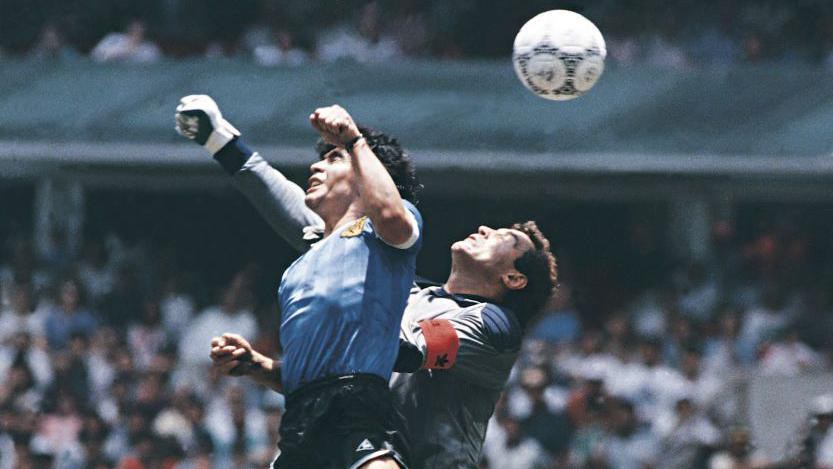
To understand the price tag, one must revisit the four minutes of madness in Mexico City. The 'Hand of God' was the first act, a moment of pure, unadulterated cynicism that left Peter Shilton fuming and the England bench in hysterics. It was a goal that should never have stood, yet it became the cornerstone of Maradona's legend as the ultimate street footballer who would win by any means necessary. He later told reporters the goal was scored "a little with the head of Maradona and a little with the hand of God."
Diego Maradona controversially punches the ball over Peter Shilton to open the scoring in Mexico City.
Just moments later, the same ball was at the feet of the master for a different reason. Maradona embarked on a 60-yard slaloming run that saw him leave five England defenders in his wake before rounding Shilton to score the 'Goal of the Century.' It was the perfect counterweight to his earlier transgression—a display of such breathtaking skill that even some of the England players later admitted they wanted to applaud. That single match ball witnessed the two most discussed goals in the history of the World Cup.
The Adidas Azteca itself was a technological milestone, being the first fully synthetic match ball used in a World Cup. Designed to withstand the high altitude and often wet conditions of Mexico, its durability is evident in the fact that it remains in remarkably good condition nearly forty years later. The intricate designs on the panels, inspired by Aztec architecture, now serve as a backdrop to the scuffs and marks earned during that frantic quarter-final.
The Market for Footballing History
The sale of this ball highlights the booming industry of footballing relics. As the sport becomes increasingly globalized and wealthy, high-net-worth individuals are looking to tangible assets as investments. Items associated with Pele, Messi, and Maradona have become the 'Old Masters' of the sporting world. While a ball might lack the aesthetic appeal of a painting, its value lies in the emotion it triggers and the specific second of history it represents.
We are seeing a shift where items from the pre-digital era are becoming increasingly rare and sought after. In 1986, there were fewer cameras and less scrutiny, making the physical evidence of Maradona’s genius even more precious. The fact that this ball failed to hit the £10 million mark might suggest a ceiling for such items, but £2.5 million is still a powerful statement of Maradona's enduring cult of personality. He remains the most bankable name in football history.
As this piece of leather moves into a new private vault, the debate over the 1986 quarter-final shows no signs of slowing down. For England fans, the ball is a reminder of a grand injustice; for Argentines, it is a holy relic of a tournament that brought national pride during a difficult era. Regardless of one’s perspective, the Azteca ball is a witness to the two faces of Diego Maradona: the cheat and the genius, inextricably linked by a single piece of sporting equipment. more football news on MATCHLINE