
Lionel Messi delivered a tactical masterclass in Atlanta, exploiting England's fatigue and Thomas Tuchel’s tactical shifts to guide Argentina to the final.
England have long prided themselves on a brand of football built on high-octane physicality and unrelenting energy, yet in the sweltering heat of Atlanta, they were systematically dismantled by a 39-year-old who spent the vast majority of the evening walking. Lionel Messi, the undisputed master of the calculated stroll, provided a masterclass in footballing intelligence that proved far more potent than the youthful vigour of Thomas Tuchel’s side. While the legs may not carry the same explosive burst of his Barcelona prime, Messi's capacity to serve as an on-pitch coach allowed Argentina to navigate a difficult start and eventually suffocate the English resistance. It was a performance defined by rhythm and timing, where the veteran captain sensed exactly when to drift and when to strike.
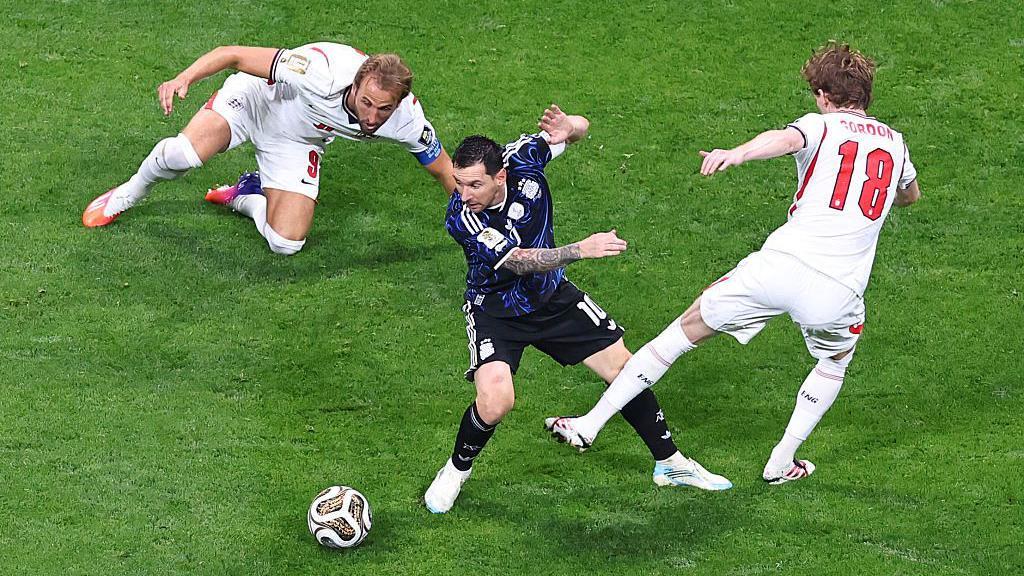
The Illusion of Control: England's Early Press
In the opening exchanges, it appeared that Thomas Tuchel had devised the perfect blueprint to stifle the defending champions. The England front line, led by the industrious Anthony Gordon and Morgan Rogers, worked tirelessly to pin Argentina back. Their primary objective was to cut off the supply lines from goalkeeper Emiliano Martinez to the full-backs, forcing the South Americans to play through a congested central corridor. For twenty minutes, this front-footed approach bore fruit as Harry Kane and the midfield trio implemented a strict man-to-man marking system. The intention was clear: to physically bully the Argentinians and disrupt their natural technical flow before they could establish a foothold in the match.
Jude Bellingham, typically the spearhead of the attack, was deployed in a surprisingly disciplined role deeper in the engine room. His specific brief was to shadow Enzo Fernandez, while Declan Rice performed a similar task against Alexis Mac Allister. This left Elliot Anderson with the unenviable job of tracking Messi. In the early stages, the 23-year-old Anderson was exceptional, displaying the kind of snappy anticipation that had many believing the veteran talisman could be successfully neutralised. In the 10th minute, Anderson even managed a clean interception on a pass intended for Messi, a moment that encapsulated England’s initial dominance and their belief that they could dictate the terms of the semi-final.
The Stroll of Deception: Messi's Tactical Adaptation
However, the great danger of facing Messi lies not in what he does with the ball, but what he does without it. As the first half progressed, the captain began to manipulate the space around him with surgical precision. He started taking up increasingly deeper positions, forcing Anderson into a series of tactical dilemmas. Should the young midfielder follow him into the Argentinian half and leave a gaping hole in the center of the pitch, or should he maintain his station and allow Messi the time to survey the field? This is where Messi’s legendary walking pace becomes his most lethal weapon. By remaining almost stationary, he lures defenders into a false sense of security before suddenly bursting into life with a short, sharp dart toward the ball.
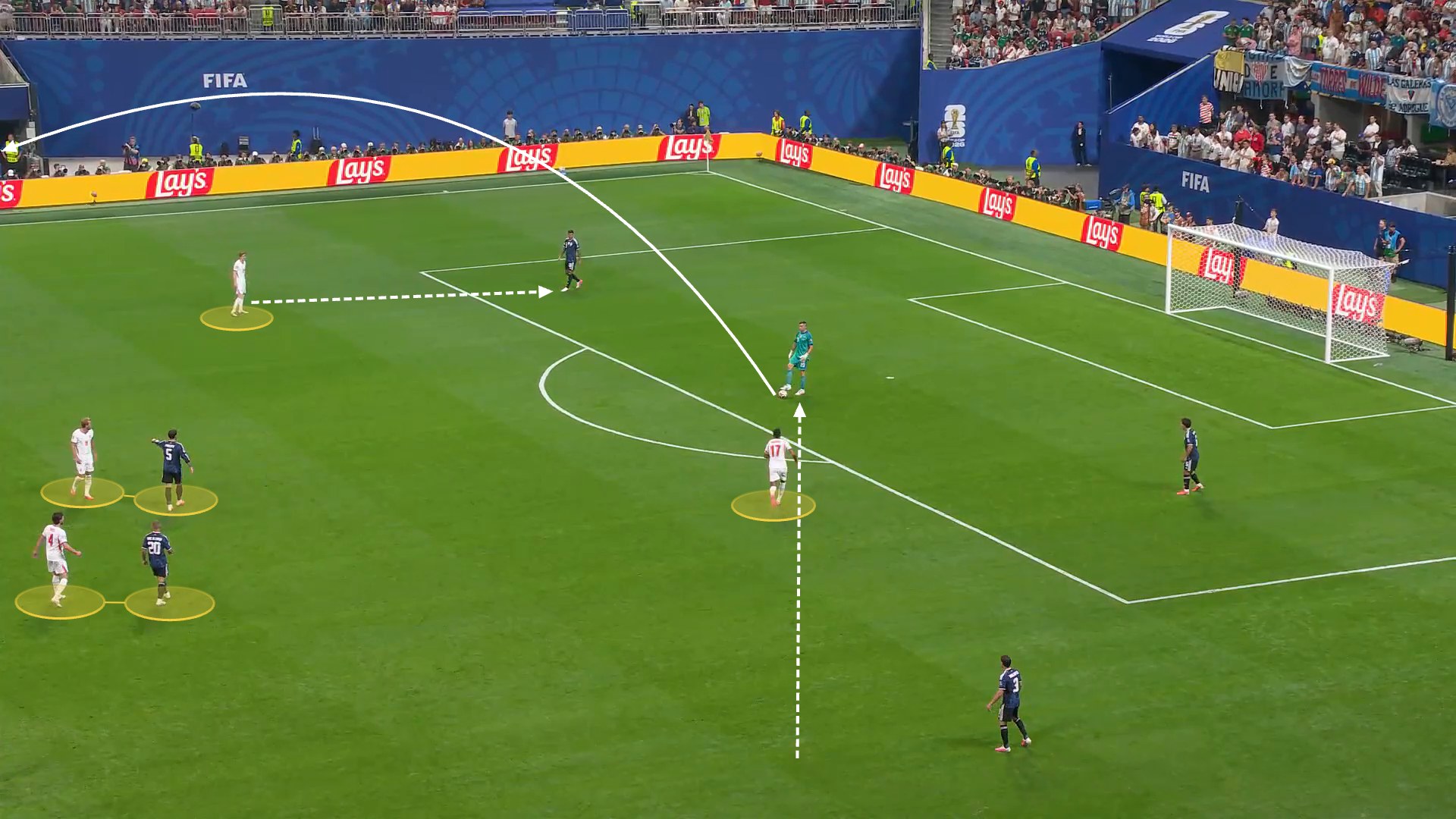
England's press, which had looked so robust in the first twenty minutes, began to show visible signs of fatigue. As the energy levels dipped, Argentina found it easier to bring the ball up the pitch as a cohesive unit. Messi was the conductor of this shift, separating himself from the England midfielders and helping his side establish a sustained period of control. The advantage shifted firmly toward the holders as the defending side was forced to react to Messi’s movements rather than dictating them. The psychological toll of constantly checking over one's shoulder to see where the number ten had drifted began to manifest in sloppy touches and late challenges across the England lineup.
Exploiting the Aggression: The Anderson Trap
The turning point in the individual battle between Messi and Anderson arrived when the veteran began to use the youngster’s aggression against him. Recognising that Anderson was eager to engage in physical duels, Messi started holding the ball for an extra second, inviting contact and drawing the midfielder out of position. Once the space was vacated, Messi would effortlessly flick the ball around the corner to a teammate. This wasn't just individual skill; it was a psychological dismantling. By baiting the press, Messi was effectively creating the very openings England had worked so hard to close at the start of the night.
This dynamic was most evident during the sequence leading to Argentina's equalising goal. After a short corner, Messi began a mazy dribble toward the edge of the area. Anderson, sensing an opportunity to make a defining tackle, left his central post to double up on the captain alongside Djed Spence. It was exactly what Messi wanted. He delayed the final pass until the maximum number of defenders had been sucked into his orbit, then released the ball to Enzo Fernandez. The Chelsea midfielder, found in acres of space that Anderson should have been occupying, had the time to pick his spot and fire a clinical strike past Jordan Pickford to level the scores in the 85th minute.
Structural Failures and the Fatal Switch
As England retreated into a defensive shell to protect their lead following Anthony Gordon’s 55th-minute opener, they inadvertently played into Messi’s hands. Between the goal and the equaliser, England managed a meagre 12 percent of possession, spending the vast majority of the half pinned in their own final third. Thomas Tuchel attempted to solidify the structure by switching to a back five, moving to a 5-3-2 formation to gain numerical parity in the box. Yet, this tactical tweak only served to create more room for Messi to operate on the periphery. With the wing-backs pinned deep, the three central midfielders were stretched too thin to cover the full width of the pitch.
Messi immediately identified this flaw, drifting toward the right touchline where he could receive the ball unmarked. By positioning himself behind Jude Bellingham, who was often caught too high or drawn toward the ball, Messi created constant three-on-two overloads on the flank. This allowed Argentina to sustain pressure and deliver a barrage of dangerous crosses. The final blow came in stoppage time when Messi delivered a pinpoint cross for Lautaro Martinez to head home the winner. It was a fitting end to a match where one man's vision overcame an entire team's industry, proving that even at 39, Messi remains the ultimate arbiter of World Cup destiny. more football news on MATCHLINE