New Zealand Football joins a growing international coalition withdrawing support for FIFA President Gianni Infantino ahead of the March Congress.
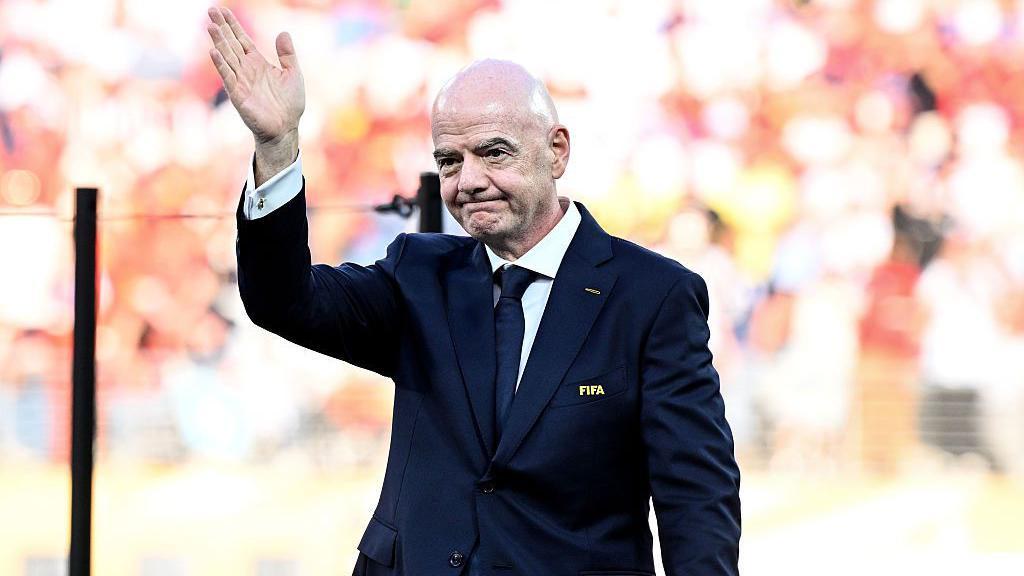
The monolith of Gianni Infantino’s presidency has suffered another significant structural crack in the South Pacific. New Zealand Football (NZF) has officially broken ranks with the Oceania Football Confederation (OFC), joining a widening rebellion of member nations that have formally withdrawn their support for the 56-year-old’s re-election bid. This decision moves New Zealand into alignment with heavyweights from Europe, North America, and Asia, signaling a deep-seated dissatisfaction with the current administration's commercial maneuvers and governance standards.
Infantino, who is seeking a fourth term at the upcoming FIFA Congress in March, finds himself increasingly isolated from the traditional power centers of the sport. While he still commands a mathematical path to victory, the loss of support from the likes of England, Wales, Norway, and the Republic of Ireland has now been bolstered by a New Zealand side that remains the dominant force in its own region. The crux of the fallout stems from the widely criticized and ultimately aborted plans to sell 20% of the FIFA World Cup’s commercial rights to private investors, a move that many confederations viewed as a short-sighted raid on the game's long-term financial heritage.
The Pacific Revolt and the Demand for Transparency
The decision by New Zealand to split from the collective stance of the OFC represents a rare moment of discord in Pacific football politics. Traditionally, the Oceania confederation has acted as a unified voting bloc, often providing a reliable foundation for the incumbent FIFA leadership. However, the leadership at NZF, led by chief executive Andrew Pragnell, has made it clear that the status quo is no longer tenable. By calling for an independent review of the steps taken to develop the FIFA Forward Enterprise Scheme (FFE), New Zealand is demanding a level of scrutiny that goes beyond the internal optics usually favored by the Zurich hierarchy.
Pragnell was vocal about the necessity of external oversight, insisting that an "in-house quick washover" would be insufficient to repair the damage done to the relationship between FIFA and its member associations. The sentiment in Auckland is that the FFE project was handled with a level of opacity that eroded trust. For a nation that was the only OFC member to qualify for the 2026 World Cup, New Zealand carries a degree of regional authority that cannot be ignored. Their stance suggests that even those who benefit from FIFA's development funding are no longer willing to ignore perceived failures in accountability.
The statements released by NZF were uncharacteristically blunt for a member association. They pointed to a breakdown in trust and a climate of increased division within the international game. By advocating for stronger governance and transparency, New Zealand is positioning itself as a reformist voice at a time when the presidential race is becoming a referendum on Infantino’s leadership style rather than just his policy achievements. They are essentially asking for a reset of the relationship between the governing body and those who comprise its membership.
The Commercial Catalyst: 20 Percent of the Future
The primary driver of this continental-scale rift is the controversy surrounding the FIFA Forward Enterprise Scheme. The proposal to carve out a fifth of the World Cup’s commercial rights for private investors sent shockwaves through UEFA, the AFC, and Concacaf. These three regional giants have already confirmed they will not back Infantino in March. To many, the plan felt like a desperate attempt to generate immediate liquidity at the expense of the sport’s most valuable asset. While the proposal was eventually withdrawn after fierce pushback, the reputational damage had already been done.
Infantino needs 106 votes to secure another term, and while he still retains the backing of the Confederation of African Football (CAF) and South America’s CONMEBOL, the tide is turning in the Northern Hemisphere and parts of the Pacific. Critics argue that the FFE was an attempt to centralize power and wealth in a way that bypassed traditional consultation channels. The perception of "deception" in how the scheme was presented has been a recurring theme among the presidents of the confederations that have now turned their backs on the Swiss-Italian lawyer.
This commercial friction has exposed a fundamental disagreement about what FIFA should be. Is it a service organization designed to distribute wealth and govern the rules fairly, or is it an aggressive commercial entity seeking to maximize profit through private equity partnerships? For nations like New Zealand, the answer must prioritize the integrity of the institution. They believe that this specific point in time represents a rare opportunity for all member associations to demand a more rigorous standard of administration before the global game moves further into uncharted financial territory.
A Fractured Global Base
The geopolitical map of football is currently a patchwork of conflicting loyalties. Infantino’s support in Africa and South America remains robust, primarily due to the increased investment and expanded World Cup slots that have benefitted those regions during his tenure. However, the opposition from Europe and North America is significant because those regions provide the bulk of the commercial revenue and player talent that makes the World Cup a global phenomenon. When major markets like England and Wales withdraw support, the symbolic weight often exceeds the single vote they carry.
The Asian Football Confederation’s decision to join the opposition was perhaps the biggest surprise to the FIFA executive. Historically, the AFC has been a bastion of support for the status quo. Their shift indicates that the concerns regarding the FFE scheme were not just limited to Western European sensitivities but were shared by the rapidly growing markets in the East. This collective withdrawal of support has created a situation where Infantino is no longer seen as a consensus candidate, but a divisive figure clinging to power through the support of specific voting blocs.
In the United Kingdom, the consensus is near-total. The Football Association in London, along with the governing bodies in Cardiff, Belfast, and Dublin, have all moved into the opposition camp. They have cited a desire for a leadership that prioritizes the stability of the international calendar and respects the sovereignty of domestic leagues. The cumulative effect of these announcements is a sense of momentum that Infantino has struggled to counter with his usual rhetorical flourishes or promises of increased development grants.
The OFC's Delicate Balance
While New Zealand has taken a hardline stance, the Oceania Football Confederation as a whole is walking a much finer tightrope. In a statement, the OFC Executive Committee welcomed the withdrawal of the FFE proposal but stopped short of dumping Infantino entirely. There is a clear tension within the region: the smaller island nations remain heavily dependent on the FIFA Forward funding that has flowed more freely under Infantino’s leadership, while the regional leader, New Zealand, is looking at the broader governance implications.
The OFC acknowledged the progress made in the region over the last decade, crediting FIFA's leadership with advancing the game in places where resources are scarce. This suggests that while there is an appetite for reform, there is also a fear of the vacuum that might follow if the current administration is toppled. The confederation is encouraging FIFA to use the independent review as an opportunity for change, but they are not yet ready to join the "anyone but Infantino" movement that is gaining speed elsewhere.
This divide highlights the complexity of FIFA's voting system. Every member association, regardless of its size or footballing pedigree, has one vote. Infantino has historically been a master at building coalitions among the smaller nations, but the defection of New Zealand shows that even this base is no longer guaranteed. As the March Congress approaches, the pressure will mount on other OFC members to decide whether they stand with their regional neighbor or with the man who has controlled the purse strings in Zurich for nearly a decade.
The Path to the March Congress
The coming months will be defined by intense lobbying and backroom negotiations as both the Infantino camp and the reformists attempt to shore up their numbers. The demand for an independent review is the current focal point, as it provides a neutral ground for nations to express their dissatisfaction without necessarily committing to a rival candidate. If such a review uncovers genuine procedural failures or ethical lapses in the FFE project, Infantino's position could become untenable even among his current supporters.
For the global game, the stakes are remarkably high. The 2026 World Cup is set to be the largest in history, and the governance of that tournament—and the distribution of its record-breaking revenues—will be determined by whoever wins in March. New Zealand Football’s break from the pack is a signal that the era of unquestioned presidential authority may be coming to a close. The demand for accountability is no longer a whisper from the fringes; it is a loud, clear call from across the globe.
As the international community waits to see if a viable challenger will emerge to take advantage of this fractured landscape, the focus remains on the integrity of the administration. The game is currently at a crossroads where the financial ambitions of the leadership have clashed violently with the governance expectations of the member nations. Whether Infantino can survive this storm will depend on his ability to convince the wavering associations that he is still the right man to lead them into a new era of expansion.
Follow more football news on MATCHLINE for the latest updates on FIFA's presidential race.