While fans and critics remain divided on the commercial nature of World Cup hydration breaks, Thomas Tuchel used the stoppages to orchestrate a dramatic comeback win.
The boos that cascaded down from the stands in Atlanta during the first-half hydration break were not just for the interruption of play; they were a reflection of a frustrated England support watching their team flounder. To many, these mandatory three-minute intervals are a symbol of the tournament’s creeping commercialization. Yet, for Thomas Tuchel, these breaks were the tactical timeouts that potentially saved England's World Cup campaign. From a goal down and playing without rhythm, the Three Lions used these moments of respite to regroup and eventually overpower a resilient DR Congo.
The Statistical Shift
The impact of the hydration breaks on England's performance was not just anecdotal; it was borne out in the cold reality of the match statistics. Before the first interval in the first half, England were statistically anonymous, failing to register a single shot or a single touch inside the Congolese penalty area. They were a team paralyzed by the speed and intensity of their opponents. However, following the three-minute consultation with Tuchel, the improvement was immediate. By the half-time whistle, England had amassed eight shots and 20 touches in the box.
This pattern repeated itself with even more dramatic consequences in the second half. Leading up to the final hydration break, England had managed only two shots on goal. In the period immediately following the break, they unleashed six shots, with Harry Kane clinical in his execution to score twice and secure the 2-1 victory. The breaks effectively allowed England to play the game in concentrated bursts of high intensity, a strategy that eventually broke the stamina of a tiring Congolese defense.
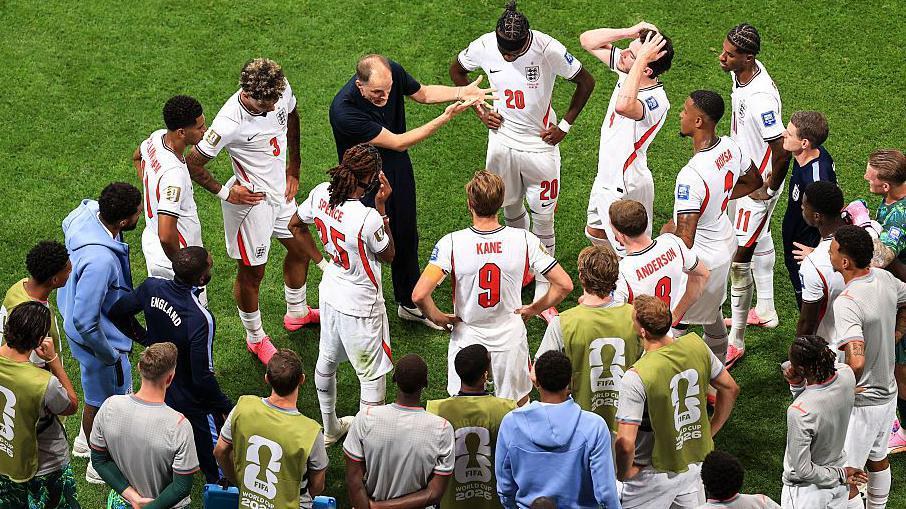
Tuchel himself is a reluctant convert to the system. The German manager has been vocal about his preference for the natural momentum of football, suggesting that the interruptions can be chaotic. However, he was quick to admit that he would be foolish not to take advantage of the opportunity. During the breaks, Tuchel was seen in animated discussion with his players, who appeared calm and receptive to the tactical tweaks that were necessary to solve the Congolese 4-4-2 block.
Coaching in the 'Water Time'
While the fans see a commercial break, coaches see a whiteboard moment. In Atlanta, Tuchel gathered his team into a tight huddle, delivering specific instructions to individuals while the players rehydrated. It was a stark contrast to the often-chaotic nature of these breaks earlier in the tournament. The England players, including Eberechi Eze and Bukayo Saka, were seen nodding in agreement as the manager outlined the path to victory. Eze later noted that the breaks give the team a "time to breathe" and recalibrate when the momentum is against them.
The tactical shift that won the game—moving Declan Rice into a more advanced, right-sided role and allowing Jude Bellingham to drift into the left channel—was refined during these brief stoppages. By having a dedicated moment to communicate with the entire squad at once, Tuchel was able to ensure that everyone was synchronized for the final assault. This is a luxury usually reserved for halftime, but the hydration breaks have effectively turned football into a game of four quarters.
Gianni Infantino, the FIFA president, was quick to praise the use of the breaks, framing them as a tool for player safety and tactical organization. He noted that England's ability to reorganize and get on the front foot was a prime example of how the stoppages can benefit the quality of the match. For FIFA, the success of teams like England in utilizing these breaks provides a convenient counter-argument to those who claim they are purely an advertising gimmick.
The Fan Backlash and Commercial Concerns
Despite the tactical benefits, the hydration breaks remain deeply unpopular with the traveling supporters. The primary criticism is that they disrupt the organic flow of the match and serve as a vehicle for broadcasters to squeeze in more advertising revenue. In stadiums that are often air-conditioned or during matches played in mild temperatures, the justification for a medical necessity feels thin to many observers. FIFA’s decision to make the breaks mandatory for every game, regardless of weather conditions, has only fueled the suspicion of commercial motives.
One England supporter expressed the sentiment of many, suggesting that the players "figured it out" in the final 20 minutes because they were faced with the prospect of an early flight home, not because they had a drink of water and a chat with the coach. The visceral reaction from the crowd—the jeers and the whistles—indicates a significant gap between the perspective of the technical staff and the experience of the fans. For the supporters, the beauty of the game lies in its continuous nature, a trait that is being eroded by these modern additions.
However, football is a results-driven business, and if the breaks help England navigate the knockout stages, the controversy will likely be relegated to a footnote. The tactical flexibility offered by the stoppages could be even more vital in the next round against Mexico. In the high-altitude environment of the Azteca Stadium, where physical exhaustion will set in much earlier, the hydration breaks may prove to be a genuine medical and tactical necessity for a squad that is not acclimatized to the conditions.
Looking Toward Mexico City
As England prepares to face Mexico, the hydration breaks will once again be a focal point. Tuchel has shown he has the ability to maximize these windows of communication, and in a hostile away environment, having two extra opportunities to settle his players could be the difference between progression and exit. The manager's calm demeanor during the Atlanta stoppages was a positive sign for a team that has historically struggled to adapt to changing match circumstances.
The challenge for England will be ensuring they don't become over-reliant on these breaks to fix problems that should be addressed on the pitch. While they worked to perfection against DR Congo, a more elite opponent might not allow England the luxury of regrouping. The breaks are a tool, but as Tuchel noted, the core of the game remains the 90 minutes of movement. If England can combine their tactical adaptability during the stoppages with a more consistent performance throughout the match, they will be a formidable force.
For now, the debate will continue. Is it a $250 million commercial goldmine or a vital tactical innovation? In the eyes of Thomas Tuchel and Harry Kane, the answer is simpler: it was the platform for a comeback. As England moves deeper into the tournament, the drama of these intervals will only increase, as every word whispered during a hydration break could be the one that changes the course of a World Cup campaign.