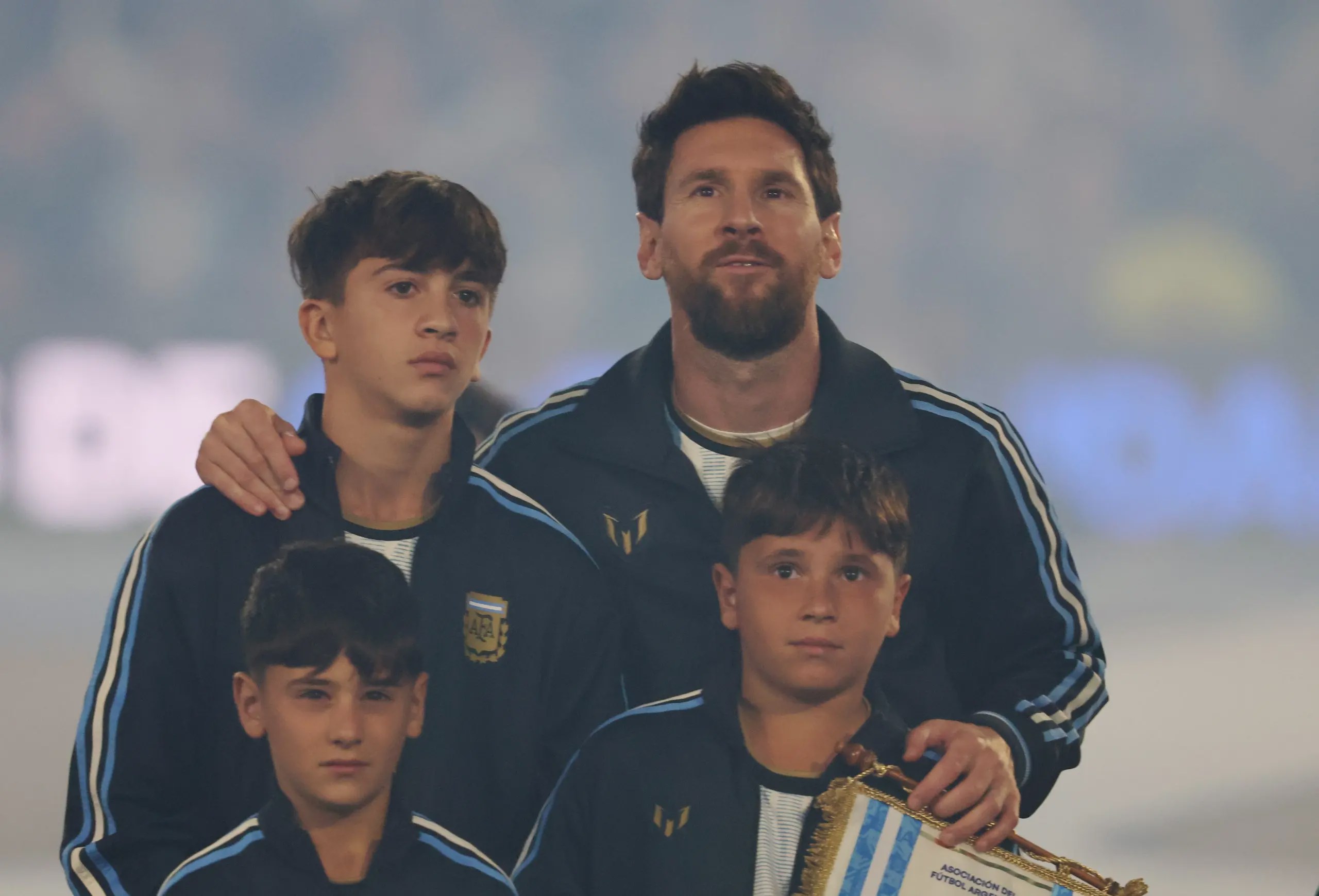
Argentina’s World Cup semi-final victory over England has sparked a political firestorm after players displayed a banner claiming the Falkland Islands.
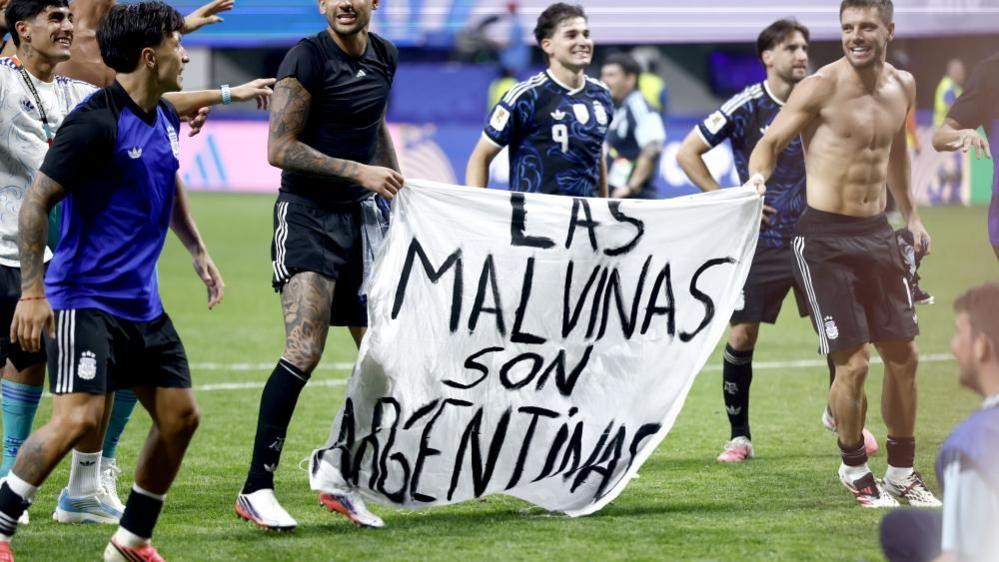
The sporting triumph of reaching a second consecutive World Cup final has been instantly overshadowed by a geopolitical firestorm as Argentina’s players celebrated their semi-final victory over England with a provocative territorial claim. In the immediate aftermath of their 2-1 win in Atlanta, members of the Albiceleste squad unfurled a white banner that read "Las Malvinas son Argentinas," a direct assertion of sovereignty over the British overseas territory. The move has reignited a centuries-old dispute and drawn a sharp, immediate rebuke from the British government, casting a long shadow over what should have been a night of pure footballing celebration for the South American giants.
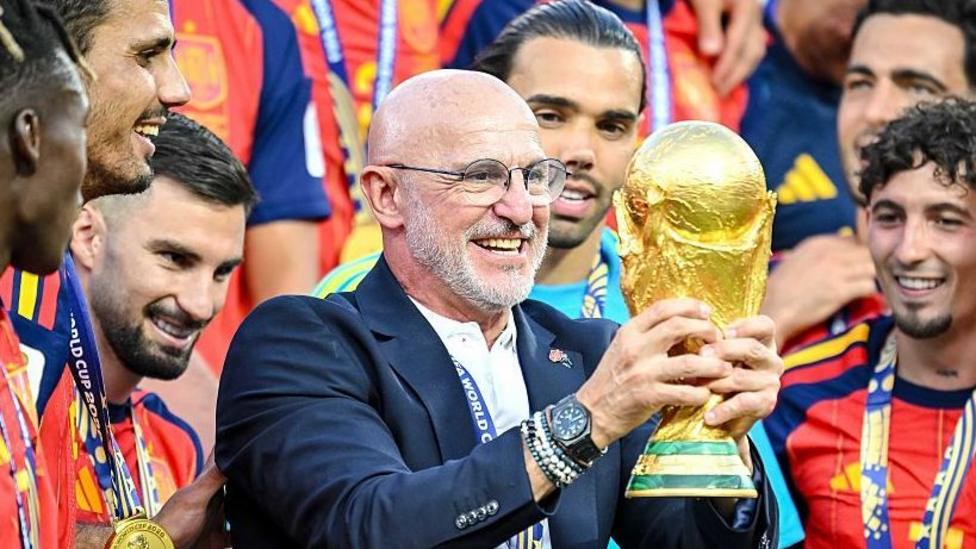
Downing Street was quick to respond to the scenes, with a spokeswoman for Sir Keir Starmer making it clear that while the World Cup trophy may currently belong to Argentina, the Falkland Islands remain resolutely British. The official statement emphasized that the principle of self-determination remains the cornerstone of the UK's position, noting that the islanders themselves have repeatedly and overwhelmingly voted to remain part of the British family. The Prime Minister, while offering a diplomatic nod to the finalists, notably directed his warmest wishes toward Spain, England’s conquerors in the previous European Championship, in a subtle but firm piece of statecraft.
A Diplomatic Clash in the Heart of Georgia
The choice of venue for this latest flare-up — Atlanta’s Mercedes-Benz Stadium — provided a global stage for a message that has deep, painful roots in both nations. The Falklands War of 1982, which lasted 74 days, remains a raw nerve for veterans and families on both sides. The conflict claimed the lives of 255 British military personnel, three islanders, and 649 Argentine soldiers. By bringing this historical grievance onto the pitch, the Argentine players have violated the long-standing FIFA principle of keeping political manifestos out of the sporting arena. Foreign Office Minister Stephen Doughty expressed profound disappointment, lamenting that the focus had shifted away from what was a pulsating football match.
In the House of Commons, the reaction was even more visceral. Liberal Democrat MP Al Pinkerton described the celebrations as disgraceful, accusing the Argentine squad of using the world's most-watched sporting event to challenge the democratic rights of the Falkland Islanders. He argued that the players were attempting to undermine a 2013 referendum in which over 90 percent of the islands' population participated, with 1,513 voting to remain a UK territory and just three voting against. The British government has now echoed calls for FIFA to launch a full investigation into the incident, placing the burden of discipline on the shoulders of football's world governing body.
Precedent and Potential Final Bans
The threat of disciplinary action is far from idle speculation. Footballing history is littered with examples of players being sanctioned for political gestures, and a very recent precedent exists within European football. During Spain’s Euro 2024 celebrations, stars Rodri and Alvaro Morata were slapped with one-match bans by UEFA after they led chants of "Gibraltar is Spanish." Liberal Democrat leader Sir Ed Davey has been vocal in suggesting that FIFA must apply the same rigour here, arguing that the players involved in the banner incident should be barred from competing in Sunday’s final against Spain.
Argentina’s vice-president, Victoria Villarruel, has only added fuel to the fire. Taking to social media, she posted a video of Argentine soldiers alongside a defiant message stating that the claim to the islands is "carried in our blood." She criticised tournament organisers for attempting to ban the banner from the stadium, suggesting that the players’ actions were an act of national defiance. This internal political support for the team's actions makes it increasingly difficult for manager Lionel Scaloni to maintain his stance of separating sport from politics, a line he has desperately tried to toe throughout the tournament.
The Weight of a Bitter Footballing Rivalry
The tension on the pitch in Atlanta was already at a boiling point before the banner appeared. England and Argentina share one of the most storied and acrimonious rivalries in world football, a history punctuated by moments like Diego Maradona’s "Hand of God" in 1986 and David Beckham’s red card in 1998. This latest chapter saw England take an early lead through Anthony Gordon, only for the holders to roar back with two late goals. The equaliser from Enzo Fernandez and the injury-time winner from Lautaro Martinez were clinical, but the subsequent celebrations ensured the match would be remembered for all the wrong reasons.
Midfielder Leandro Paredes admitted after the final whistle that for Argentina, this is never "just another match." He spoke of the war as a sad part of his nation's history, but his comments reflected a team that feels a deep, almost spiritual connection to the territorial claim. For England, the disappointment of a semi-final exit is now compounded by the feeling that their opponents lacked the grace to keep the contest within the white lines. The Three Lions now face a third-place play-off against France, while Argentina must wait to see if FIFA’s disciplinary committee will disrupt their plans for the final.
Scaloni’s Impossible Balancing Act
Throughout the build-up to the semi-final, Lionel Scaloni was adamant that his players should focus on the ball, not the history books. He spoke eloquently about the tragedies of war and the need to respect the past without being held hostage by it. However, the actions of his squad suggest that the nationalistic fervor surrounding the Malvinas claim is a force too strong to be contained by a manager’s tactical instructions. Scaloni now finds himself in a precarious position, needing to prepare his team for a final while the threat of suspensions hangs over several key starters.
The Conservative and Reform UK leaders, Kemi Badenoch and Nigel Farage, have both weighed in, with Farage expressing disgust at the players' behaviour and calling for a rapid strengthening of the Royal Navy in response to the perceived provocation. While such rhetoric belongs more to the world of geopolitics than a sports desk, it highlights the scale of the controversy. As Argentina prepares to face Spain, the world will be watching to see if FIFA has the stomach to enforce its own rules on political neutrality, or if the 2026 World Cup final will go ahead with a cloud of diplomatic resentment hanging over the stadium.
The focus now inevitably shifts to Zurich, where the decision-makers must weigh the integrity of the competition against the immense commercial and sporting pressure of the final. For the fans who witnessed the drama in Atlanta, the brilliance of the football has been momentarily lost in the noise of a banner that should never have been seen. Whether the trophy stays in South American hands or returns to Europe, the fallout from this semi-final will resonate long after the final whistle in New York. more football news on MATCHLINE