Thomas Tuchel defends his tactical choices in Miami as England face the fallout of their painful World Cup semi-final exit against Argentina.
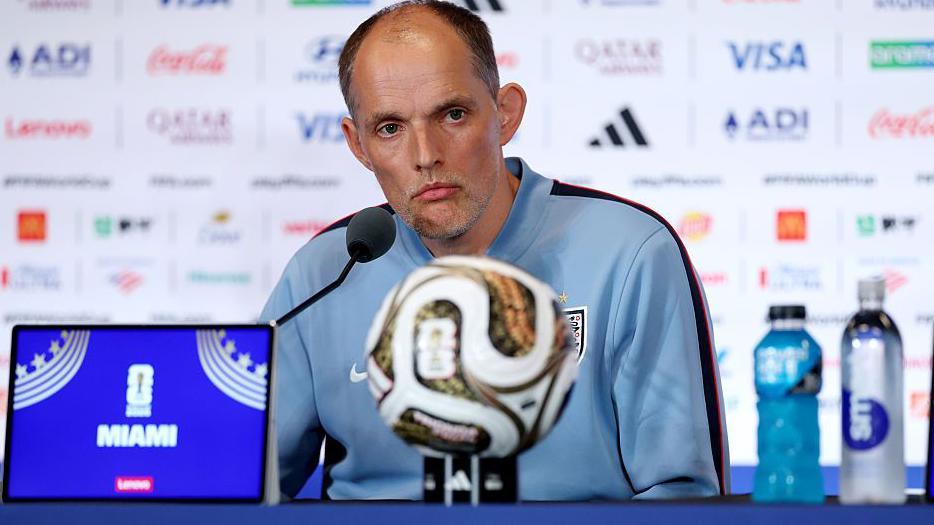
The air in the Miami press room was thick with the kind of tension that only follows a national sporting disaster. Thomas Tuchel sat behind the microphone, his features hardened, looking every bit the man who had spent the last forty-eight hours replaying the same eighty-fifth minute in his mind. England were five minutes away from the promised land, five minutes from their first World Cup final since the days of black-and-white television. Instead, they are preparing for a third-place play-off against France, a match that feels like a wake rather than a celebration. Tuchel, ever the tactician, chose to front up to the inevitable interrogation with a mixture of raw honesty and sharp defensiveness.
The Responsibility of the Tactical Retreat
As the questions flew regarding the tactical retreat that saw England surrender a 1-0 lead to Lionel Messi’s Argentina, Tuchel was uncompromising. He made no apologies for the decisions that saw his side sink deeper into their own territory as the clock ticked down. The German insisted that he acted on experience and intuition, attempting to help a team that was visibly losing its grip on the match. He made it clear that while the result was a failure, the intent was survival. He took the burden of the loss squarely on his shoulders, stating that if a scapegoat was required, he was the only candidate.
The manager spoke of momentum shifts that felt like a tide coming in. He watched as his side became passive, a word he used repeatedly to describe the closing stages of the semi-final. There was a sense of inevitability as England’s defensive line dropped, creating a vacuum that the reigning world champions were all too happy to fill. Tuchel argued that he reacted to the flow of the game, but admitted that the reaction failed to produce the necessary resistance. It is a tactical scar that he believes will define this group of players for years to come.
Tuchel dismissed the notion that he regretted his late-game adjustments. He noted that he would only feel regret if he had remained idle while his team struggled. By switching to a back five, he intended to close the channels and deal with the relentless crossing from the Argentine flanks. The fact that Argentina found another gear in the final moments was, in his view, a testament to their elite status rather than a simple English collapse. He refused to join the chorus of pundits who have spent the last day dismantling his substitution strategy.
The Deep Block and Harry Kane’s Isolation
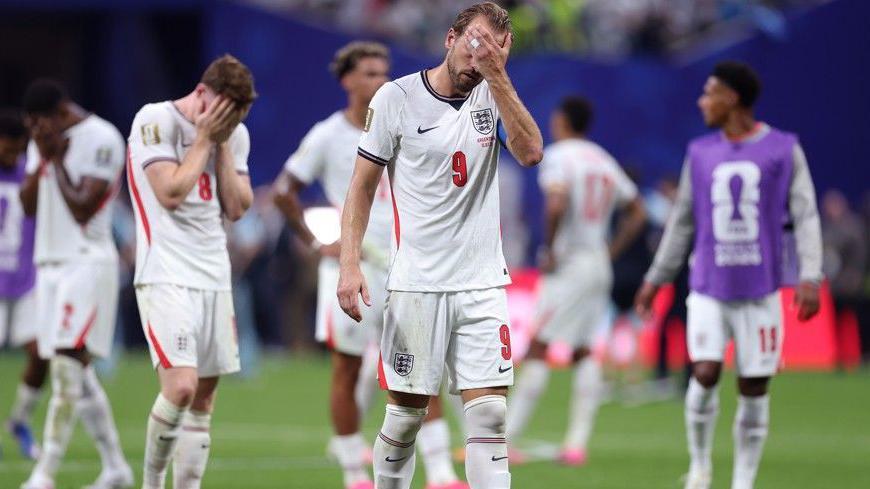
One of the most stinging criticisms leveled at Tuchel was the positioning of Harry Kane. The England captain, usually the focal point of the attack, spent the final thirty minutes operating almost as an auxiliary defender. Tuchel was visibly exasperated when asked why his record goalscorer was so far from the opposition box. He pointed out that when a team defends in a deep block, every player, including the striker, must adhere to the defensive structure. It was a functional necessity, not a tactical preference.
Kane’s heat map from the final stages showed a player pinned back by the sheer volume of Argentine possession. The striker was caught in the middle of a tactical storm, unable to find the outlet he needed because England could no longer keep the ball. Tuchel explained that the lack of activity in the press forced the entire team back. When the midfield cannot stop runners or prevent crosses, the forward line is naturally sucked into the defensive third to provide bodies in the box.
The manager insisted that questioning the spirit of the team was unfair. He saw a group of players who were physically spent and mentally drained. Kane’s deep role was a symptom of a larger problem: the inability to retain possession under the highest level of pressure. For Tuchel, it was not a case of instructing Kane to defend, but rather a case of the game forcing the captain into a role that no striker ever wants to play in a World Cup semi-final.
Physical Fatigue and the Altitude Factor
Tuchel leaned heavily on physical data to explain the drop-off in performance during the second half. He pointed to the grueling path England had taken to reach the final four, specifically citing the match against Mexico. Playing with ten men in the thin air of the Azteca Stadium had taken a significant toll on the squad’s energy reserves. He also mentioned the sweltering heat of Miami during the Norway fixture as a contributing factor to the players' eventual exhaustion.
The data showed a visible decline in sprint distances and high-intensity bursts compared to earlier matches in the tournament, such as the victory over DR Congo. While Tuchel acknowledged that using fatigue can sound like an excuse, he argued it was a physiological reality. The players had given everything physically in every single match, and the tank was simply empty when Argentina began their final assault. The motivation remained high, but the legs no longer followed the brain’s instructions.
This physical deficit is what Tuchel believes led to the passivity. When a player is tired, their reaction time slows, and they tend to take a step back rather than a step forward. This collective hesitation allowed Argentina to find the total flow that eventually broke the English resistance. He argued that the reigning champions had a smoother path to the semi-finals, allowing them to retain a gear that England simply could not match in the Miami humidity.
Closing the Gap to the Elite
Despite the agony of the loss, Tuchel is adamant that England are on the right trajectory. He spoke of a gap that still exists between England and the true powerhouses of world football: Argentina, Spain, and France. These nations, he suggested, have an ingrained expectation to win titles, whereas England are still in the process of building that elite mentality. He sees his role as the man who must bridge that divide before the next major tournament.
The manager refused to stop his pursuit of the top teams. He described the current situation as a hunt, with England as the challengers looking to unseat the established order. The loss to Argentina showed that while England can compete for eighty-five minutes, they lack the cynical edge and the physical endurance to see out games against the very best. Tuchel will not stop challenging his players to find that missing percentage that turns semi-finalists into champions.
He urged his players to use the pain of this defeat as a catalyst for growth. The scar of Miami is something he wants them to carry, not as a weight, but as a reminder of the standards required. He believes the team spirit is unbreakable and that the reaction to this disappointment will begin immediately. The chase for the elite status continues, and Tuchel is convinced that the lessons learned in this tournament will be the foundation for future success.
A Shot at Historical Perspective
Focus now shifts to the third-place play-off. While many see the bronze-medal match as a redundant fixture, Tuchel is framing it as a historic opportunity. He reminded the media that a win against France would represent England’s best World Cup finish in sixty years. It is a perspective he is desperate to instill in his players to ensure they do not sleepwalk through their final appearance in the United States.
The manager knows that third place will not heal the wound of missing the final, but it provides a chance to finish on a high. Facing the French offers a final test against top-tier opposition and a chance to prove that the Argentina collapse was an anomaly rather than a trend. Tuchel wants to see a reaction that proves his team can still perform when the stakes are high, even if the ultimate prize is no longer on the table.
The journey from January 2025 has been a whirlwind for the German coach. He has taken England further than many expected, yet the manner of their exit has left a bitter taste. As he prepares to lead his team out one last time this summer, the objective is clear: secure the bronze, analyze the failures, and begin the long road to Euro 2028. The Miami sun might be shining, but for Tuchel and England, the shadows of the semi-final will loom large for some time. more football news on MATCHLINE