
England faces its toughest physical test yet as they swap air-conditioned domes for the brutal Miami heat in a high-stakes quarter-final against Norway.
England’s path through the 2026 World Cup has been a masterclass in controlled environments, but the safety of the indoors is about to be replaced by the brutal reality of a Florida summer. As Thomas Tuchel prepares his squad for a quarter-final showdown against Norway, the primary opponent might not be Erling Haaland, but the suffocating humidity of Miami. The Three Lions have spent much of the tournament shielded from the North American heat in air-conditioned hubs, yet on Saturday, they step into what experts are calling a humidity trap that could push the limits of athletic performance.
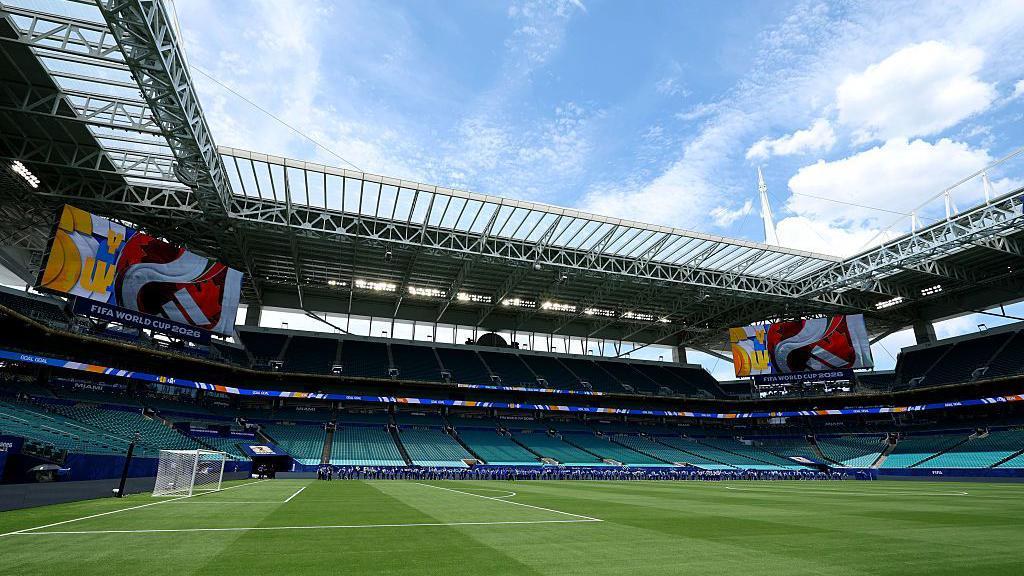
The Hard Rock Inferno: A Humidity Trap
The weather forecast for Miami on matchday is nothing short of menacing. While a recorded temperature of 33C might seem manageable for professional athletes, the addition of intense humidity will push the 'real feel' temperature to a staggering 41C. The National Weather Service has already flagged a hazardous heat threat for the region, warning of increased risks for heat-related illnesses. For England, who have enjoyed the 21C comfort of stadiums in Dallas and Atlanta, this transition represents a massive shock to the physiological system.
Compounding the problem is the unique architecture of the Hard Rock Stadium. Unlike more open outdoor venues, the stadium features a canopy roof that, while protecting fans from the sun, creates a stagnant environment on the pitch. By blocking natural breezes, the structure prevents the airflow necessary for sweat to evaporate. In high humidity, the body's primary cooling mechanism—sweating—becomes remarkably inefficient because the air is already saturated with moisture. This creates a greenhouse effect where players are effectively marinating in their own heat, significantly increasing the risk of early fatigue.
England's Acclimatisation Strategy and Tuchel's Prep
Despite the looming environmental crisis, the England camp remains confident in their physical preparation. Thomas Tuchel made the strategic decision to base the initial warm-up camp in Florida, spending ten days in the Tampa and Orlando heat before moving to their tournament base in Kansas. In Kansas, the squad has consistently trained in temperatures exceeding 32C, ensuring that their bodies have undergone the necessary physiological adaptations to cope with thermal stress. Performance experts suggest that England has successfully acquired the 'gold standard' of heat acclimatisation through this consistent exposure.

Norway’s Battle-Hardened Edge in the Heat
Norway, meanwhile, may hold a psychological and physical advantage derived from recent experience. While England were playing in rain and 18C temperatures in Mexico City last Sunday, the Norwegians were battling through oppressive conditions in New Jersey to beat Brazil. The temperature during that fixture hit 31C in the shade, and the humidity was extreme enough to trigger a heat warning. Having already survived a high-intensity knockout game in these conditions, Stale Solbakken’s side has proven they can maintain their tactical discipline when the lungs are burning.
Norway’s tournament path has seen them play all but one of their matches outdoors, including a clear-sky opener against Iraq. While England’s stars have been tucked away in climate-controlled domes, the Norwegians have been forged in the sun. This battle-hardness could be decisive in the final twenty minutes of the quarter-final, when the ability to make sprint efforts under extreme thermal load will separate the winners from the losers. The fatigue management of players like Odegaard and Haaland, who have already put in huge shifts in the heat, will be Solbakken's biggest concern.
The Science of Survival and the WBGT Index
Fifa and the global players' union, Fifpro, utilize the Wet Bulb Globe Temperature (WBGT) index to determine when conditions become too dangerous for play. This index accounts for temperature, humidity, wind speed, and solar radiation. Guidelines suggest that any reading above 28C should lead to the postponement or delay of matches. Forecasts for Saturday's kick-off place the WBGT at exactly that threshold. While the game is certain to go ahead, both medical departments will be on high alert for signs of heatstroke and exhaustion.
To combat the elements, both teams will employ a range of cooling technologies. England has been utilizing phase-change ice vests during warm-ups and cooling tents at their training facility. During the match, hydration breaks will feature ice-cold towels and electrolyte replenishment. The introduction of climate-controlled benches is a modern addition designed to offer some respite to substitutes, but for the eleven men on the pitch, there is no escape. The winner of this tie will not just be the team with the best tactics, but the team that can most effectively manage their internal core temperature over 90 or 120 minutes.
Historical Parallels and Fan Safety
The conditions in Miami evoke memories of the 1994 World Cup in Orlando, where the Republic of Ireland and Mexico played in temperatures that reached a legendary 43C. That match remains a benchmark for physical suffering in the modern era. While Saturday may not hit those record-breaking heights, it will be a test of endurance rarely seen in the modern game. For the fans, the risk is equally high; Miami-Dade Fire and Rescue have already responded to dozens of heat-related calls at the stadium during earlier group games, urging supporters to utilize cooling stations and stay hydrated.
As the sun sets over Miami, the tactical battle between Tuchel and Solbakken will be dictated by the mercury. High-pressing systems, a staple of both managers, may have to be abandoned in favor of a more conservative, energy-saving approach. The pace of the game is likely to be slower, with a premium placed on ball retention to avoid chasing shadows in the humidity. In this pressure cooker environment, one lapse in concentration caused by heat fatigue could be the difference between a semi-final berth and a flight home. more football news on MATCHLINE