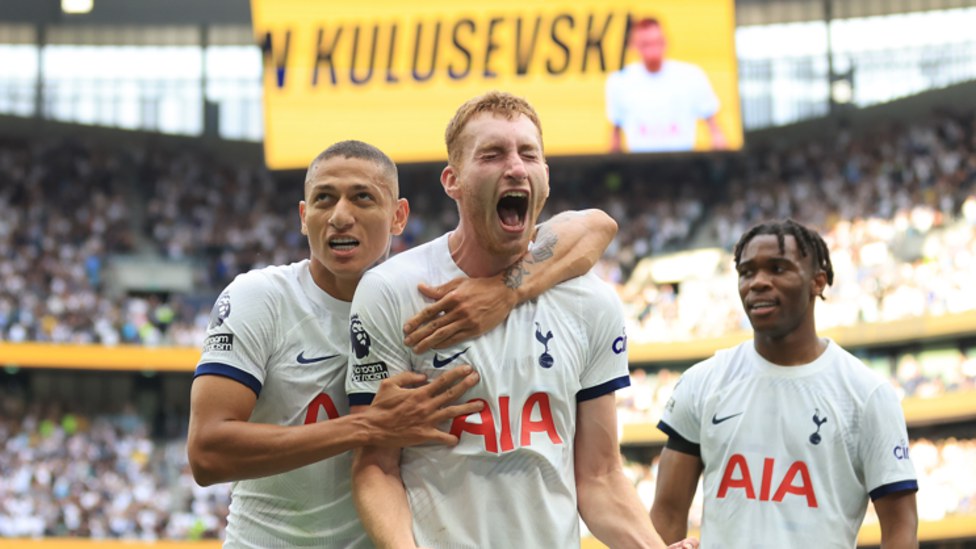
The Premier League’s Key Match Incidents Panel confirms a joint-record six on-field mistakes in a single weekend, fueling the fire of VAR frustration.
The veneer of technical perfection in the Premier League has been stripped away once again. In a weekend where the whistle seemed to carry more weight than the ball, the top flight has officially matched its most error-strewn round of fixtures on record. The Key Match Incidents (KMI) Panel, the league’s independent adjudicator for officiating, has ruled that referees made six distinct on-field errors during the last set of games. It is a statistic that validates the collective groan heard across stadiums from London to Liverpool, marking a low point for officiating standards not seen since the chaotic opening weeks of the 2023-24 campaign.
While the Premier League often prides itself on the speed and intensity of its matches, the friction between human judgment and technological intervention has never been more abrasive. The panel, comprised of five members who vote on the accuracy of both on-field decisions and the subsequent VAR reviews, dissected a weekend where nearly every fixture was marred by contention. From ignored hair-pulls to misinterpreted offside sequences, the findings suggest that even with multiple camera angles and a dedicated room in Stockley Park, the fundamental application of the laws remains dangerously inconsistent.
The VAR Failures: Hair Pulls and Offside Gaffes
The most damning portion of the KMI Panel’s report involves the two instances where both the on-field official and the VAR were found to have failed. At the heart of the Friday night opener, Coventry City were denied a clear penalty when Everton’s James Tarkowski appeared to yank the hair of Caleb Yirenkyi inside the area. The panel was unanimous: a 5:0 vote declared it an error by the referee and a missed intervention by the VAR. For fans and players, the fact that a blatant act of physical interference was overlooked by a suite of monitors is a difficult pill to swallow, raising questions about what constitutes the "high bar" for intervention.
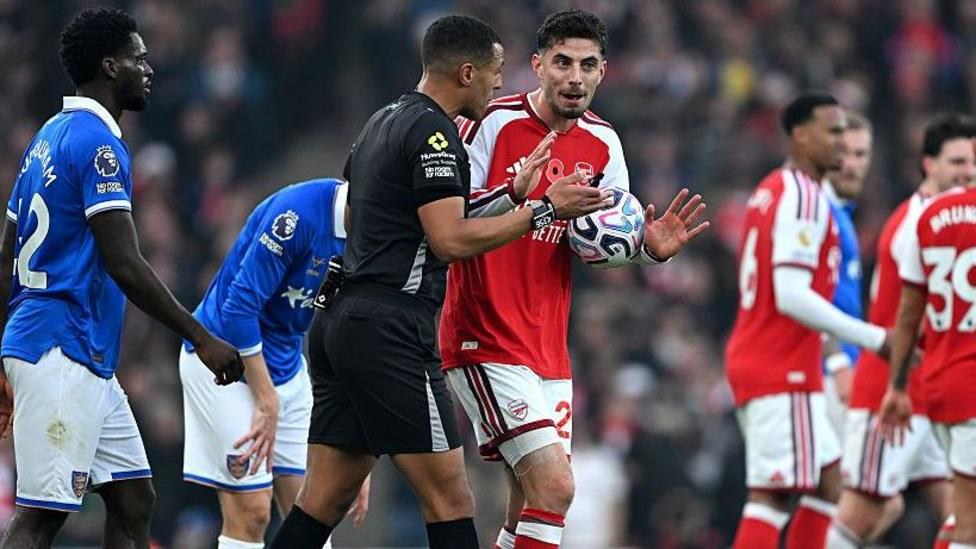
Equally baffling was the situation involving Kai Havertz during Arsenal’s clash with Hull City. The German international was hauled down by Nobel Mendy, an incident so clear that VAR Michael Oliver actually sent referee Farai Hallam to the pitchside monitor. However, the penalty was ultimately rescinded due to an offside call against Havertz. The KMI Panel has now ruled this an error, stating that the "impactful holding action" by Mendy occurred before the offside offence was relevant. It was a technical misstep that could have cost the Gunners dearly had they not eventually found a winner, highlighting a concerning lack of sequence-reading within the VAR booth.
The "High Bar" Paradox
The report also detailed four instances where referees were found to have made incorrect decisions on the pitch, yet the VAR was cleared for not intervening. This is the murky territory of the "clear and obvious" threshold—a concept that continues to alienate supporters. In Crystal Palace’s late drama against Liverpool, a penalty was awarded for a foul by Milos Kerkez on Dario Osorio. The panel voted 5:0 that the on-field decision was wrong, describing the contact as "inevitable." Yet, because it didn't meet the threshold of a total hallucination, the VAR was deemed correct to stay silent. This creates a bizarre reality where a mistake is officially acknowledged, but the system designed to fix mistakes is forbidden from doing so.
A similar logic applied to Ipswich Town’s penalty against Bournemouth. The panel ruled 4:1 that Abdoul Ouattara had effectively initiated the contact with Lewis Cook, and therefore the penalty should never have been given. Again, the VAR was supported for not stepping in. For managers, this remains the most frustrating aspect of the modern game. They are told the technology exists to ensure fairness, yet they are frequently told that a known error must stand because it wasn't "erroneous enough." It is a linguistic gymnastics act that does little to satisfy those losing points on the weekend.
Discipline and Handball Dilemmas
The panel didn't stop at penalties. Everton’s Thierno Barry saw a goal stand despite a VAR check for handball, a decision the panel now says was likely incorrect on the field but impossible to overturn due to a lack of "conclusive evidence" on the replays. This highlights the technical limitations of the broadcast; if the angle isn't perfect, the error persists. Furthermore, Bournemouth’s Marcus Tavernier escaped a second yellow card for delaying a restart, an incident the panel confirmed was a clear and deliberate action that the referee missed. Because VAR cannot intervene on yellow cards, this on-field error was left to fester.
These rulings carry weight beyond just post-match analysis. In the Premier League, these KMI reports contribute to a merit table that accounts for 50% of a referee’s end-of-season bonus. The financial implications for officials are real, yet the reputational damage to the league’s officiating brand seems even more significant. When the panel admits to a record number of errors, it suggests a system under immense pressure, struggling to cope with the very tools intended to simplify it.
Controversies Deemed Correct
Not every complaint was upheld. Tottenham’s fury over Jayden Bogle’s high challenge on Mathys Tel was dismissed by a 3:2 majority, with the panel deciding the Leeds defender lacked the necessary speed and force to warrant a red card. It was a split decision that mirrored the divide on social media, but it offered a rare moment of backing for the officials. Similarly, Chelsea’s complaints about a penalty awarded to Sunderland against Levi Colwill were shut down; the panel felt the defender was guilty of a "careless trip" after a period of mutual holding.
The final incident reviewed involved Aston Villa’s Zion Suzuki, who claimed he was fouled before Patrick Dorgu’s late equalizer. The panel was unanimous in supporting the referee here, noting that contact was not impactful enough to warrant a foul. It serves as a reminder that while the volume of errors is high, the panel is not simply a rubber stamp for every manager’s grievance. They are looking for specific violations of the laws, even if those laws feel increasingly disconnected from the intuitive feel of the sport.
The Future of the KMI Panel
The existence of the KMI Panel itself is not without controversy. Earlier this year, the Scottish Premiership scrapped their equivalent body after clubs grew tired of the voting patterns. In England, the panel is seen as a necessary evil—a way to provide transparency in an era of intense scrutiny. However, as long as fans see six errors in a weekend and hear that only two were "bad enough" for VAR to fix, the frustration will remain. The statistics are moving in the wrong direction, and with half the season still to play, the pressure on the PGMOL to tighten these interpretations is becoming unbearable.
The joint-record six errors serve as a wake-up call. Referees are human, and the game is faster than ever, but the safety net of VAR is currently being used as a shield for mediocrity rather than a sword for justice. Until the "high bar" is lowered or the on-field competence is raised, weekends like this will continue to be defined by the men in black rather than the players in colors. more football news on MATCHLINE