A deep dive into the statistics defining the 2026 World Cup final as European champions Spain prepare to clash with holders Argentina.
The 2026 World Cup final is not merely a clash of two footballing titans; it is a collision of two distinct philosophies supported by startling statistical profiles. On one side stands Argentina, the clinical holders who have turned efficiency into an art form. On the other, Spain, the European champions whose suffocating defensive structure and high-intensity pressing have redefined what it means to control a football match. As these two giants prepare to meet, the numbers reveal a story of contrasting paths to the ultimate stage, with Lionel Messi and Lamine Yamal serving as the generational bookends to a fascinating tactical battle.
Argentina enters the final having played sixty minutes more football than their counterparts, a result of two grueling stints in extra time. However, their physical output has been carefully managed. While Spain dominates the charts for distance covered and sprints per 90 minutes, Argentina has been outrun by every single opponent they have faced in this tournament. This is not a sign of weakness, but of a team that understands how to conserve energy and strike with lethal precision. They lead the tournament with nineteen goals, averaging a strike rate that defies conventional expected goals models.
The Great Scoring Divide
Argentina’s attacking prowess is built on a foundation of ruthless finishing. They have managed to score at least twice in every World Cup fixture for the past four years, a streak that began immediately after their shock opening loss in the previous edition. What makes their current form so terrifying is their variety. While Spain creates high-quality chances inside the box, they have struggled to convert them at a rate higher than their xG suggests. Argentina, conversely, has been deadly from distance, netting five goals from outside the area. This ability to score from almost anywhere makes them a nightmare for defensive coordinators who prefer to sit deep.
Spain’s offensive story is one of volume and persistence. They have taken more shots than Argentina but have found the net six fewer times. Their 13.3 expected goals rating almost perfectly matches their thirteen actual goals, suggesting they are getting exactly what they deserve but nothing more. This lack of clinical edge from distance could be a deciding factor if Argentina’s defense manages to clog the central areas. Luis de la Fuente has instilled a belief in the process, trusting that the sheer weight of chances will eventually break an opponent, but in a final, that patience will be tested by a team that needs only half a chance to punish an error.
The Impenetrable Spanish Wall
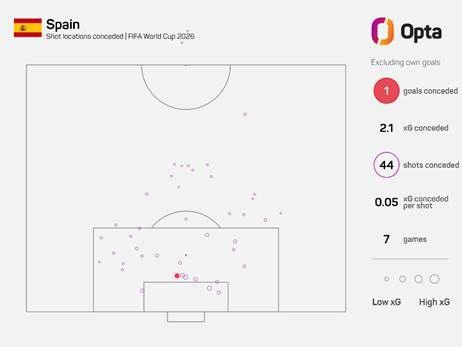
If Argentina owns the clinical edge, Spain owns the defensive blueprint. Their defensive statistics are nothing short of historic. Throughout the entire tournament, they have conceded only a single goal, which came during their quarter-final victory over Belgium. Even more impressive is their defensive expected goals (xG) against. At just 2.1, it is the lowest in the competition, despite Spain playing more matches than the vast majority of the field. They simply do not give up high-quality chances, a feat achieved through a combination of high-line pressing and impeccable positional discipline.
The secret to Spain’s defensive success lies in their work rate. They lead the tournament in winning possession in the final third, trailing only Uruguay in that specific metric. By suffocating opposition build-up play, they prevent attacks before they can even reach the final third. When teams do manage to break through, they are often forced into difficult, low-percentage shots from wide angles. The statistical map of shots faced by Spain shows a sea of small dots, indicating that they have successfully denied their opponents any major scoring opportunities. Argentina will have to find a way to penetrate a system that has been virtually flawless for six matches.
Physicality and Distance
There is a stark contrast in the physical demands placed on both squads. Spain’s identity is built on a relentless engine. They sprint more and run more per 90 minutes than almost any other side in the competition. This intensity is designed to overwhelm opponents, forcing mistakes through sheer physical pressure. However, this high-octane approach carries the risk of fatigue, especially against an Argentina side that has mastered the art of the "slow-fast" game. The South Americans may have covered more total distance due to extra time, but their per-minute intensity is significantly lower, allowing them to remain fresh for the explosive moments that define matches.
Argentina’s approach is more about control and selection. They rested key players in their final group game, ensuring that their veterans, including Messi, are at peak physical condition for the final hurdle. While they have been outrun by 17km in total across the tournament, they have emerged victorious in every instance. This suggests a team that is comfortable without the ball, waiting for the right moment to exert their influence. The battle between Spain’s constant motion and Argentina’s calculated bursts of energy will likely dictate the rhythm of the final.
The Dribbling Duel: Messi vs Yamal
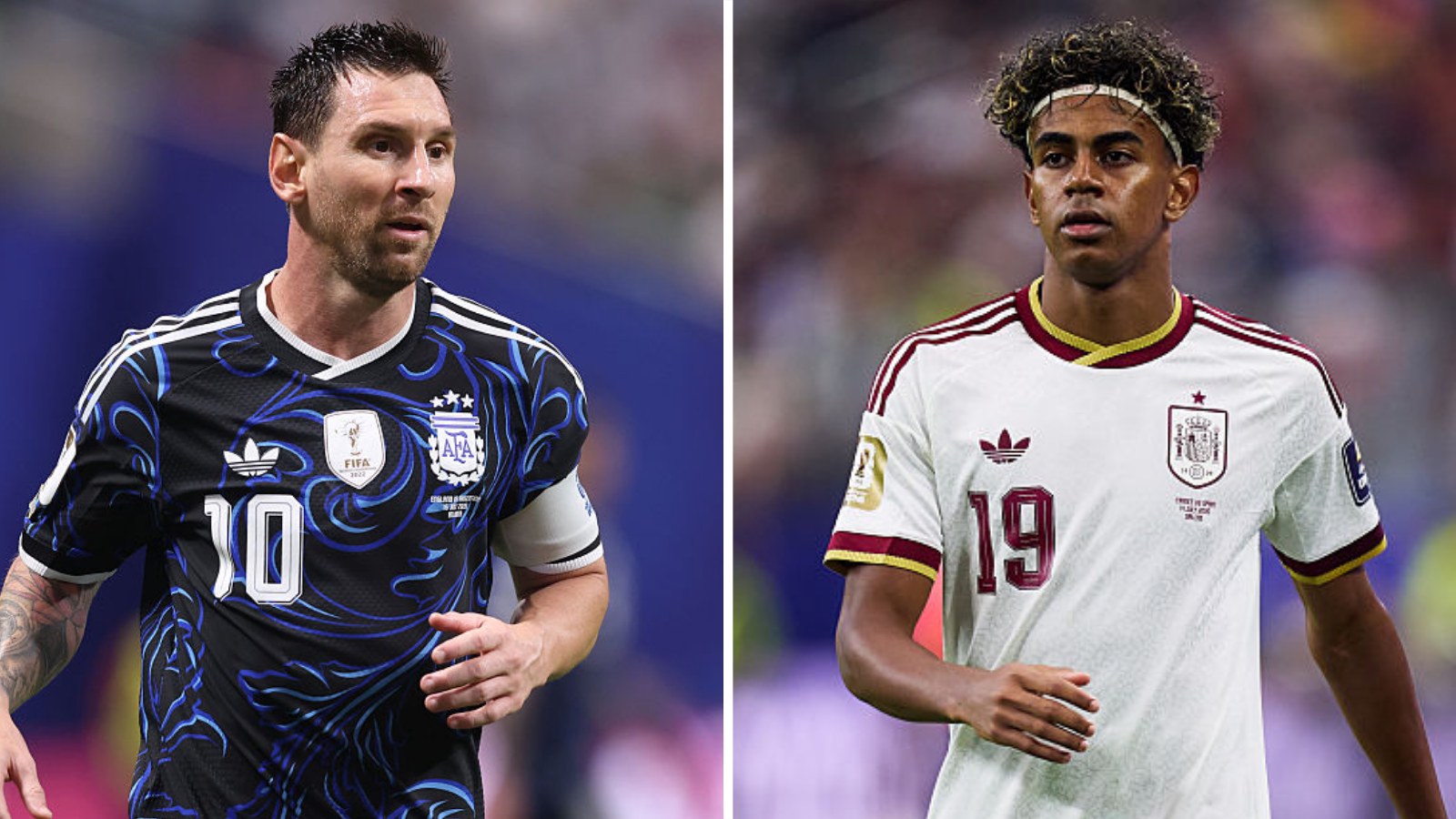
The individual battle that captures the imagination is the duel between the legendary Lionel Messi and the teenage sensation Lamine Yamal. These two players alone account for 43 percent of all dribbles attempted by the two finalists. Yamal leads the entire World Cup in attempted dribbles, showing a fearless willingness to take on defenders and stretch the play. His emergence has given Spain a directness that was perhaps lacking in previous iterations of their "tiki-taka" style. At just 18 years old, he is playing with the confidence of a veteran, and his duel with Argentina's full-backs will be a primary focus of the tactical battle.
Messi, on the other hand, continues to be the talisman for Argentina. While he may not cover the ground he once did, his efficiency with the ball remains unparalleled. Only Yamal and Vinicius Jr have run at opponents more often than Messi in this tournament. His role has evolved into that of a playmaker who chooses his moments with surgical precision. When Messi decides to take the ball into the heart of the opposition, the gravity he exerts creates space for players like Lautaro Martinez, who has recently found his scoring touch from crosses. This final is as much a statistical comparison as it is a passing of the torch.
Possession and Tactical Flexibility
Both finalists have demonstrated that they do not need to dominate the ball to win, despite their reputations. Spain’s possession dropped to 51 percent in their semi-final against France, while Argentina won their group stage match against Algeria with only 48 percent of the ball. This tactical flexibility is crucial in a final where the stakes are so high. Argentina has shown an increasing reliance on crosses as the tournament has progressed, attempting 51 in their last three games compared to just 13 in their first four. This shift in strategy resulted in the winning goal against England and suggests Scaloni is willing to adapt to exploit specific weaknesses.
Spain holds a significant advantage in the air, boasting the best aerial duel success rate at the World Cup. This could prove vital in defending Argentina’s newfound love for crossing. However, Argentina has been slightly more dominant in ground duels, suggesting a fierce battle for every loose ball in the midfield. Ultimately, the final will be decided by whether Spain’s collective structure can withstand the individual brilliance and clinical finishing of an Argentina side that feels destined for a successful title defense. It is a match where every number counts, but only one scoreline will matter. more football news on MATCHLINE