Despite his genius, Lionel Messi’s record from the spot is under scrutiny at the 2026 World Cup after setting an unwanted record for penalty misses.
The story of Lionel Messi is one of perpetual motion, a narrative that refuses to settle even as the sun begins to set on the most illustrious career in the history of the sport. At 39, the Argentina captain is still the gravitational center of the 2026 World Cup, a tournament he has illuminated with flashes of the same celestial talent that defined his peak years. Against Egypt in the last 16, he was the architect of a recovery that defied logic, dragging his team back from the abyss of a 2-0 deficit to secure a 3-2 victory. He remains a record-breaking machine, becoming the oldest player to score and assist in a single World Cup match, a feat he has now achieved five times. Yet, amidst the celebration of his longevity and his ninth tournament assist, a darker statistic has emerged from the penalty spot.
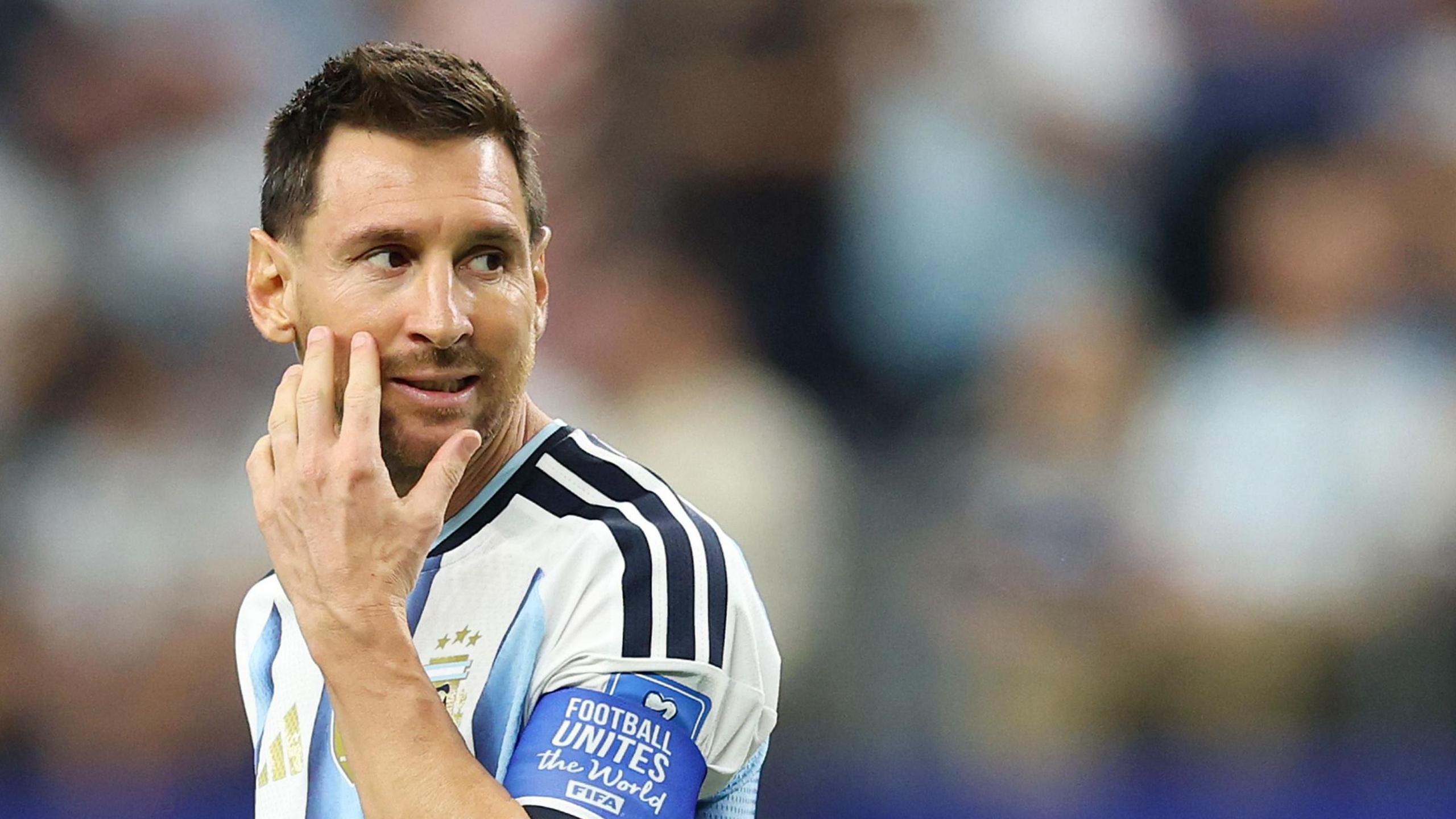
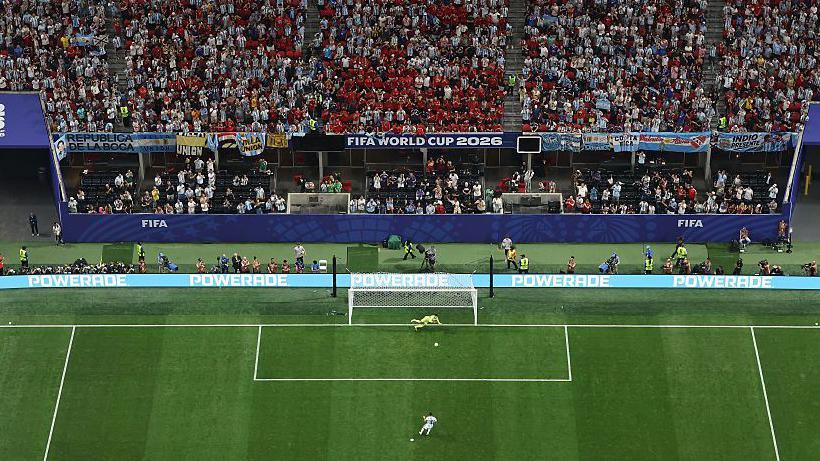
During a grueling afternoon in the North American heat, Messi stepped up to take a penalty that would have drawn Argentina level at 1-1 following a foul on Nicolas Tagliafico. It was the moment the world expected him to deliver, but the resulting strike was uncharacteristically pedestrian. Lacking the whip and precision associated with his open-play finishing, the effort was easily smothered by Mostafa Shobeir. It marked Messi's second miss from twelve yards in this tournament alone, following a similar failure against Austria in the group stage. No player in the history of the World Cup has ever missed two penalties during regulation time in a single edition. The genius, it seems, has found a recurring glitch in his otherwise flawless operating system.
The Statistical Reality of the Twelve-Yard Strike
To question Messi is often seen as a form of footballing heresy, yet the numbers provide a cold, hard counterpoint to the romance of his legend. While he has scored 117 penalties across his career for club and country, including shootouts, his conversion rate in normal time sits at approximately 77 percent. In the elite stratosphere of modern football, this figure is remarkably average. When compared to the clinical efficiency of Harry Kane, who boasts a 90.7 percent success rate, or Cristiano Ronaldo at 85.2 percent, Messi’s relative weakness becomes undeniable. Even younger stars like Kylian Mbappe and Erling Haaland have surpassed his proficiency from the spot, leaving the Argentina captain in a statistical tier occupied by much less celebrated forwards.
Data provided by Opta suggests that the average penalty is worth 0.79 expected goals, meaning the baseline expectation for any professional is a 79 percent conversion rate. Messi, therefore, is technically underperforming the average player when it comes to the most straightforward scoring opportunity in the game. The irony is palpable: the man who can navigate a crowded penalty area with the grace of a ballet dancer and find the top corner from thirty yards out struggles with a stationary ball and a single defender. It is a paradox that has haunted him through various stages of his career, most notably in the 2016 Copa America final, and one that has resurfaced at the worst possible time for the defending world champions.
The Psychological and Technical Breakdown
Why does the world's greatest finisher struggle when the game stops? The answer may lie in the very nature of Messi's improvisational brilliance. Football is a game of reactions, and Messi is the ultimate reactor, a player who thrives on the split-second decisions dictated by the movement of opponents. Penalties, conversely, are a test of routine and repetition. Specialists like Robert Lewandowski or Harry Kane rely on rigid, practiced mechanics that they can replicate under extreme duress. Messi often employs a more reactive approach, waiting for the goalkeeper to commit before making his final decision. If the man between the posts stays upright and patient, as Shobeir did, the pressure shifts back to the taker, forcing a hurried and often compromised execution.
The emotional toll of these misses is clearly visible. Messi himself admitted to breaking down in tears following the victory over Egypt, despite the fact that his team had progressed. He spoke of feeling as though he had abandoned his teammates, a heavy burden for a captain who is expected to be the solution to every problem. The modern game has also become a hostile environment for penalty takers; goalkeepers now have access to exhaustive databases and heat maps of every taker's preferences. When a player as scrutinized as Messi steps up, the goalkeeper often knows his favorite corner better than the player himself. In this analytical age, the element of surprise is harder to maintain, especially for a player who has been under the microscope for two decades.
Finding an Alternative Within the Ranks
If Lionel Scaloni were to make the unthinkable decision to remove Messi from penalty duties, he would find himself spoiled for choice. Within the current Argentinian squad, there are several players with statistically superior records from the spot. Leandro Paredes, who has returned to South American football with Boca Juniors, possesses a formidable conversion rate of nearly 93 percent. Similarly, Alexis Mac Allister and Enzo Fernandez have both demonstrated a coolness under pressure that puts them in the elite bracket of penalty takers, with both converting over 91 percent of their competitive attempts. Even Julian Alvarez offers a more consistent alternative with an 89.5 percent success rate.
However, the politics of the locker room make such a change nearly impossible. In a team where Messi is not just the captain but the spiritual icon, who has the authority to tell him to step aside? The dynamic within the Argentina camp is built on a foundation of absolute loyalty to their leader. As Ian Wright noted, the prospect of a teammate approaching Messi to take the ball away is almost inconceivable. This is a player who delivered the 2022 World Cup by scoring six of seven penalties, showing that he can, when in the right headspace, be the clinical finisher his team requires. The debate is not about talent, but about the mental fatigue that comes with being the focal point of a nation's hopes for so long.
Scaloni's Stance and the Road Ahead
Lionel Scaloni has remained characteristically firm in his support of his captain. On the eve of the quarter-final against Switzerland, the manager made it clear that the decision rests entirely with the player. If Messi feels he is the right man for the job, the ball will remain in his hands. Scaloni’s management has always been defined by his ability to create a protective environment for Messi, allowing the number ten to play without the fear of internal judgment. Yet, as the tournament enters the business end where margins are razor-thin, the cost of a missed penalty becomes exponential. Argentina survived the scare against Egypt, but they might not be so fortunate against the organized defenses of the European heavyweights.
As the reigning champions prepare for their next test, the penalty question remains the only cloud on an otherwise bright horizon. Messi's ability to influence games from open play is as potent as ever, but the psychological hurdle of the twelve-yard strike is a challenge he must overcome if he is to lead his team to a second consecutive title. Whether he continues to take them or chooses to delegate, the decision will be one of the defining themes of the knockout rounds. For now, the world watches and waits to see if the greatest to ever do it can conquer his final remaining weakness. For more live updates and tactical breakdowns, follow more football news on MATCHLINE.