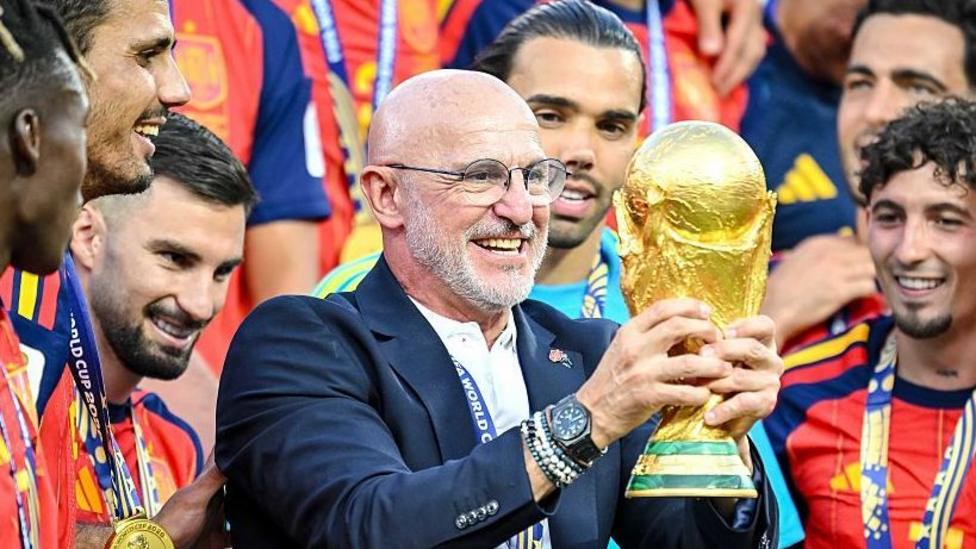
England face a historical reckoning in Atlanta as they meet Argentina in a World Cup semi-final that carries the weight of sixty years of rivalry.
The air in Atlanta is thick with more than just the humidity of a Georgia summer; it is heavy with the crushing weight of history. When England and Argentina walk out onto the pitch on Wednesday night, they carry with them a tapestry of sporting antipathy that has been woven over six decades. This is not just another semi-final. For the Three Lions, this is the most significant match since Sir Alf Ramsey’s men stood on the Wembley podium in 1966. The futuristic stadium, with its retractable roof and gleaming steel, provides a jarringly modern backdrop for a rivalry that feels ancient in its intensity.
Thomas Tuchel, a man who thrives in the tactical laboratory of knockout football, finds himself at the center of this storm. He knows that his reputation as one of the world's elite coaches will be defined by whether he can guide England over the final hurdle that has tripped them up so many times in the recent past. The interest in this match is so overwhelming that the pre-match press conference had to be moved to a cavernous venue just to accommodate the global media. Everyone understands that this is the moment where England’s "nearly men" must finally graduate to the status of legends.
The Legacy of Rattin and Ramsey
To understand the depth of the animosity between these two nations, one must look back to that sun-drenched afternoon in 1966. The quarter-final at Wembley was a match that descended into a psychological battle after the dismissal of Argentina’s captain, Antonio Rattin. The images of Rattin refusing to leave the pitch and eventually sitting on the royal carpet remain etched in football folklore. It was the catalyst for Sir Alf Ramsey’s famous directive to his players not to swap shirts with their opponents, whom he branded "animals" in the heat of the moment.
That day established a template for every encounter that followed. Whether it was the Falklands War providing a somber backdrop to the 1986 quarter-final or the "Hand of God" goal that saw Diego Maradona use his fist to alter the course of history, the rivalry has always been about more than just football. Each generation adds a new layer of controversy. For Thomas Tuchel, the history might be something he tries to minimize in the dressing room, but the players are well aware that they are stepping into a furnace of long-standing resentment. They are not just playing for a place in the final; they are playing to settle scores that predate most of them.
Breaking the Cycle of Near Misses
England’s recent tournament record is a study in frustration. Under Gareth Southgate, the team reached two European Championship finals and a World Cup semi-final, yet they always seemed to hit a ceiling when the pressure reached its peak. The 2018 exit in Russia against Croatia was a bitter pill, a game where England took an early lead only to be suffocated by their own conservatism. It was a pattern that repeated itself in the Euro 2020 final at Wembley, where an early goal was followed by a long, agonizing retreat and an eventual defeat on penalties.
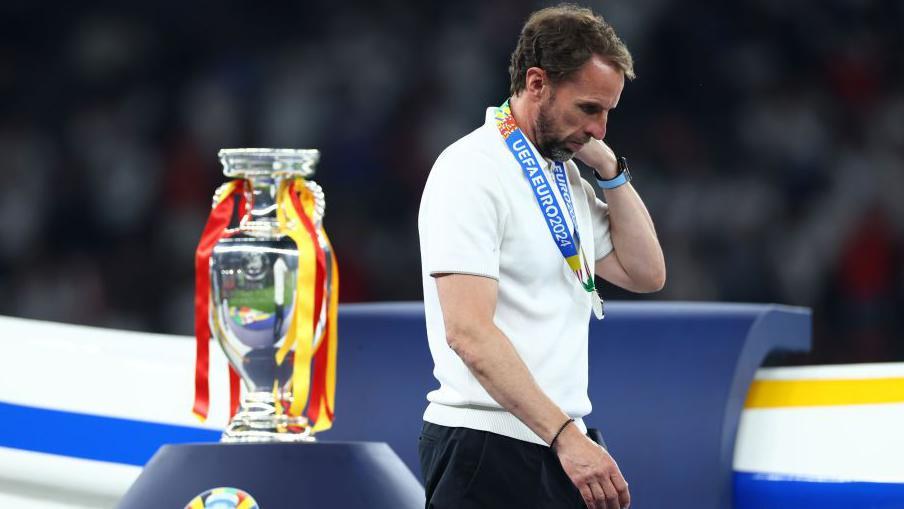
Tuchel’s challenge is to find the "last bit" of energy and tactical intelligence that was missing in those moments. He has inherited a squad that is battle-hardened but also carries the psychological baggage of those defeats. The loss to Spain in the Euro 2024 final was particularly galling, a performance that lacked the proactive spark needed to overcome a superior technical side. Tuchel’s arrival was intended to provide that tactical edge, the ability to make the right move on the chessboard when the game is on the line. He has praised the ambition and energy of his camp, but he knows that in Atlanta, only the result matters.
The Modern Rivalry: Beckham and Sapporo
The more recent history between these two sides is no less dramatic. The 1998 clash in Saint-Etienne is remembered for the emergence of Michael Owen and the villainization of David Beckham. It was a night of pure theatre that ended in the familiar agony of a penalty shootout defeat. Four years later, Beckham found his redemption under the dome in Sapporo, smashing home a penalty to secure a group-stage win. But even that victory was mired in controversy, with Argentina accusing Michael Owen of diving to win the decisive spot-kick.
These matches are never "just another game." They are emotional rollercoasters that test the mental fortitude of every player involved. Lionel Scaloni, who was part of the Argentina squad in 2006, understands this better than most. He has spoken about the emotional weight of this fixture, acknowledging that the stories of the past continue to fuel the fire of the present. For England, the goal is to create a new story, one that doesn't end in a noble defeat or a controversial exit, but in a clear, decisive victory that propels them toward the ultimate prize.
The Dual Threat of Kane and Bellingham
England’s hopes of reaching the final rest heavily on the shoulders of two world-class talents. Harry Kane and Jude Bellingham have accounted for 12 of England’s 13 goals in this tournament, a statistic that highlights both their brilliance and the team’s reliance on them. Kane continues to be the ultimate reference point in the attack, a striker who can conjure a goal from half a chance. Bellingham, meanwhile, has become the heartbeat of the side, a player whose physical presence and technical quality allow him to dominate matches from the midfield.
If England are to overcome an Argentina side that has lived on the edge throughout the knockout stages, they will need their big players to deliver their best performances of the tournament. Argentina have shown vulnerability, escaping by the narrowest of margins against the likes of Cape Verde and Egypt. Tuchel will be hoping that this is the night where their luck finally runs out. To do that, England must find a way to silence Messi while simultaneously breaking through a streetwise Argentine defense that knows every trick in the book. Immortality is within reach, but first, they must survive the most intense 90 minutes of their lives.
The stage is set for a historic night in Atlanta. Whether it ends in the familiar heartbreak of the last sixty years or a breakthrough that changes the face of English football remains to be seen. Tuchel has the players and the tactical acumen; now he needs the execution. The ghosts of 1966 are watching, waiting for a new generation to join them in the pantheon of champions. more football news on MATCHLINE