After decades of war, sanctions, and trauma, the Lions of Mesopotamia return to the world stage to face Haaland and Mbappe in 2026.
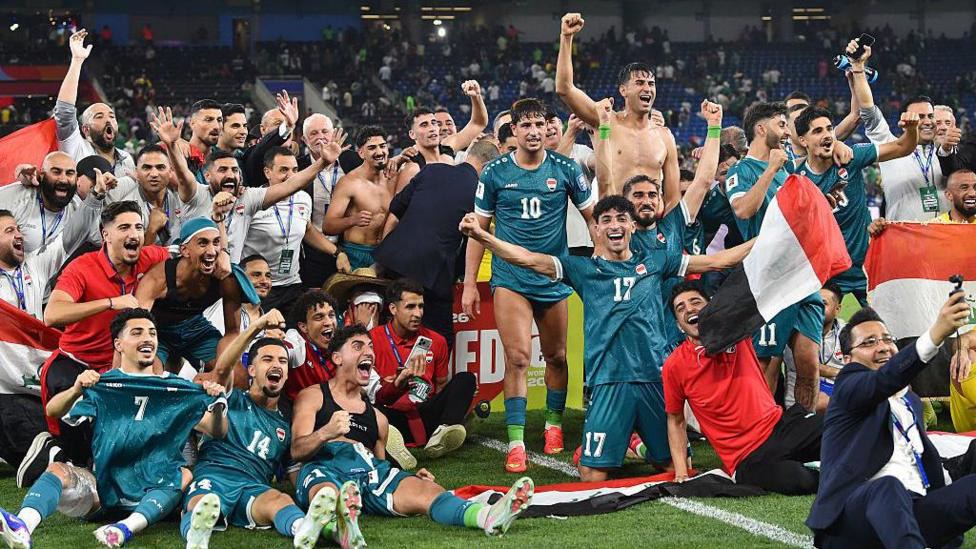
History has a poetic way of closing circles in football. When Iraq secured their place at the 2026 World Cup by overcoming Bolivia in Mexico, they did so on the very soil where their global journey began and abruptly stalled four decades ago. For a nation that lives and breathes the sport, the 40-year hiatus has been more than a sporting absence; it has been a reflection of a country navigating through some of the darkest chapters of modern history. Now, the Lions of Mesopotamia are back, carrying the hopes of 46 million people who have waited since 1986 to see their flag fly at the finals.
The Shadow of the Past and the Weight of 1986
Karim Allawi remembers the thin air of Mexico in 1986 with a mixture of pride and lingering frustration. As a vital part of the squad that faced Paraguay, Belgium, and Mexico, he lived through the pinnacle of Iraqi football. Today, at 66, he watches from the sidelines as a fan, witnessing a new generation prepare to face a daunting Group of Death featuring Norway, France, and Senegal. The memories of 1986 are etched in the collective consciousness of Baghdad, particularly the infamous disallowed goal against Paraguay where the referee blew for half-time while the ball was mid-air on its way to the back of the net.
That 1986 squad was a golden generation that reached three consecutive Olympics and dominated regional tournaments. However, their success was achieved against a backdrop of unimaginable hardship. Allawi reflects on the qualification campaign for Mexico, which had to be played entirely on neutral ground in Saudi Arabia due to the ongoing Iran-Iraq war. The sheer resilience required to compete at an elite level while the nation was embroiled in conflict remains a hallmark of the Iraqi sporting spirit. Now, the goal is simple but monumental: to improve on the three losses of 1986 and finally register a win on the world stage.
The Dark Era of Uday Hussein
To understand the significance of this qualification, one must acknowledge the trauma that plagued the national team during the 1990s and early 2000s. Under the regime of Saddam Hussein, his son Uday was placed in charge of the football association, initiating a reign of terror that stunted the growth of the sport. Players were subjected to a brutal system of rewards and punishments that transcended the boundaries of sport and entered the realm of human rights abuses. Torture, imprisonment, and public floggings for poor performances became a terrifying reality for the squad.
Reports that emerged after the fall of the regime in 2003 described players being forced to train with concrete balls or being sent to the notorious Al-Radwaniya prison for missing a penalty. Allawi remains guarded when discussing this era, describing it only as a period governed by a very strict principle of reward and punishment. The psychological scars of that period took years to heal, and the instability that followed the 2003 invasion meant that football often took a backseat to the basic struggle for survival. That the team has managed to rebuild and qualify today is nothing short of a sporting miracle.
The Graham Arnold Revolution
The catalyst for this modern resurgence was the bold appointment of Graham Arnold in 2025. The 62-year-old manager brought a wealth of international pedigree, having famously led Australia to the knockout stages of the 2022 World Cup in Qatar. His arrival signalled a shift in Iraqi football philosophy, moving away from reactive tactics toward a more disciplined, modern approach. Arnold navigated a gruelling 21-game qualification process, culminating in the tense play-off victory over Bolivia that sparked wild celebrations across the streets of Baghdad.
Under Arnold’s guidance, Iraq has transitioned into a side that blends tactical rigidity with the flair of a new diaspora-based generation. The manager’s experience in high-pressure environments has provided the players with a sense of calm that was often missing in previous qualifying cycles. Reporters close to the camp suggest that there is no pressure on this squad; they are viewed as underdogs in a group containing Erling Haaland and the French juggernaut. This freedom to perform, coupled with Arnold’s defensive organisation, makes Iraq a dangerous prospect for any opponent in June 2026.
A Golden Generation with European Polish
Unlike the home-grown heroes of 1986, the current Iraqi roster is fortified by players developed in Europe’s top academies. Ali Al-Hamadi, who has made waves with Ipswich Town, provides a physical presence and clinical edge up front. Alongside him, the creative spark often comes from Zidane Iqbal, the former Manchester United prospect now flourishing at Utrecht. This infusion of tactical knowledge from the Dutch and English systems has given Iraq a level of composure in possession that they previously lacked.
Further depth is provided by Kevin Yakob, fresh from a domestic title win in Denmark with AGF. The presence of these professionals has raised the standards within the training camp, forcing domestic players to elevate their game. The team currently sits 57th in the world rankings, but their performances against top-tier opposition during the qualifiers suggests they are capable of punching above their weight. For the Iraqi public, the sight of their players competing as equals with European stars is a source of immense national pride and a sign of a country slowly finding its feet again.
Homecoming in Basra and the Road to Boston
For decades, Iraq was a team in exile, forced to play their home games in Jordan, Malaysia, or Iran due to security concerns. The breakthrough came in 2020 when FIFA finally granted permission for competitive matches to be held in the southern city of Basra. This change was transformative, allowing the team to feel the visceral support of their own fans for the first time in a generation. The atmosphere in Basra has become a fortress for the Lions, providing the emotional fuel necessary to navigate the final rounds of the Asian qualifiers.
The journey to the finals was not without its final hurdles, as regional tensions in early 2026 nearly saw their play-off in Mexico postponed. The squad and coaching staff faced significant logistical challenges just to leave the Middle East, but they eventually arrived to complete their mission. As the countdown to their opening match against Norway in Boston begins, the focus is no longer on the wars and sanctions of the past. It is on the 90 minutes of football that lie ahead. For Iraq, simply being there is a victory, but this group is determined to ensure that their stay in North America lasts much longer than their brief cameo in 1986. more football news on MATCHLINE