Campaigners warn that Wales risks losing elite talent without the creation of women's under-21 and under-23 squads to bridge the jump to senior level.
In the rapidly evolving landscape of women's football, Wales finds itself at a critical crossroads. While the senior national team has reached historic heights, a significant structural void threatens to undermine the long-term future of the sport in the country. Campaigners are now sounding the alarm over an "unacceptable" gap that exists between the youth ranks and the senior international stage, arguing that without a middle buffer like an under-21 or under-23 squad, many of the nation's most promising talents are simply dropping out of the system before they reach their prime.
The Kelly Campaign for Equality
Soraya Kelly, mother of Wales squad goalkeeper Soffia Kelly, has become the leading voice in the push for a more sustainable pathway. Her campaign, Equality For Our Women And Girls, has already taken a petition to the Welsh Government, demanding funding to establish the missing age-grade teams. Kelly argues that while the boys' system in Wales has long enjoyed these developmental bridges, the girls are being left to sink or swim once they age out of the under-19 setup. It is a matter of basic fairness and sporting necessity that has garnered support from across the political and social spectrum.
The discrepancy is particularly glaring when compared to neighboring associations. Both England and Scotland have established under-23 teams that compete in international friendlies and independent leagues, providing their young players with the high-level minutes required to transition to the senior game. For Welsh players, the jump from facing teenagers to competing against seasoned professionals who are 25 or older is often too steep a climb, both physically and mentally. This lack of a transition period means that unless a player is a generational anomaly, their international career often ends before it has truly begun.
The Jump to the Senior Setup
For those who do manage to make the direct leap from the under-19s to the senior squad, the experience is both exhilarating and daunting. Players like Manchester United's Mared Griffiths and Aston Villa's Soffia Kelly have proven it is possible, but they are the exceptions rather than the rule. The pressure to perform immediately at the highest level without the safety net of an intermediate age group can be immense. Campaigners worry that for every success story, there are dozens of talented girls who lose motivation once they realize there is no clear path forward after their nineteenth birthday.
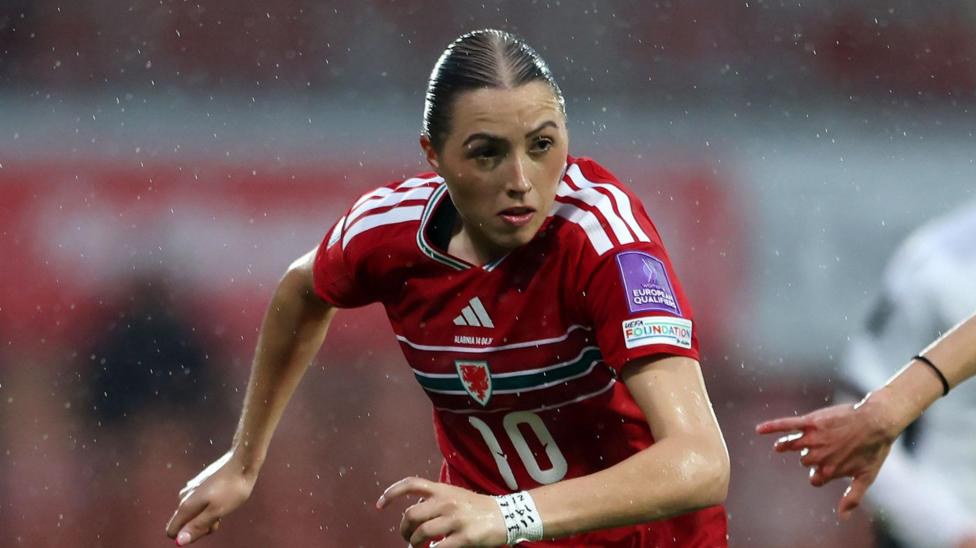
Mared Griffiths has already earned multiple senior caps despite her youth, yet her journey highlights the narrowness of the current corridor. In a squad of twenty players, only a handful are typically eligible to continue with the under-19s. When those players move on, there is nowhere for the remaining fifteen or sixteen members of a squad to go if they aren't ready for the senior team. This creates a bottleneck where talent is wasted and potential is extinguished, often leaving players to walk away from the game entirely to pursue careers in other industries.
Lessons from the Past
The story of Shanelle Edwards serves as a poignant reminder of what is at stake. Once a promising international at youth level who was invited to train with the seniors, Edwards ultimately left the game without the senior cap she had worked so hard to achieve. Now working in property finance, the 32-year-old believes her chances would have been vastly improved had there been an under-23 side to help her navigate the physical and mental leap required for senior football. She is not alone; many former players agree that the absence of a pathway prevented them from fulfilling their potential.
Historical data from the men's game supports this argument, showing that the average international debut occurs between the ages of 21 and 23. Expecting female players to be ready for the senior stage at 18 or 19 is an unrealistic standard that ignores the natural developmental curve of elite athletes. By failing to provide this bridge, Wales is essentially asking its young women to perform a feat that is rarely expected of their male counterparts, further highlighting the inequality that the campaign seeks to address.
The Changing Talent Pool
In the past, the primary argument against creating more age-grade teams was the limited size of the talent pool in Wales. However, legendary striker Helen Ward believes that the explosive growth of the women's game has rendered that excuse obsolete. Ward, who earned over a hundred caps and holds scoring records, points out that while generational talents like Carrie Jones can skip levels, most players need time to develop. The increase in participation across the country means there are now more girls playing than ever before, creating a surplus of talent that currently has nowhere to go.
Ward herself did not make her senior debut until she was 22, a fact that she cites as proof that not everyone is ready for the rigors of the senior game at 19. Now working in a leadership role at Watford, she sees firsthand the benefits of a structured pathway. As players develop earlier and faster due to better coaching at the grassroots level, the need for a place to house those who are 'too old' for youth football but 'not yet ready' for the senior team becomes an urgent priority for the Football Association of Wales.
The Funding Hurdle
The biggest obstacle to the creation of these new squads is, predictably, financial. The Football Association of Wales relies heavily on commercial revenue and grants from international bodies like FIFA and UEFA, and their budget has been tightened by the men's team's failure to qualify for the recent World Cup. This is where the Welsh Government must step in, according to Soraya Kelly. While the government already supports grassroots infrastructure, the campaigners believe that elite pathway development is equally essential for the national interest.
The Senedd’s petitions committee has expressed support for the goals of the campaign, noting the positive work the FAW is already doing but acknowledging the gap that remains. For Wales to compete with the likes of England on a consistent basis, they must invest in the same developmental structures that their rivals use. This requires a coordinated effort between the governing body and the government to ensure that the momentum generated by the senior team’s success in reaching Euro 2025 is not lost through a lack of foresight.
A Long-Term Vision for Wales
The campaign is not just about the current crop of players; it is about building a legacy for the next generation. By launching in earnest this August, the movement aims to secure commitments that will protect the futures of thousands of girls currently playing in regional talent centers. With support from organizations like Her Game Too and various political figures, the pressure is mounting on the authorities to take concrete action. The goal is a confident, ambitious Wales where talent is nurtured at every single level, rather than being left to chance.
If Wales can successfully bridge this gap, the rewards will be felt for decades. A consistent pipeline of battle-hardened 21 and 22-year-olds ready to step into the senior team would make the national side far more competitive on the global stage. It would also send a powerful message to every young girl in the country that her footballing journey does not have an expiration date. As the women's game continues its rapid ascent, the time for half-measures has passed. To stay updated on this story and more, check more football news on MATCHLINE