Three decades ago, a heavyweight Irish consortium almost moved Wimbledon FC to Dublin. This is the story of the project that nearly changed football forever.
Every weekend, thousands of football supporters board flights and ferries from across the Irish Sea, making a pilgrimage to the cathedrals of English football. Ireland’s obsession with the Premier League is a phenomenon of modern sport, yet few remember just how close the island came to hosting its own top-flight franchise. The 'Dublin Dons' project was not merely a flight of fancy or a boardroom rumor; it was a high-stakes attempt to transplant a historic London club into the heart of the Republic, a move that would have fundamentally altered the geography of the beautiful game.
The genesis of this radical plan lay in the desperation of Wimbledon FC chairman Sam Hammam. Having led the club through its 'Crazy Gang' glory years, Hammam found himself at a permanent impasse with Merton Council. Since leaving their ancestral home of Plough Lane in 1991, the club had been forced into a fractious ground-share with Crystal Palace at Selhurst Park. The arrangement was toxic; Wimbledon fans felt like nomads, and Palace supporters viewed them as unwelcome squatters. It was against this backdrop of homelessness that the idea of a Dublin relocation began to take shape, sparked by an innocuous report in a Sunday broadsheet that caught the eye of Irish businessman Tommy Higgins.
The Heavyweight Syndicate and the 40,000-Seat Dream
Higgins, a key figure at Ticketmaster Ireland, recognized a unique opportunity. Property developer Owen O’Callaghan already held planning permission for a 40,000-seater stadium on the outskirts of Dublin, but the project lacked a permanent tenant. The logic was simple: a club without a stadium meeting a stadium in search of a club. Higgins soon assembled a formidable consortium that included U2 manager Paul McGuinness, businessman Maurice Cassidy, and the legendary pundit Eamon Dunphy. They weren’t just looking for a football team; they were looking to import a cultural powerhouse.
The syndicate believed that the timing was perfect. Irish football was riding the wave of the Jack Charlton era, with the national team having reached the latter stages of two consecutive World Cups. The appetite for high-level football in Dublin was voracious. The consortium envisioned a scenario where a 'mini-international side' would play at a packed Dublin stadium every fortnight, drawing fans from across the four corners of the island. For Hammam, the proposal offered an escape from the limitations of South London and the chance to tap into a massive, untapped commercial market.
Beckham, Selhurst Park, and the Breaking Story
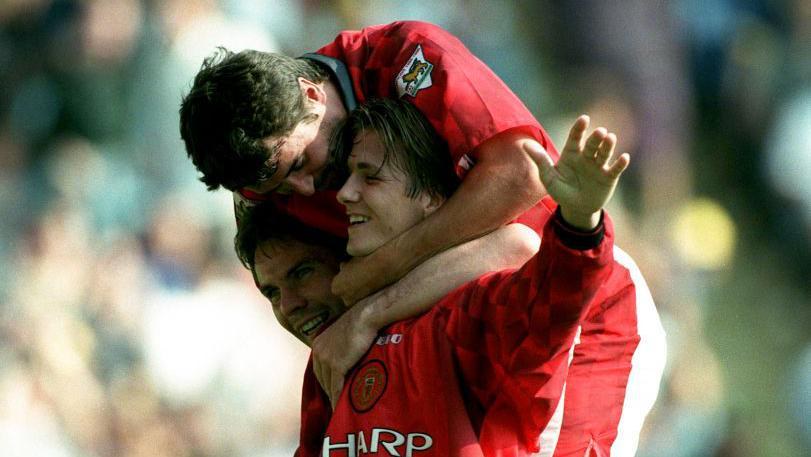
The project moved from theory to reality in the summer of 1996. While the consortium was quietly preparing a £6m bid for a 74% stake in the club, the Premier League was entering its own glamorous new era. Stars like Jurgen Klinsmann and Gianfranco Zola were arriving, and the league was becoming a global brand. On the opening day of the 1996-97 season, a young David Beckham scored his iconic goal from the halfway line against Wimbledon at Selhurst Park. In the stands that day were the Irish businessmen, their presence marking the moment the secret began to leak into the British press.
Beckham’s celebration that afternoon symbolized the rising profile of a league that was suddenly outgrowing its traditional boundaries. As news of the potential Dublin move broke, the reaction was swift and polarized. Wimbledon manager Joe Kinnear, himself a former Ireland international, was a vocal supporter of the plan, believing it would allow him to sign the cream of Irish talent. However, the club’s players were more skeptical. Dublin-born full-back Kenny Cunningham recalled his English teammates being 'insular' about the move, asking if Dublin was a good night out while treating the city as if it were on the other side of the planet.
Fan Revolt and the 'Dublin = Death' Placards
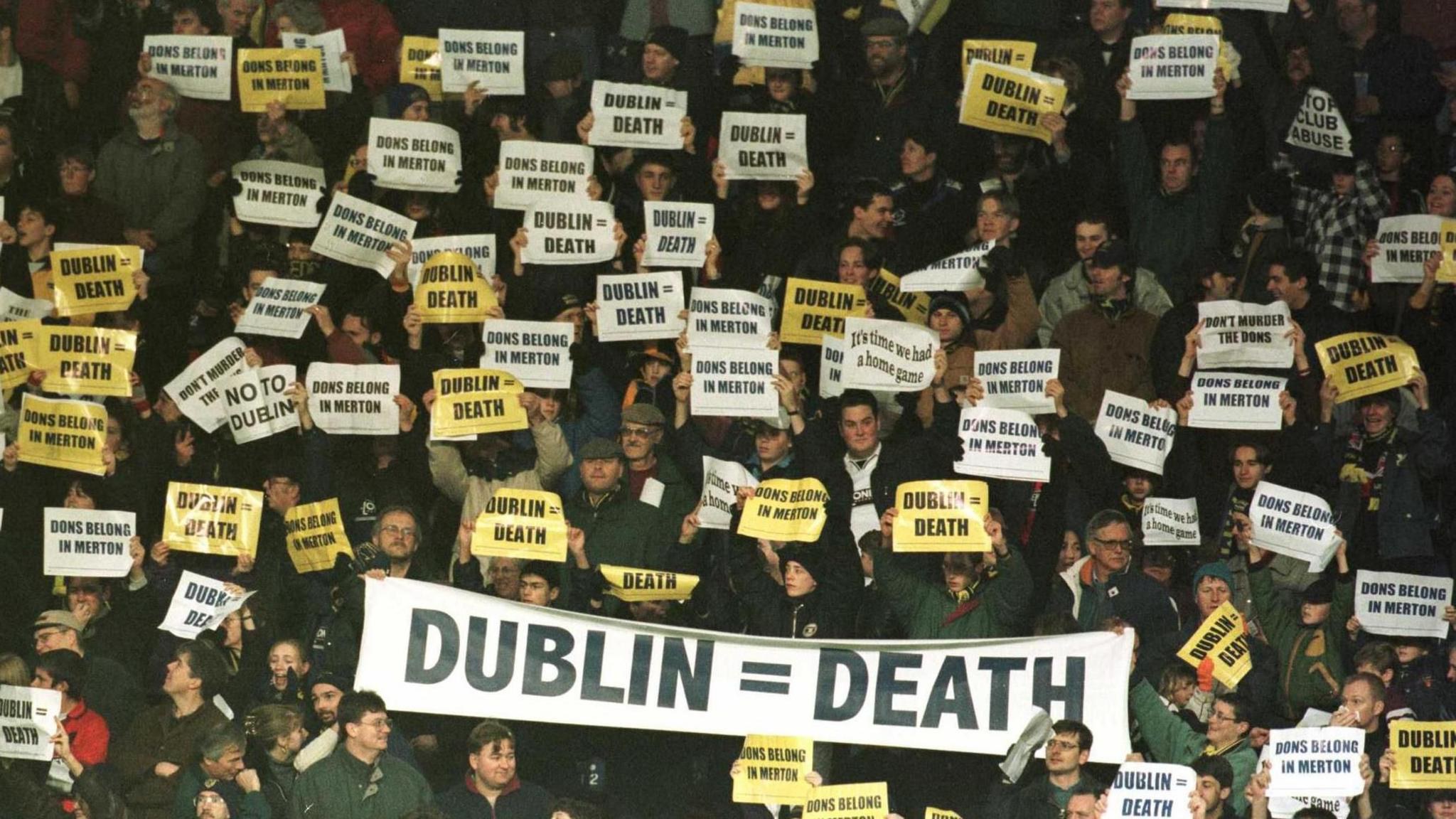
If the players were uncertain, the fans were incandescent. For the core supporters who had followed the club from its non-league roots, the idea of moving the team to a different country was an existential threat. They saw it not as a strategic expansion, but as the murder of their community identity. Ivor Heller, one of the club's most devoted fans, spearheaded the resistance. Through his printing business, he produced the infamous placards that were held aloft at Selhurst Park, bearing the stark message: 'Dublin = Death'.
To the fans, the business logic was irrelevant. They didn't care about the potential for 40,000-strong crowds in Neilstown; they cared about the Tuesday nights at Plough Lane and the identity of a South London institution. The emotional chasm between Hammam’s boardroom ambitions and the fans’ local loyalty was unbridgeable. The protest movement ensured that the Premier League and the Football Association would have to consider the massive reputational risk of allowing a club to be uprooted so callously, setting a precedent that many feared would lead to an American-style franchise system.
The FAI Blockade and the Final Collapse
Despite the momentum, the project faced its most significant hurdle in the form of the Football Association of Ireland (FAI). The governing body in Dublin was deeply hostile to the idea. While the consortium argued that a Premier League club would provide a 'rising tide' for all Irish football, the FAI feared the opposite. They believed that a permanent top-flight English presence in Dublin would effectively kill off the domestic League of Ireland, diverting all sponsorship, media attention, and fan loyalty away from the local clubs.
This institutional opposition proved fatal. The FAI’s refusal to sanction the move meant the project could never clear the necessary regulatory hurdles. After 18 months of intense negotiations, the line to Sam Hammam suddenly went dead. The Irish consortium, holding an unsigned contract, watched from afar as Hammam eventually sold the majority of the club to a Norwegian group for £26m—more than four times the Irish bid. The Dublin Dons dream was over, and the site where the stadium was to be built eventually became a shopping center.
Legacy of the Move That Never Was
The fallout from the failed Dublin move eventually led to one of the most controversial chapters in English football history. Unable to find a solution in London or Dublin, the club was eventually relocated to Milton Keynes in 2004, becoming MK Dons. This move triggered the birth of AFC Wimbledon, a fan-owned club that started in the ninth tier and remarkably climbed back into the Football League. Today, they play at a new stadium on Plough Lane, a testament to the resilience of a community that refused to be sold.
Looking back, the Dublin Dons project remains one of the great 'what ifs' of the sport. While critics at the time labeled it crazy, figures like Tommy Higgins still believe it could have transformed soccer on the island, preventing other sports from dominating the commercial landscape. Today, Irish fans still fill Croke Park for friendlies, proving the appetite for the Premier League remains undimmed. The story of the Dublin Dons serves as a reminder of a time when the Premier League’s expansionist ambitions almost erased a century of local history in favor of a trans-national experiment. more football news on MATCHLINE