Jack Wilshere discusses his return to Luton Town, the influence of Mikel Arteta, and how his playing scars are shaping a new generation of talent.
The grass at Luton Town training ground holds a specific kind of memory for Jack Wilshere. It is the site where a seven-year-old boy first learned to manipulate a football, long before the bright lights of the Emirates Stadium and the heavy weight of the England number ten shirt. Today, the 34-year-old stands on those same pitches not as a prospect, but as the man in charge, overseeing a transformation that feels like the ultimate footballing homecoming. His journey has been a whirlwind of precocious brilliance, agonizing injury, and a premature retirement that many feared would leave him adrift. Instead, it has funneled him back to where it all began, armed with a tactical blueprint forged under the elite minds of the modern game.
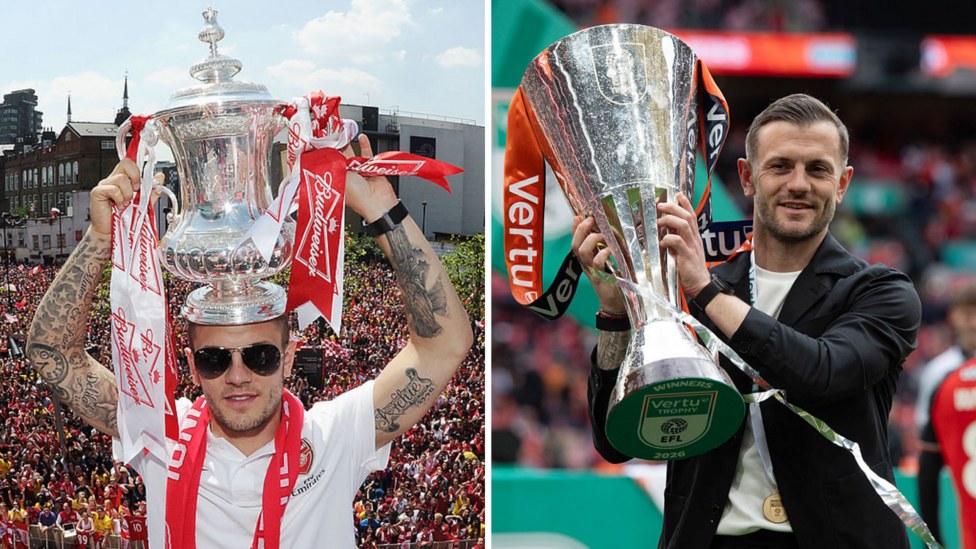
Walking through the doors at Luton again feels like a completion of a narrative arc that few could have scripted. Wilshere, who hoisted the FA Cup twice as an Arsenal talisman and represented his country on the grandest stages in Brazil and France, is now translating that elite experience into the gritty reality of management. He is only a year into his first permanent senior role, yet the transition has been seamless. The player who once glided past challenges with a low center of gravity now moves through the technical area with the same calculated intent. Retirement at 30 was a bitter pill, but for Wilshere, it opened a door that he has sprinted through with the same enthusiasm he once showed on his Premier League debut.
The Arteta Influence and Tactical Evolution
The transition from pitch to dugout was accelerated by a stint coaching Arsenal youngsters, where Wilshere found himself back in the orbit of Mikel Arteta. For five years, they were teammates in North London, but seeing Arteta reinvent the Gunners as a modern juggernaut provided Wilshere with a masterclass in management. He speaks with a profound reverence for the Spaniard, not just for the success he achieved in ending Arsenal's 22-year title drought, but for the intellectual rigor he applied to every session. Wilshere was the inquisitive student, constantly probing Arteta for the reasoning behind specific drills and tactical shifts. It was here that he learned the most crucial lesson for any coach: understanding the 'why' behind every instruction is the key to player buy-in.
This apprenticeship allowed Wilshere to bridge the gap between being a gifted intuitive player and a structured, analytical coach. He admits that in the early days of his coaching badges, he felt uncomfortable. The mechanics of planning a session to achieve a specific tactical outcome did not come naturally to someone who played the game with such instinctive flair. However, the obsession soon took over. He found himself dissecting Arteta’s methods and then immediately applying those principles to the Arsenal under-18s. This feedback loop of learning from one of the best in the business while getting hands-on experience was the furnace in which Wilshere the manager was truly forged.
Silverware at Wembley and the Luton Identity
Success at Luton arrived with startling speed. Guiding the Hatters to an EFL Trophy triumph in April, beating Stockport County in front of a staggering crowd of 50,000 at Wembley, served as an immediate validation of his methods. For a young manager, such a moment is priceless. It provides a level of authority that no amount of badges can replicate. Wilshere notes that he could technically still be playing at 34, but the thrill of orchestrating a victory from the touchline has provided a different, perhaps deeper, sense of satisfaction. The board at Luton took a significant gamble on a rookie coach, but it is a debt of gratitude Wilshere is paying back through consistent progress and a clear playing identity.
That identity is built on a foundation of clarity. Wilshere is obsessed with ensuring his players know exactly what is expected of them in every phase of play. He demands a high-intensity work rate, a non-negotiable trait for any team playing under his watch. The atmosphere at Kenilworth Road has always been one of defiance and grit, and Wilshere has blended that traditional Luton spirit with the technical sophistication he absorbed at Arsenal. The goal is clear: a return to the Championship and eventually the top flight, but the process is being managed with a maturity that belies his relatively short time in the dugout.
Nurturing the Next Generation of Stars
Perhaps the most rewarding aspect of Wilshere’s new career is his work with emerging talent. During his tenure with the Arsenal academy, he worked closely with the likes of Ethan Nwaneri and Myles Lewis-Skelly, players now knocking on the door of the first team. He recalls the sheer audacity of Max Dowman, a player he blooded in the under-18s when the boy was just 13 years old. Wilshere’s own experience as a teenage sensation gives him a unique perspective on managing these high-ceiling talents. He understands the pressure, the hype, and the physical demands placed on a body that is still developing, allowing him to act as both a coach and a protective mentor.
His assessment of talent is sharp. When he first saw Dowman play, he immediately called his father, a man who had watched Jack’s own meteoric rise through the ranks. In a moment of candid honesty, the elder Wilshere admitted the kid was even better than Jack had been at that age. It is this lack of ego that makes Wilshere such an effective developer of players. He is not trying to find the next 'Jack Wilshere'; he is trying to give these youngsters the tools to surpass his own achievements while avoiding the pitfalls that occasionally derailed his own career. He creates an environment where failure is seen as a data point rather than a catastrophe.
The Weight of Past Mistakes
Wilshere does not shy away from the darker chapters of his playing days. He was a frequent target for the tabloids, criticized for lifestyle choices that drew the ire of Arsene Wenger. Instead of burying these memories, he uses them as educational tools. He speaks to his players about the standards required of a professional and the consequences of slipping below them. Having a manager who has actually lived through those mistakes, felt the disappointment of a legendary figure like Wenger, and fought back from public scrutiny carries a weight that a coach with a pristine, uneventful background simply cannot match.
This honesty builds a bridge of trust with his squad. He believes in second chances because he was granted them himself. His philosophy is one of firm boundaries but also deep empathy. He knows that young men will make errors in judgment, and his role is to educate rather than simply punish. By being open about his own history, he removes the barrier between the 'boss' and the players, creating a culture of accountability where players feel safe to be themselves but understand the gravity of the badge they represent. It is a modern approach to man-management that prioritizes the human being behind the athlete.
The Viral Moment and Future Ambitions
The world caught a glimpse of Wilshere’s management style on the opening day of the season. Trailing Reading 3-1 at halftime, a passionate, fiery team talk from Wilshere went viral, capturing the raw intensity of his desire to win. Luton turned the game around to win 4-3, a result that many attributed to the fire he lit in the dressing room. For Wilshere, that moment was not for the cameras; it was a genuine expression of the high standards he expects. He demands that his players work as hard as he does, noting that management is a role that completely consumes your life. If you aren't all-in, you shouldn't be in the game at all.
The path forward is arduous, and the pressure of a promotion race is relentless, but Wilshere is thriving in the chaos. He has found a home at Luton that respects his past but judges him solely on his present. As he looks out over the pitches where his footballing life began, there is a sense that the best chapters are yet to be written. He has traded the thrill of the solo run for the collective triumph of a well-drilled unit, and in doing so, he has found a purpose that matches the intensity of his playing days. The kid from Luton is back, and he is just getting started. more football news on MATCHLINE