Steve Clarke prepares to name his 26-man Scotland squad for the 2026 World Cup, with major decisions looming over Ross Stewart and Craig Gordon.
For twenty-eight years, the Tartan Army lived on a diet of nostalgia and crushing disappointment, but Tuesday marks the moment Scotland truly steps back onto the global stage. Steve Clarke, the man who rebuilt the national team's shattered self-belief, faces his most agonizing task yet as he prepares to name the twenty-six players who will represent the country at the 2026 World Cup. It is the announcement every Scottish football fan has been waiting for, a definitive list that will separate the dreamers from the travelers who will fly to the United States this summer.

The Striker Duel: Stewart vs McBurnie
One of the most intense debates surrounding the squad involves the striking department, where a vacancy has likely opened due to a cruel injury to Middlesbrough forward Tommy Conway. The 22-year-old was seen leaving the pitch in tears during a recent defeat to Southampton, and while his club has kept the specifics under wraps, the consensus is that his World Cup dream is over. This misfortune has paved the way for a head-to-head battle between Ross Stewart and Oli McBurnie, two strikers who offer vastly different profiles but similar levels of recent productivity.
Ross Stewart has become a name that Clarke simply cannot ignore. Despite a hamstring injury that decimated his first half of the season, the Southampton forward has enjoyed a sensational 2026. With five goals in his last ten appearances, including a pivotal strike in the Championship promotion play-off semi-finals, Stewart is the definition of a player hitting form at the perfect moment. His physical presence and ability to lead the line could provide Scotland with a necessary alternative to Lyndon Dykes, especially in the high-pressure environment of a World Cup group stage.
Challenging him is Hull City’s Oli McBurnie, who has enjoyed a fruitful campaign of his own with 18 goals in 41 matches. McBurnie’s relationship with the national team has been complicated, and he recently revealed that he took the step of calling Clarke directly to ask why he had been frozen out. The 29-year-old is a confidence player, and his recent scoring streak for The Tigers suggests he is ready to translate that club form to the international scene. With a play-off final showdown between Stewart's Saints and McBurnie’s side looming, the match could serve as a final audition for the flight to America.
Findlay Curtis: The Emergence of a Bolter
Every major tournament squad needs a spark, a player who hasn't been worn down by years of international struggle, and Kilmarnock’s Findlay Curtis appears to be that man. At just 19 years old, the winger has captured the imagination of the Scottish public with a series of sensational performances. His post-split form under Neil McCann has been nothing short of transformative, yielding four goals in five games. Curtis possesses a directness and raw pace that the current Scotland squad often lacks, making him an ideal candidate for an impact role off the bench.
Former Livingston manager Marvin Bartley and pundit Scott Allan have both championed the teenager's inclusion, arguing that Scotland needs players who can influence a game through sheer athleticism. While Clarke is famously loyal to his established group, the emergence of Curtis presents a unique opportunity to inject youth into an experienced roster. He has already tasted international football, having made his debut against Japan, and his ability to carry the ball up the pitch could be vital when Scotland find themselves under pressure against elite opposition. If Clarke is looking for a wild card, Rugby Park’s newest star is the obvious choice.
The case for Curtis is bolstered by the fact that Clarke has been a frequent visitor to Rugby Park in recent weeks, watching the youngster firsthand. In a squad that often relies on tactical discipline and defensive solidity, a player with the unpredictability of Curtis could be the tactical shift that catches opponents off guard. While it is early in his career, the history of the World Cup is littered with young players who seized their moment, and Curtis looks like a player who would not be overawed by the occasion.
The Craig Gordon Fairytale
In the goalkeeping department, the most romantic and statistically significant story involves the veteran Craig Gordon. At 43 years and five months, the Hearts shot-stopper is vying to become the second-oldest player to ever feature in a World Cup. His exclusion from the Euro 2024 squad was seen by many as the end of his international career, but Gordon has defied the odds to return to the fray. His performances during the qualification campaign were essential, particularly his heroics in the draw against Greece and the historic win over Denmark.
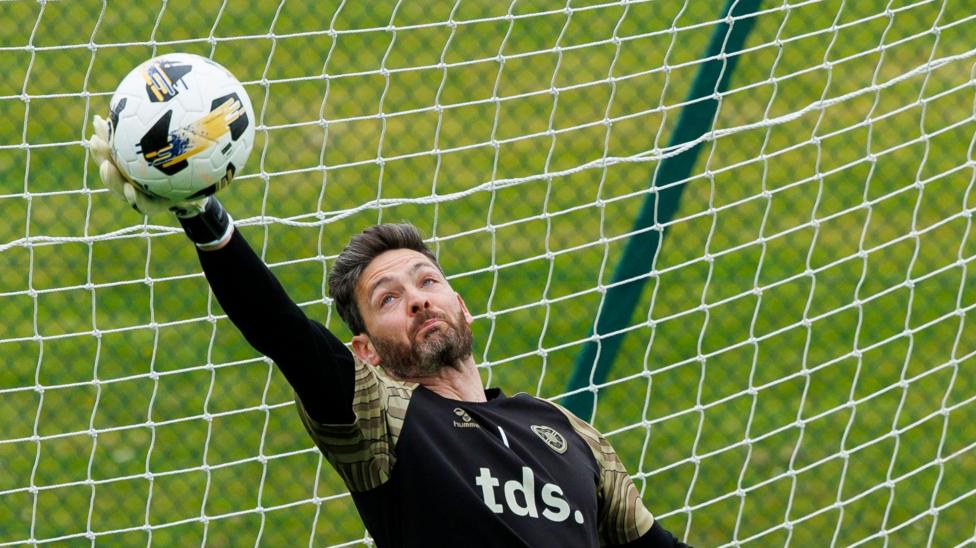
However, Gordon’s path is complicated by a shoulder injury that has kept him out of action since late January. He has recently returned to training with Hearts, but the lack of competitive minutes is a concern for a player of his age. The goalkeeping situation is further clouded by an injury to Scott Bain, who hurt his ankle in the Scottish Cup semi-finals. Bain’s absence from the Falkirk squad against Rangers last weekend suggests he may not be fit in time, which places even more emphasis on Gordon’s recovery and readiness.
Clarke’s decision on Gordon will be a test of his legendary loyalty. Gordon is a leader in the dressing room and a player who knows exactly what it takes to perform on the big stage. If he can prove his fitness in the final days before the announcement, his inclusion would be a popular move among the Tartan Army. Whether he starts or serves as the experienced third choice, Gordon’s presence in the United States would be a fitting tribute to a career defined by resilience and longevity.
Defensive Concerns and the Hanley Hurdle
Defense has been the bedrock of Clarke’s Scotland, but injuries are threatening to undermine that stability. Grant Hanley, one of the manager’s most trusted lieutenants, is currently sweating over a knee injury sustained in Hibernian’s recent defeat to Motherwell. Hanley was seen limping heavily, and manager David Gray’s assessment that the defender had overstretched his knee has caused significant anxiety. If Hanley is unable to make the trip, Clarke will lose a vital piece of his defensive puzzle and a vocal leader on the pitch.
This uncertainty has opened the door for Dominic Hyam, who finally made his first start for the national team last month. Hyam’s performance was composed and authoritative, proving that he can handle the responsibilities of Clarke’s system. At 30 years old, Hyam is at the peak of his powers and offers a reliable alternative should Hanley or other senior defenders fail to reach 100 percent fitness. The Blackburn Rovers man has been on the fringes for years, but the stars may finally be aligning for his first major tournament participation.
The defensive selection will be critical given the caliber of forwards Scotland will face in the World Cup. Clarke’s system relies on a back three that can transition quickly and communicate flawlessly. Losing a stalwart like Hanley would require a significant adjustment, but the emergence of Hyam provides a safety net that was not present in previous campaigns. The medical reports over the next 24 hours will likely dictate whether Clarke sticks with his old guard or integrates fresh faces into the backline.
The Italian Influence and Final Thoughts
Scotland's reach now extends to Serie A, where Kieron Bowie and Lennon Miller have been making waves. Bowie, in particular, grabbed headlines this weekend by scoring a stunning stoppage-time equalizer against Inter Milan at the San Siro. Despite his club Hellas Verona being relegated, Bowie's individual form has been a bright spot. His ability to perform in one of Europe’s top leagues suggests he is ready for the international step up, and his confidence will be sky-high after spoiling Inter’s title party.
Lennon Miller is another regular in recent squads, though he has found game time hard to come by. His last cap came in October, and while he is highly regarded by the coaching staff, the competition for places in midfield is fierce. With the likes of John McGinn, Scott McTominay, and Billy Gilmour certain to travel, Miller may find himself on the outside looking in. However, his consistent inclusion in camps shows that he is very much a part of Clarke’s long-term plans for the national team.
As the deadline approaches, the tension among the players is palpable. For the twenty-six individuals selected, the call from Steve Clarke will be the realization of a lifelong dream. For those who miss out, it will be a heartbreaking end to a four-year cycle. Scotland heads to the World Cup not just to participate, but to compete, and the squad Clarke names on Tuesday will be tasked with writing the next chapter in the nation's footballing history. For more football news on MATCHLINE, follow our full coverage of the World Cup buildup. more football news on MATCHLINE